Skip to content
Menu

Country · 18 sites · 4 hubs

Roman Croatia

Roman Croatia belonged to two different worlds. Istria, in the north-west, was part of Italy itself: Augustus made it, with the Veneto, the tenth region of Roman Italy, Venetia et Histria, with its capital at Aquileia. Beyond the Arsia river, the region’s eastern boundary, began the province named after the Dalmatae, an Illyrian people of the central Adriatic coast. The Romans fought three Illyrian wars in the 3rd and 2nd centuries BC; Octavian campaigned inland in 35–33 BC, and after the great revolt of AD 6–9 the old province of Illyricum was divided, leaving Dalmatia as a province stretching from the Adriatic deep into the Balkans.

Its capital was Salona, near Split, one of the largest cities of the late Empire, and the emperor Diocletian, who was born there, built his retirement palace six kilometres away. That palace became the town of Split when refugees from Salona moved inside its walls in the 7th century, which is why it still stands. In Istria, the colony of Pola, today’s Pula, kept an amphitheatre whose outer wall survives complete, a temple of Augustus and an honorary arch; Poreč keeps its Roman street plan and an early Byzantine basilica famous for its mosaics. Inland, the legions guarded the river crossings from fortresses such as Burnum on the Krka and Tilurium on the Cetina.

This page lists the sites we have documented so far, from the great monuments of Split and Pula to smaller towns and forts in the Dalmatian hinterland.
Sources: Wikipedia (en) — Dalmatia (Roman province); Wikipedia (en) — Venetia et Histria; Wikipedia (en) — Pula; Wikipedia (en) — Diocletian's Palace; Wikipedia (en) — Salona

Roman towns

Several sites in one town: see them in a day on foot.

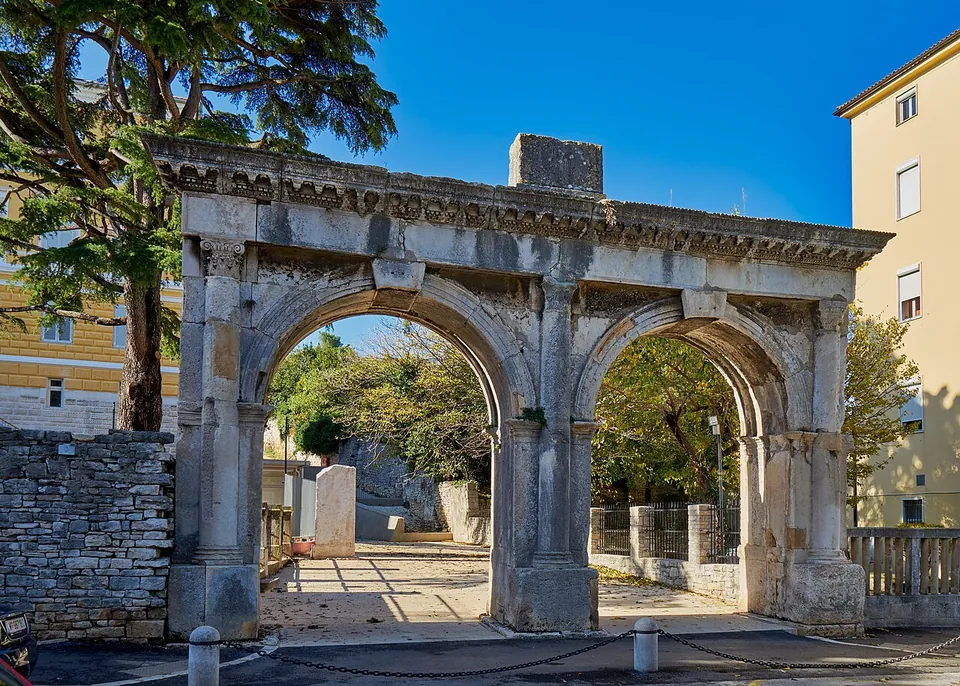
A Roman gateway with two equal round arches under one carved cornice, standing at the edge of a street with a stone wall on its left, trees behind and a paved path leading through.

Photo: Georg Karl Ell · CC BY-SA 4.0 · Commons

Hub · 4stops

Istria County · Croatia

Pola – Pula

The stops each have their own page: the Pula Arena, the amphitheatre; the Temple of Augustus on the forum; the Arch of the Sergii at the end of the main street; and the Small Roman Theatre on the slope of the central hill.

  1. 01Pula Arena · amphitheatrestart
  2. 02Small Roman Theatre, Pula · theatre≈ 7 min
  3. 03Arch of the Sergii · site≈ 3 min
  4. 04Temple of Augustus · temple≈ 7 min
Plan a day in Pola – Pula →

Landmarks

Landmark

Worth planning a trip around.

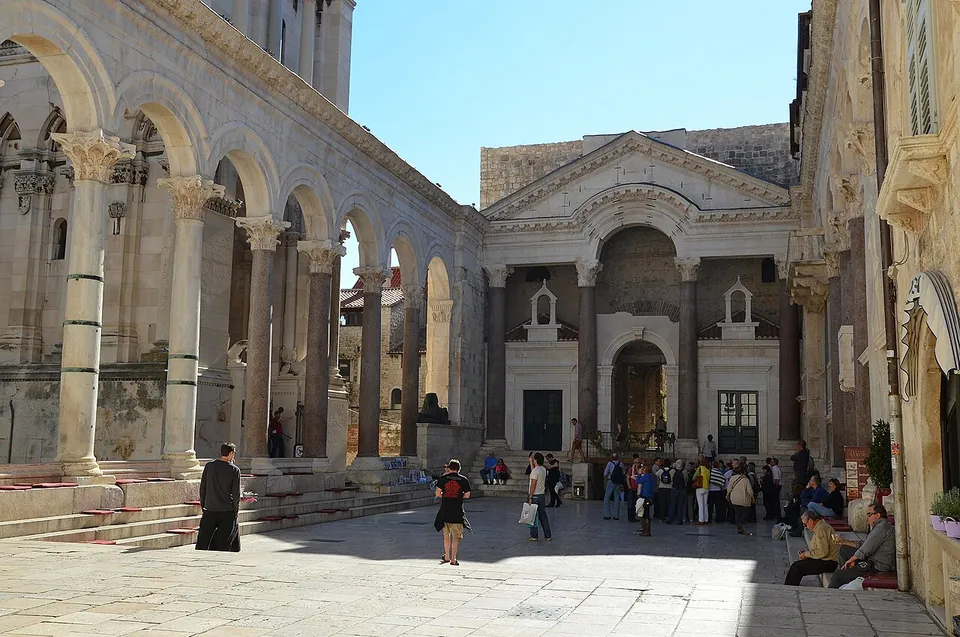
  1. A paved Roman court lined on the left by an arcade of granite columns carrying round arches, closed at the far end by a pedimented front on four columns with an arched opening, with visitors standing in the sun.

    Photo: Following Hadrian · CC BY-SA 2.0 · Commons

    palace · Split-Dalmatia County

    1. Diocletian's Palace

    The palace is an irregular rectangle of roughly 215 by 175–180 m, laid out like a legionary fort, with towers on its three landward walls and a gate in the middle of each side.

    3rd – 7th c. ADFree

Hidden gems

Hidden gem

Remains that most visitors to the region never see.

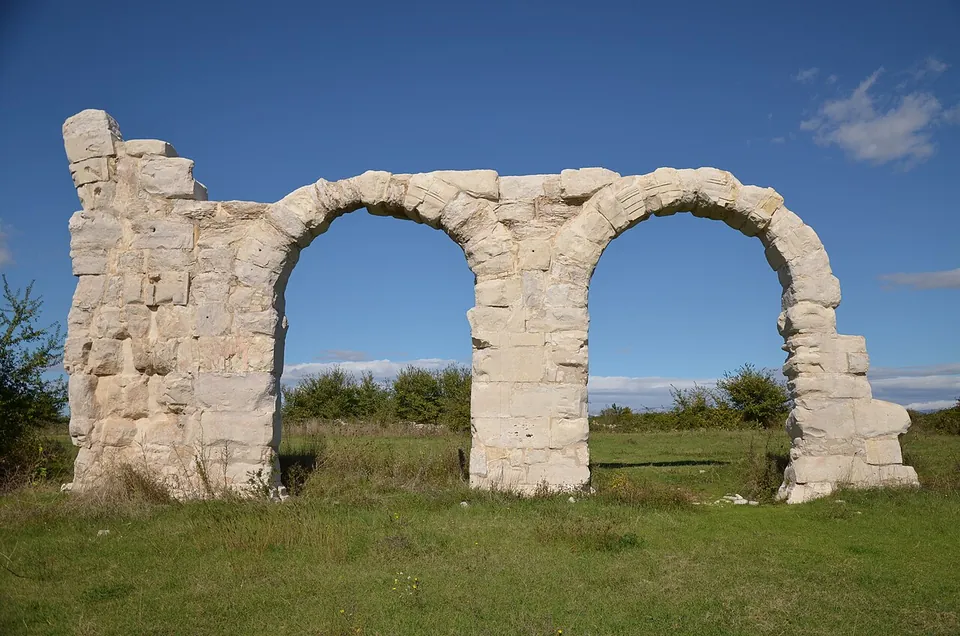
  1. Two round arches of large pale stone blocks on three piers, the end piers broken off at different heights, standing on grass against a blue sky.

    Photo: Carole Raddato · CC BY-SA 2.0 · Commons

    fort · Šibenik-Knin County

    2. Burnum

    The site is in two parts, both inside Krka National Park.

    1st c. BC – 6th c. ADTicketed
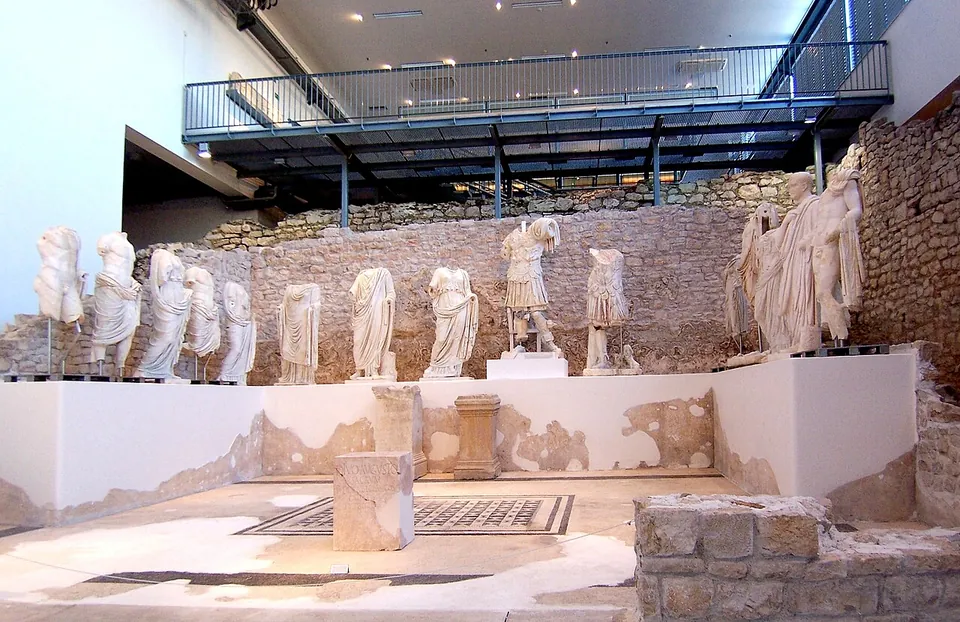
  2. A row of headless and damaged white marble statues of men and women in togas and robes standing on a plinth along the back of an excavated temple room with a mosaic floor, under a modern metal gallery.

    Photo: Rolf Kawel · CC BY-SA 3.0 de · Commons

    city · Dubrovnik-Neretva County

    3. Narona

    The Narona Archaeological Museum was the first museum in Croatia built in situ, over the remains of the Augusteum, the temple of the emperor Augustus (hr.wikipedia).

    1st c. BC – 6th c. ADTicketed
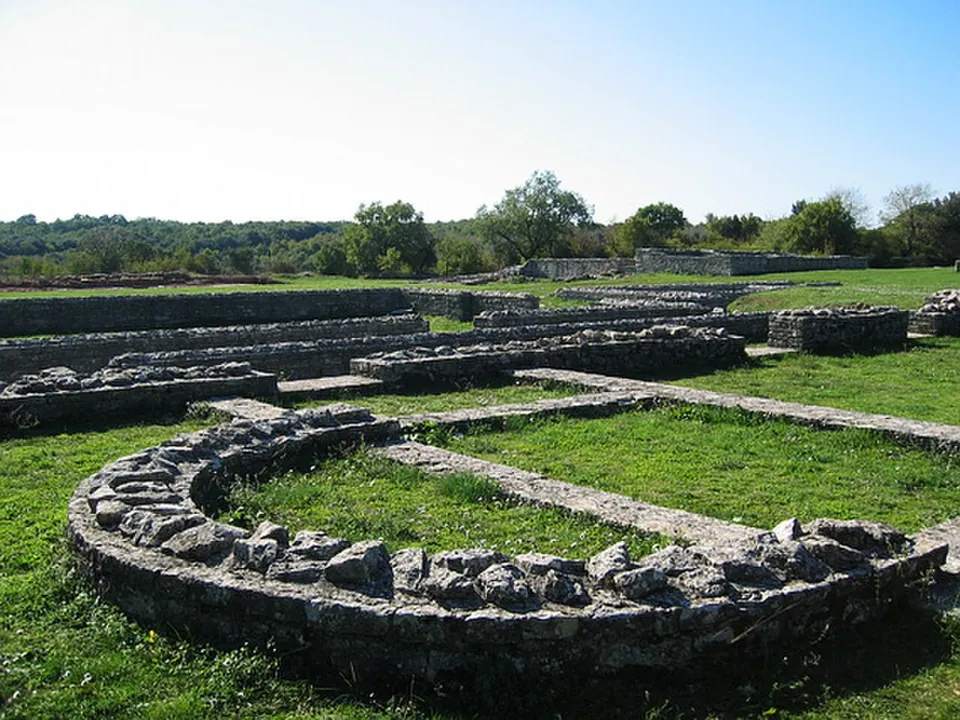
  3. The curved low stone wall of a church apse in the grass in the foreground, with the long parallel wall lines of the nave running away behind it and trees on the horizon.

    Photo: Hieronymushistriae · CC BY-SA 3.0 · Commons

    city · Istria County

    4. Nesactium

    An open archaeological park of conserved walls.

    2nd c. BC – 7th c. ADFree
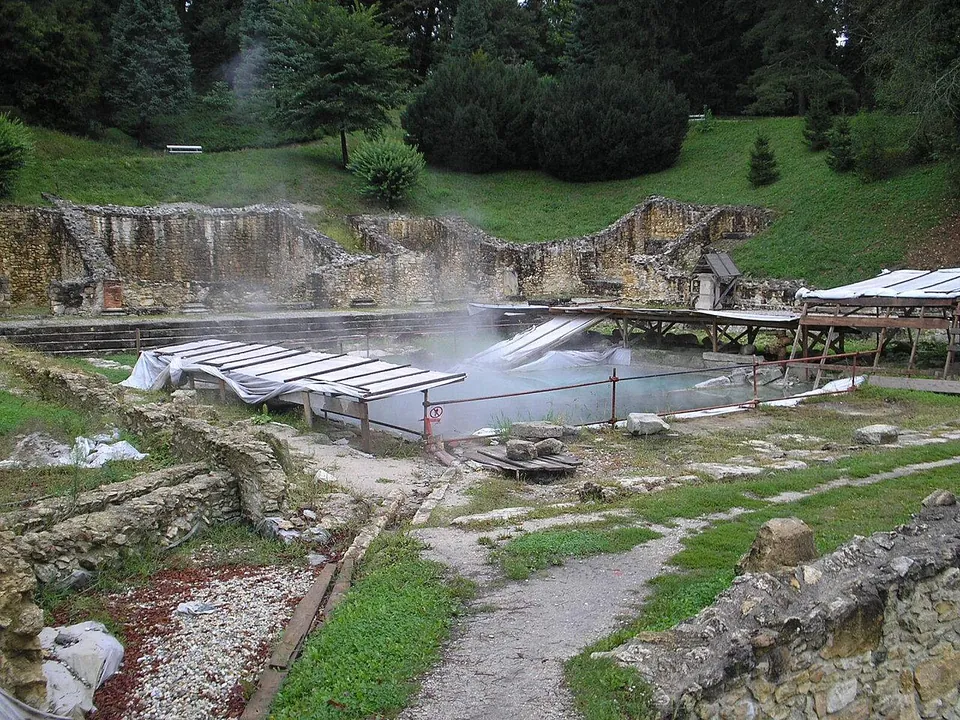
  4. Roman stone walls several metres high along the foot of a green slope, with steam rising from a pool of water behind a railing and gravel paths among the ruins in the foreground.

    Photo: Fraxinus · CC BY-SA 3.0 · Commons

    bath · Varaždin County

    5. Aquae Iasae

    A compact archaeological park covering about 6,000 m² of Roman public buildings of the 1st to 4th centuries.

    1st – 4th c. ADTicketed
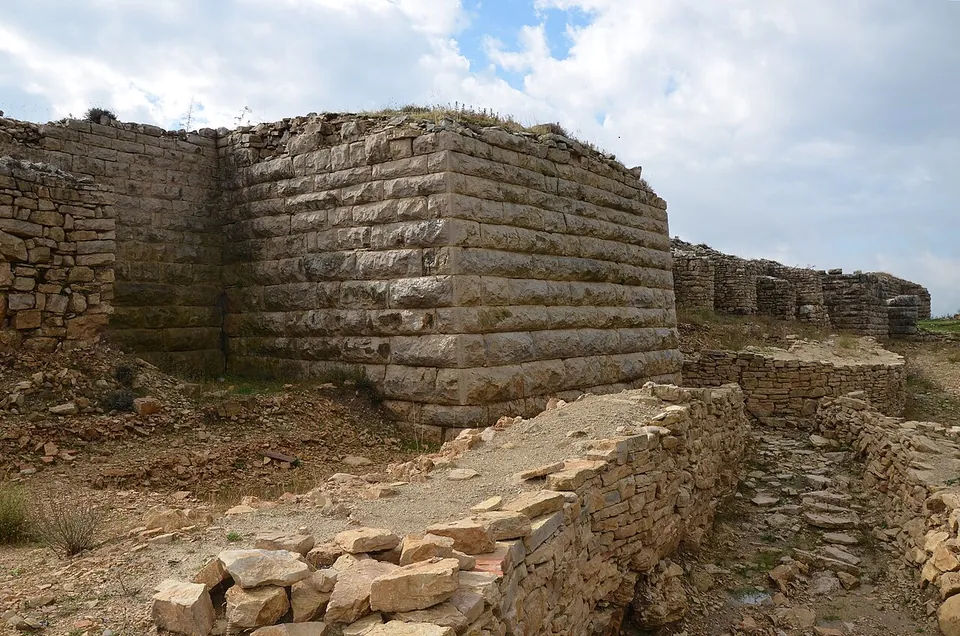
  5. A corner of massive city wall built of long courses of squared limestone blocks, standing several metres high, with lower stone foundations and a rubble path in front of it.

    Photo: Carole Raddato · CC BY-SA 2.0 · Commons

    city · Zadar County

    6. Asseria

    Long stretches of the city wall survive, in courses of massive squared blocks, with corner towers; English Wikipedia says the ashlar walls predate the Roman occupation, while German Wikipedia says the monumental late antique walls largely replaced the earlier Roman and Liburnian defences.

    1st – 6th c. ADFree
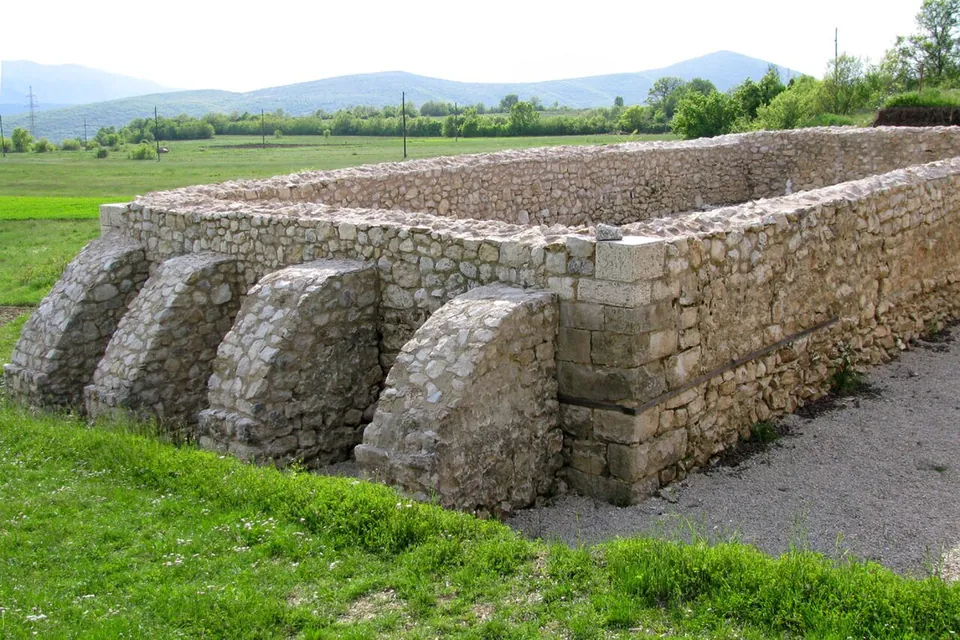
  6. A rectangular block of conserved Roman walls of rough limestone, about head high, with a row of sloping buttresses along one side, standing in grass with fields and low hills behind.

    Photo: Ante Perković · CC BY-SA 3.0 · Commons

    fort · Split-Dalmatia County

    7. Tilurium

    The camp covered about 12 hectares, and the village of Gardun sits over it (en.wikipedia).

    1st – 4th c. ADUnknown
Roman stone walls several metres high along the foot of a green slope, with steam rising from a pool of water behind a railing and gravel paths among the ruins in the foreground.

Photo: Fraxinus · CC BY-SA 3.0 · Commons

bath · Varaždin County

Aquae Iasae

A compact archaeological park covering about 6,000 m² of Roman public buildings of the 1st to 4th centuries.

Hidden gem
Open page →
The curved low stone wall of a church apse in the grass in the foreground, with the long parallel wall lines of the nave running away behind it and trees on the horizon.

Photo: Hieronymushistriae · CC BY-SA 3.0 · Commons

city · Istria County

Nesactium

An open archaeological park of conserved walls.

Hidden gem
Open page →
Two round arches of large pale stone blocks on three piers, the end piers broken off at different heights, standing on grass against a blue sky.

Photo: Carole Raddato · CC BY-SA 2.0 · Commons

fort · Šibenik-Knin County

Burnum

The site is in two parts, both inside Krka National Park.

Hidden gem
Open page →
A corner of massive city wall built of long courses of squared limestone blocks, standing several metres high, with lower stone foundations and a rubble path in front of it.

Photo: Carole Raddato · CC BY-SA 2.0 · Commons

city · Zadar County

Asseria

Long stretches of the city wall survive, in courses of massive squared blocks, with corner towers; English Wikipedia says the ashlar walls predate the Roman occupation, while German Wikipedia says the monumental late antique walls largely replaced the earlier Roman and Liburnian defences.

Hidden gem
Open page →
A rectangular block of conserved Roman walls of rough limestone, about head high, with a row of sloping buttresses along one side, standing in grass with fields and low hills behind.

Photo: Ante Perković · CC BY-SA 3.0 · Commons

fort · Split-Dalmatia County

Tilurium

The camp covered about 12 hectares, and the village of Gardun sits over it (en.wikipedia).

Hidden gem
Open page →
A paved Roman court lined on the left by an arcade of granite columns carrying round arches, closed at the far end by a pedimented front on four columns with an arched opening, with visitors standing in the sun.

Photo: Following Hadrian · CC BY-SA 2.0 · Commons

palace · Split-Dalmatia County

Diocletian's Palace

The palace is an irregular rectangle of roughly 215 by 175–180 m, laid out like a legionary fort, with towers on its three landward walls and a gate in the middle of each side.

Landmark
Open page →
A row of headless and damaged white marble statues of men and women in togas and robes standing on a plinth along the back of an excavated temple room with a mosaic floor, under a modern metal gallery.

Photo: Rolf Kawel · CC BY-SA 3.0 de · Commons

city · Dubrovnik-Neretva County

Narona

The Narona Archaeological Museum was the first museum in Croatia built in situ, over the remains of the Augusteum, the temple of the emperor Augustus (hr.wikipedia).

Hidden gem
Open page →
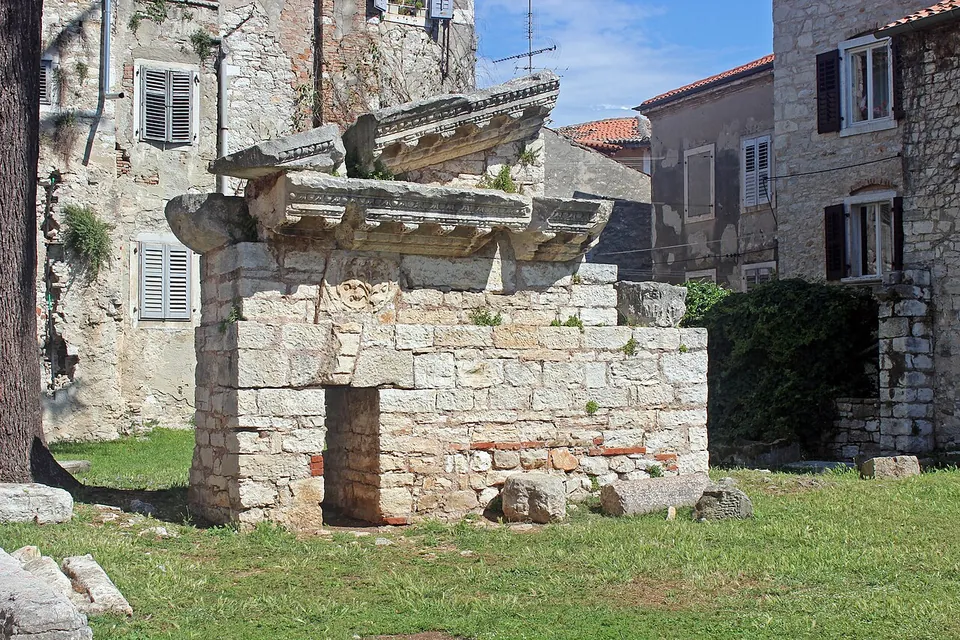
The ruined corner of a Roman temple built of large squared stone blocks, carrying fragments of a carved cornice, standing on a lawn among old stone houses.

Photo: Maesi64 · CC0 · Commons

city · Istria County

Parentium – Poreč

The town plan still shows the shape of the Roman castrum, and the two main streets, the Decumanus and the Cardo Maximus, keep their original lines.

Also here

  1. 1Euphrasian Basilica
Hub · 1 stop
Open page →
A Roman gateway with two equal round arches under one carved cornice, standing at the edge of a street with a stone wall on its left, trees behind and a paved path leading through.

Photo: Georg Karl Ell · CC BY-SA 4.0 · Commons

city · Istria County

Pola – Pula

The stops each have their own page: the Pula Arena, the amphitheatre; the Temple of Augustus on the forum; the Arch of the Sergii at the end of the main street; and the Small Roman Theatre on the slope of the central hill.

Also here

  1. 1Pula Arena
  2. 2Small Roman Theatre, Pula
  3. 3Arch of the Sergii
  4. 4Temple of Augustus
Hub · 4 stops
Open page →
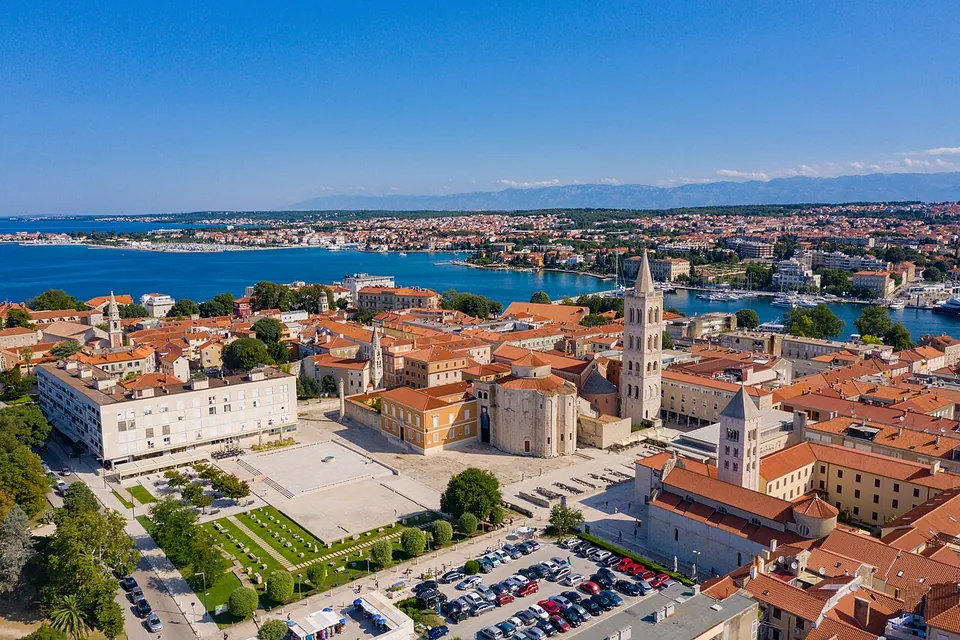
An aerial view of an old town square with a round domed church and a tall bell tower, the open area of the Roman forum beside it, a park and car park in the foreground and the sea behind.

Photo: dronepicr · CC BY 2.0 · Commons

city · Zadar County

Iader – Zadar

The one stop with its own page is the Roman Forum, an open square of Roman paving, foundations and carved blocks beside the church of St Donatus.

Also here

  1. 1Roman Forum in Zadar
Hub · 1 stop
Open page →
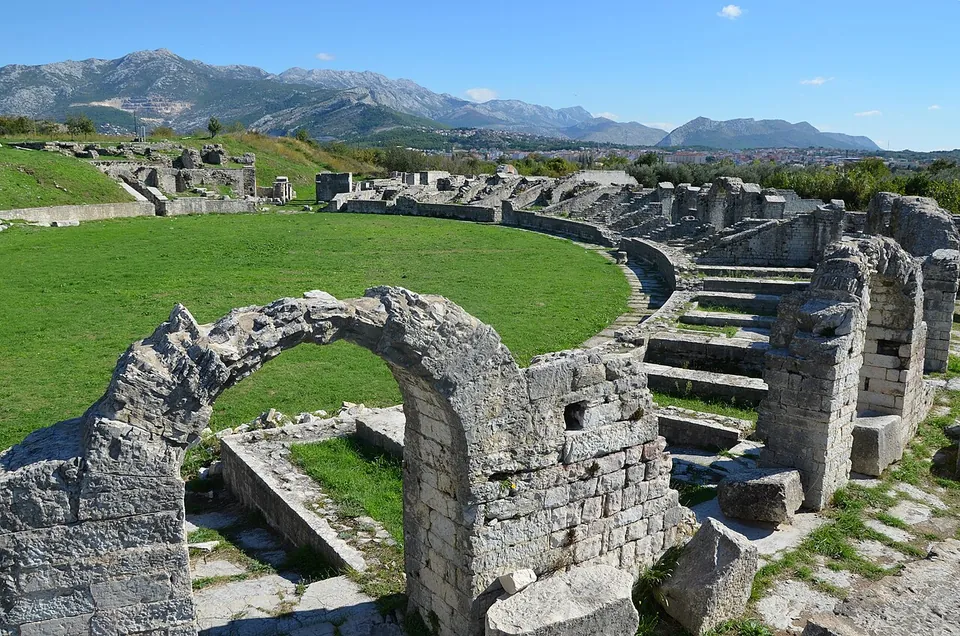
The oval of a Roman amphitheatre with a lawn for its floor, surrounded by the broken lower walls and stairs of its seating, a single stone arch standing in the foreground and mountains beyond.

Photo: Carole Raddato · CC BY-SA 2.0 · Commons

city · Split-Dalmatia County

Salona – Solin

A spread-out archaeological park rather than a single monument: the ruins run across fields and roads between the houses of Solin, and English Wikipedia calls it the largest archaeological park in Croatia.

Also here

  1. 1Diocletian's Aqueduct
Hub · 1 stop
Open page →

Numbers match the list. H marks a hub. Select a marker for a summary. Static map, generated at build time; the interactive map is one click away.