What is there today
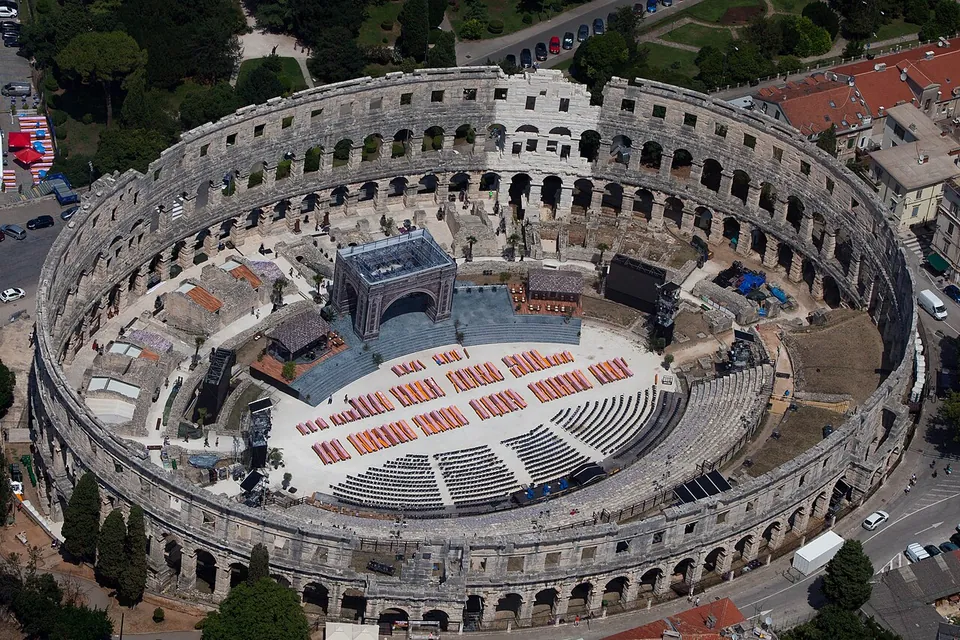
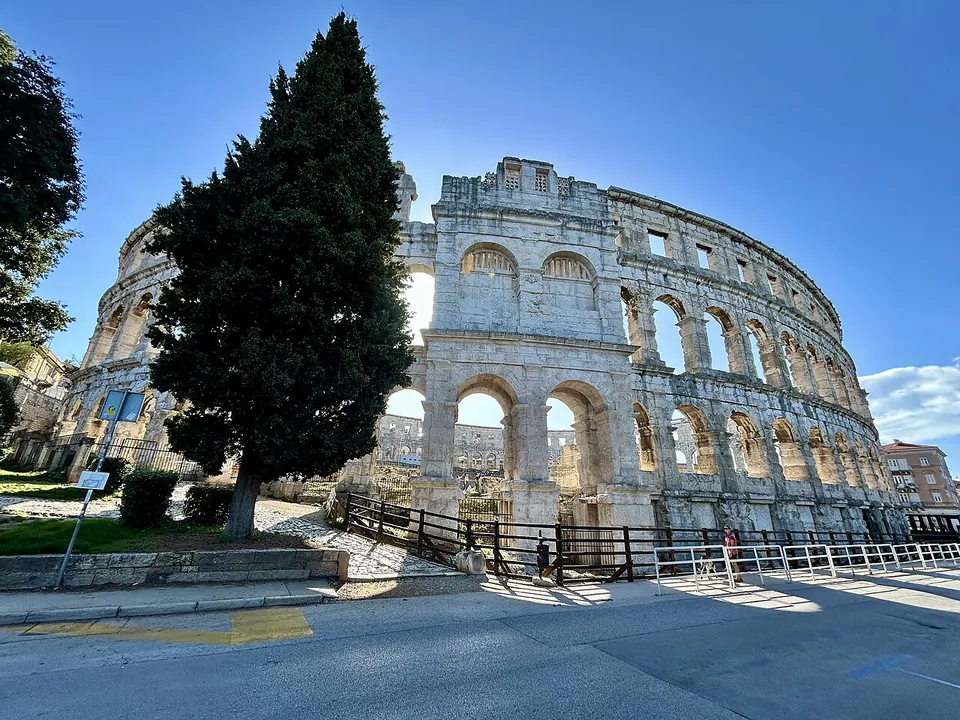
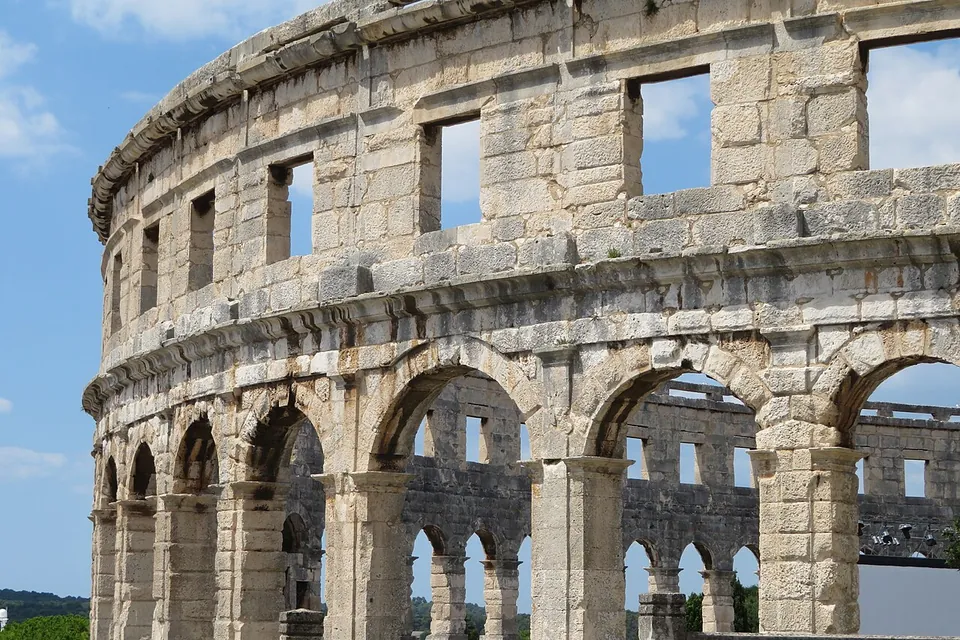
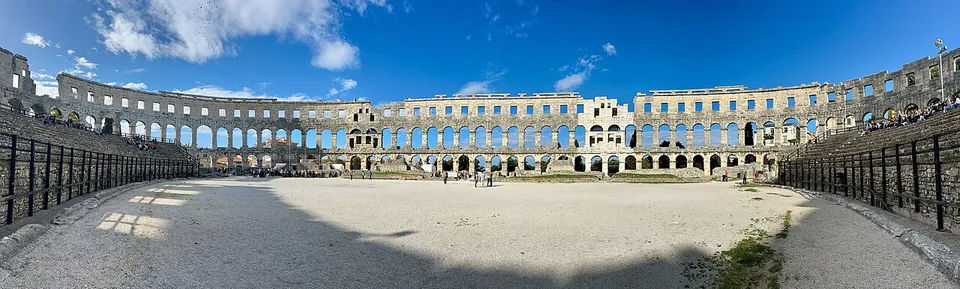
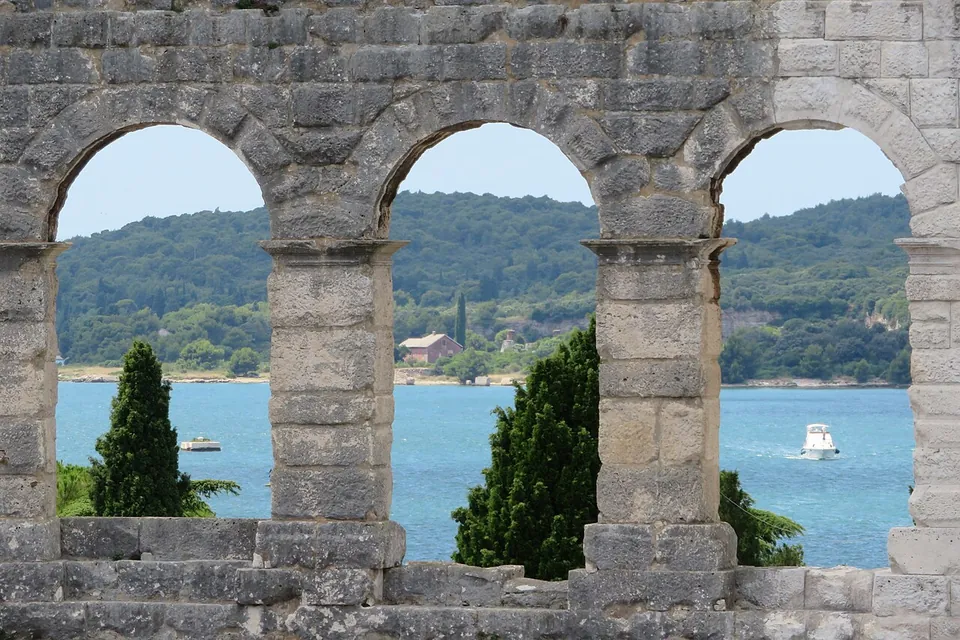
The oval measures about 132 by 105 m, and the wall rises to 32.45 m at its highest (the operator; en.wikipedia). Because it was built into a hillside, the wall has three storeys of arches facing the harbour but only two on the higher, landward side. It is the Arena’s four rectangular towers that set it apart from other amphitheatres, the operator says; they held wooden stairs and, at the top, cisterns filled with rainwater (the operator). The stone seating has gone, carried off as building stone from the 5th century onwards, but the arena floor, about 68 by 42 m, and the rooms cut into the rock beneath it remain; the underground rooms house an exhibition on olive oil and wine in Istria (en.wikipedia).
Is it worth the trip?
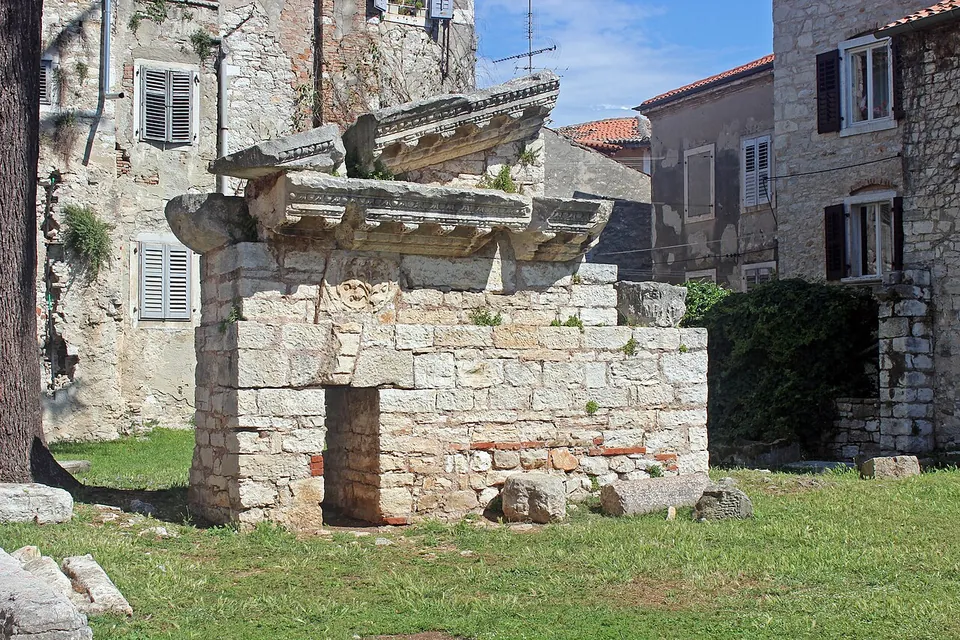
Yes. This is the reason most people come to Pula, and it deserves it: few places anywhere let you stand inside a Roman amphitheatre whose outer wall is complete. It is also a working venue for concerts, opera and the Pula Film Festival, so a stage and seating may be up when you visit; that is part of its life, but it can also mean closures, so check the day before you go. Pair it with the rest of Roman Pula — the Temple of Augustus, the Arch of the Sergii and the small theatre are all a short walk away.
Getting there
The Arena stands on Flavijevska ulica at the edge of Pula’s centre, just outside the line of the Roman town walls (the operator). A bus stop is mapped about 100 m away and a car park about 110 m away (OpenStreetMap).
In September it is open from 08.00 to 21.00; hours run from 08.00–20.00 in April up to 08.00–22.00 in the summer, and 09.00–17.00 from November to March. Ticket sales stop an hour before closing. A ticket is €10, €5 for children, pupils and students, and free under five; free audio guides are available by scanning QR codes. The Arena may close early for events — on 27 September 2026 it closes at 13.00 (Arena Pula, read 26 September 2026).
Visiting details
- Opening hours
- April 08–20, May 08–21, June to August 08–22, September 08–21, October 08–19, November to March 09–17. Ticket sales stop an hour before closing, and the Arena can close early or entirely for events (on 27 September 2026, for example, it closes at 13.00).
- Tickets
- €10 for adults; €5 for children, pupils and students; free under 5. Disabled visitors pay half and one companion is free; groups of more than 10 get 15% off. Tickets at the entrance or online at shop.ami-pula.hr. Free audio guides by QR code.
- Parking
- The nearest mapped car park is about 110 m away (OpenStreetMap).
Before you go
- The Arena is also a concert and festival venue; sound checks and stage building can happen during opening hours, and it may close to visitors on event days. Check the operator's page before you go.
Hours and prices checked 26 September 2026 on the operator's own site. Confirm before travelling.
History
Construction began under Augustus and was paid for, it is believed, from the imperial treasury; the amphitheatre was enlarged under Vespasian (en.wikipedia; the operator). It stood outside the walls of the colony of Pietas Iulia, on the Via Flavia, the road towards Aquileia and Rome, and could hold an estimated 23,000 spectators. Admission to the games was free, but seating strictly followed social rank; the arena also served for public trials and for executions ad bestias of murderers, bandits and rebels. Local tradition holds that Saint Germanus, patron of Pula, was martyred here (the operator; en.wikipedia).
Once gladiatorial shows were banned at the beginning of the 5th century, people began to take its stone. In 1583 the Venetian Senate proposed dismantling the Arena and rebuilding it in Venice; the proposal was rejected, and a plaque honouring the senator Gabriele Emo, who opposed it, is on the second tower. Restoration began under the French in the Napoleonic period and continued under Austria from 1816 (en.wikipedia).
More photographs
Nearby
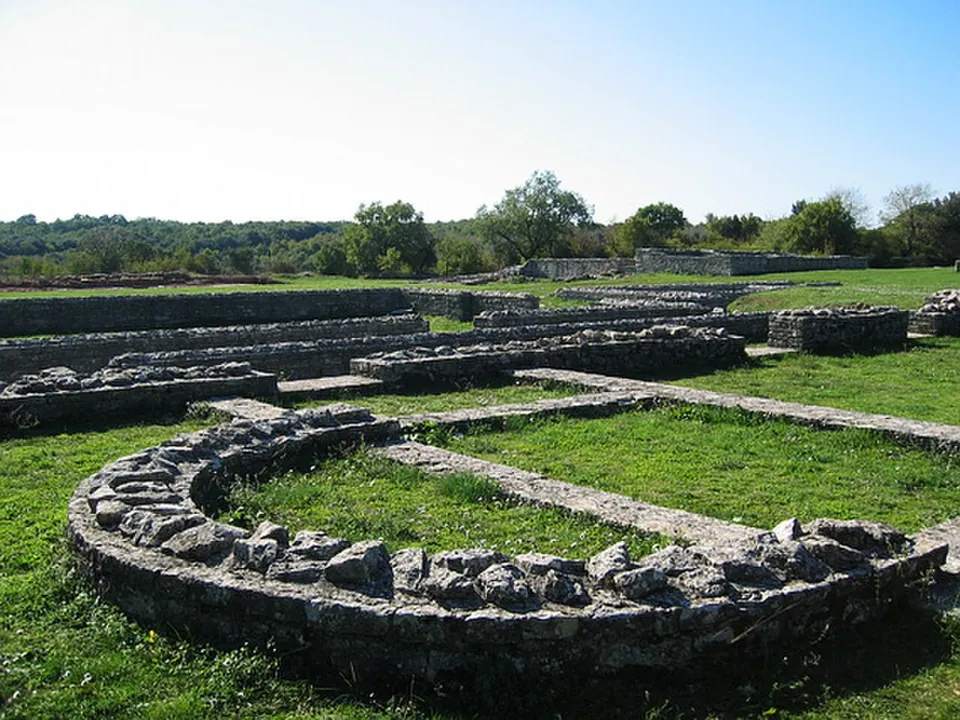
Photo: Hieronymushistriae · CC BY-SA 3.0 · Commons
44 km · city · Istria County
Parentium – Poreč
The town plan still shows the shape of the Roman castrum, and the two main streets, the Decumanus and the Cardo Maximus, keep their original lines.
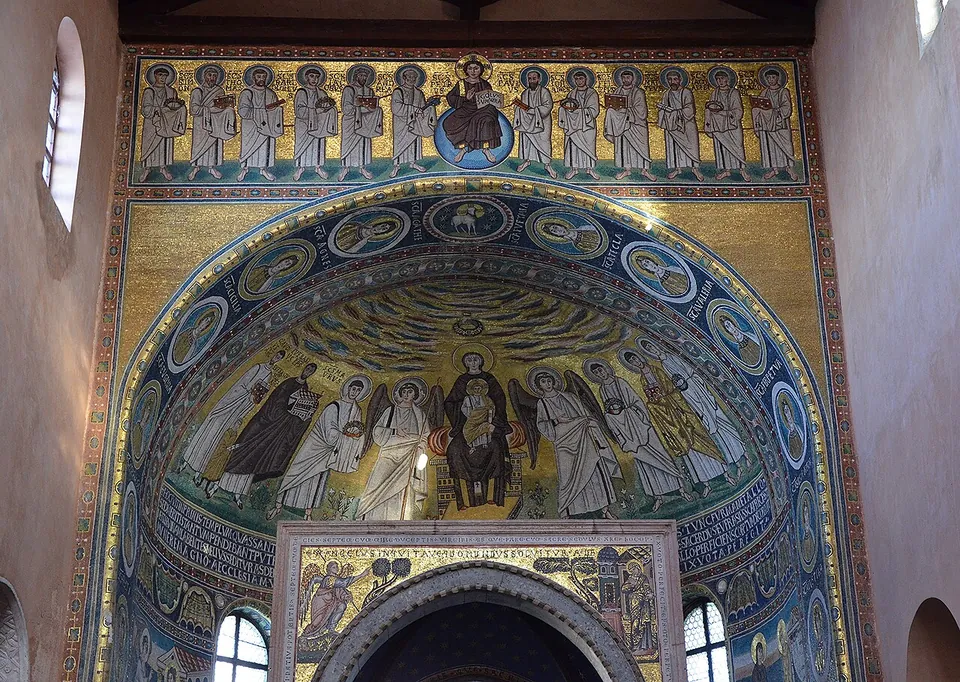
Photo: Carole Raddato · CC BY-SA 2.0 · Commons
44 km · site · Istria County
Euphrasian Basilica
The whole episcopal complex survives: the basilica itself, an atrium surrounded by porticoes with a collection of carved stones, an octagonal baptistery, the bishop's palace and a later bell tower (en.wikipedia).
.jpg)
.jpg)
.jpg)
.jpg)
.jpg)


.jpg)
Straight-line distances.
Sources
Every fact on this page comes from the records below, each used under the licence noted.
| Source | Licence |
|---|---|
| Pleiades 837713186 | CC BY |
| Wikidata Q474998 | CC0 |
| OpenStreetMap node/3010170999 | ODbL |
| Wikipedia (en) — Pula Arena | CC BY-SA 4.0 |
| Arena Pula — visitor information (the operator; hours and prices) | licence not recorded |
| Arheološki muzej Istre — Amfiteatar | licence not recorded |
| Arheološki muzej Istre — price list (PDF, from 13 May 2025) | licence not recorded |