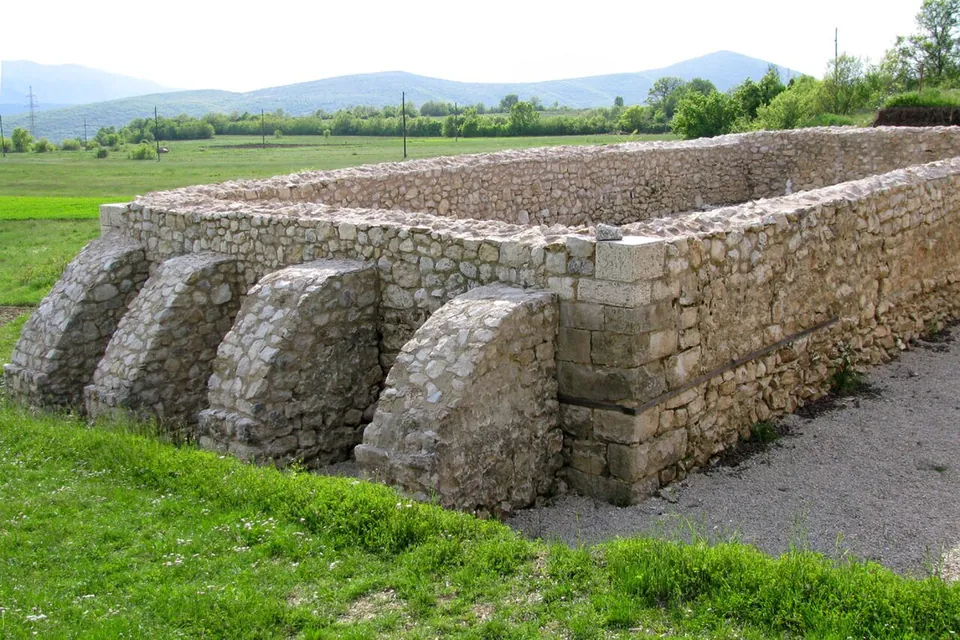
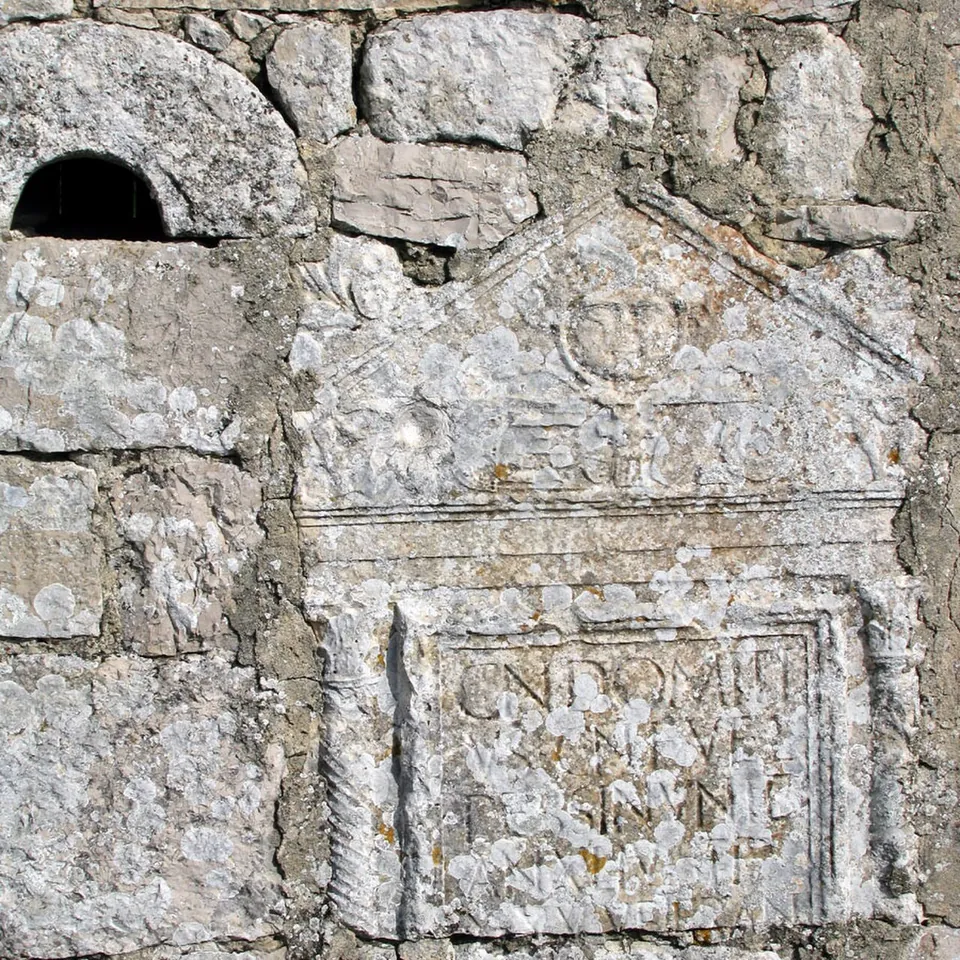
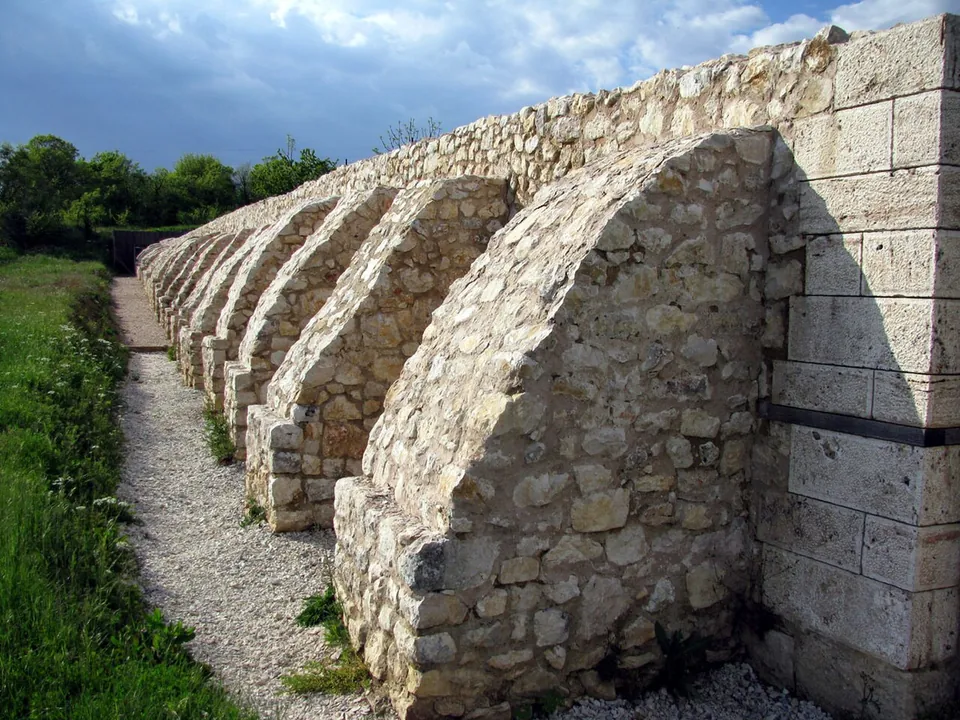


Tilurium was a Roman legionary fortress on a plateau above the river Cetina at Gardun, just above the town of Trilj, built to guard the river crossing on the way into inland Dalmatia. The camp lies under the village today; an excavated area of barracks walls has been conserved, and Roman stones can be seen built into the village’s houses and chapel.
What is there today
The camp covered about 12 hectares, and the village of Gardun sits over it (en.wikipedia). What is on show is a conserved stretch of barracks, walls about head high with a row of buttresses (the photographs; OSM names the area “spavaonice”, the dormitories). Stone from the camp was later used to build Gardun, and Roman fragments can still be seen in its houses (sl.wikipedia) — the cemetery chapel has a carved Roman stone in its wall (the photographs). The finds are shown in the permanent exhibition “Tilurium – Roman military camp” at the Museum of the Trilj Region.
Is it worth the trip?
Only if you are interested in the Roman army or passing through the Cetina valley. The conserved barracks are a small area, the rest of the fortress is under the village, and no source says how the site is presented or when it can be visited. Combine it with the museum in Trilj, which opens only on weekdays.
Getting there
Gardun is above Trilj; sl.wikipedia gives a 1.5 km road up to the site from the church of St Michael in Trilj. The Museum of the Trilj Region, at Don Ante Bućana 3 in Trilj, is open Monday to Friday from 09.00 to 15.00 (the museum, read 26 September 2026). No source publishes hours or a fee for the site itself.
Visiting details
- Opening hours
- No hours are published for the site. The Museum of the Trilj Region, with its permanent display "Tilurium – Roman military camp", is open Monday to Friday 09.00–15.00.
- Tickets
- Unknown
Before you go
- The camp lies under the village of Gardun; what is presented is a small excavated area, and much of the camp's stone went into the village houses.
Hours and prices checked 26 September 2026 on the operator's own site. Confirm before travelling.
History
The plateau was first a hillfort of the Delmatae. It became a Roman legionary fortress commanding the crossing of the Cetina (the ancient Hippus), the Tilurium bridge (en.wikipedia). The Seventh Legion stayed longest: its oldest securely dated monument is a building inscription of AD 16/17 and its latest a boundary inscription of 42–50; English Wikipedia names the Ninth Legion (Hispana) as the first garrison. Auxiliary troops followed, the longest-serving being the eighth cohort of volunteer Roman citizens, last recorded in 243 (hr.wikipedia). Stonemasons’ workshops here made tombstones and monuments for the Seventh Legion (en.wikipedia), and the site stayed a fortified post into late antiquity.
Nearby
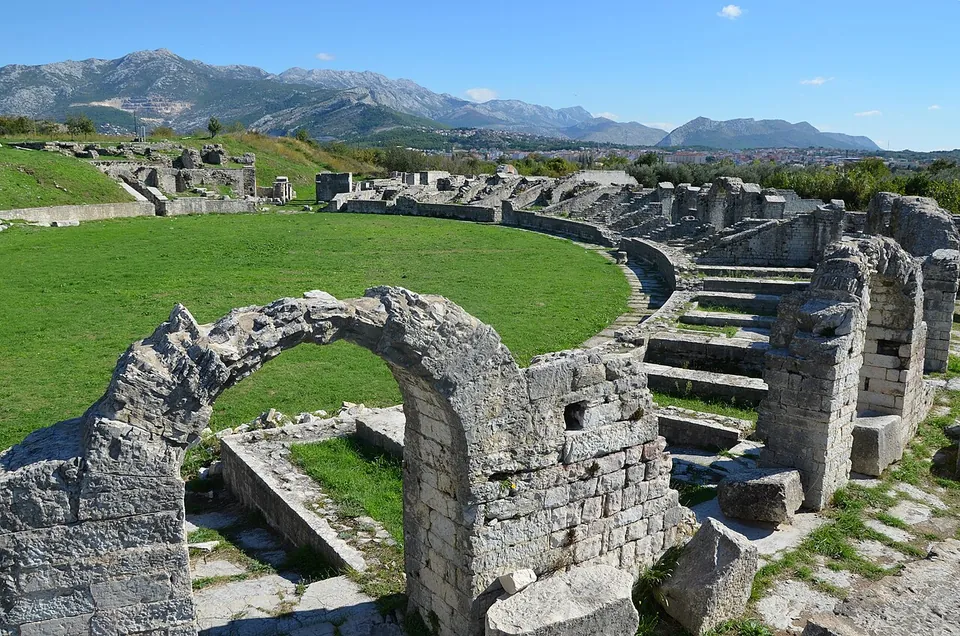
Photo: Carole Raddato · CC BY-SA 2.0 · Commons
20 km · city · Split-Dalmatia County
Salona – Solin
A spread-out archaeological park rather than a single monument: the ruins run across fields and roads between the houses of Solin, and English Wikipedia calls it the largest archaeological park in Croatia.
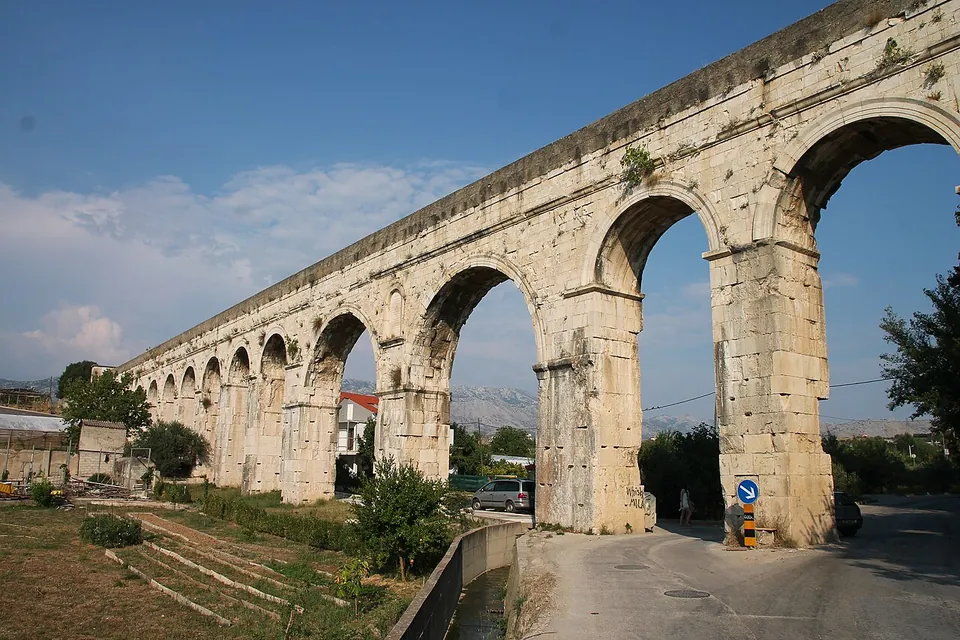
Photo: Draceane · CC BY-SA 4.0 · Commons
21 km · aqueduct · Split-Dalmatia County
Diocletian's Aqueduct
The channel runs through cuttings and tunnels or is dug into the rock, and where it crosses low ground it rides on arches (hr.wikipedia).
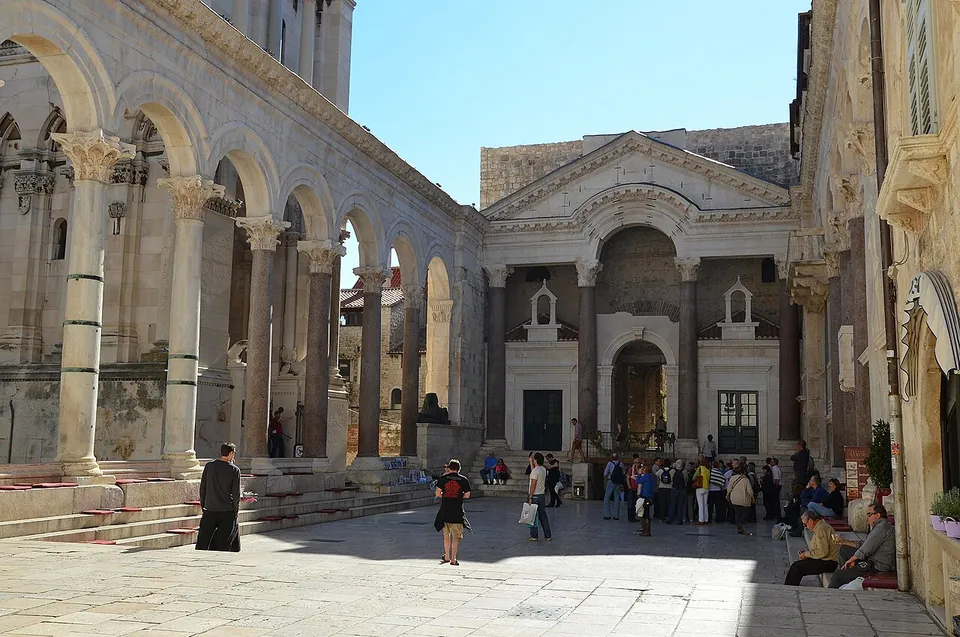
Photo: Following Hadrian · CC BY-SA 2.0 · Commons
25 km · palace · Split-Dalmatia County
Diocletian's Palace
The palace is an irregular rectangle of roughly 215 by 175–180 m, laid out like a legionary fort, with towers on its three landward walls and a gate in the middle of each side.
.jpg)
.jpg)
.jpg)
Straight-line distances.
Sources
Every fact on this page comes from the records below, each used under the licence noted.
| Source | Licence |
|---|---|
| Pleiades 197552 | CC BY |
| Wikidata Q3511836 | CC0 |
| OpenStreetMap way/113690474 | ODbL |
| Wikipedia (en) — Tilurium | CC BY-SA 4.0 |
| Wikipedia (hr) — Tilurij | CC BY-SA 4.0 |
| Wikipedia (sl) — Tilurium | CC BY-SA 4.0 |
| Muzej triljskog kraja (Museum of the Trilj Region) | licence not recorded |