
.jpg)
.jpg)
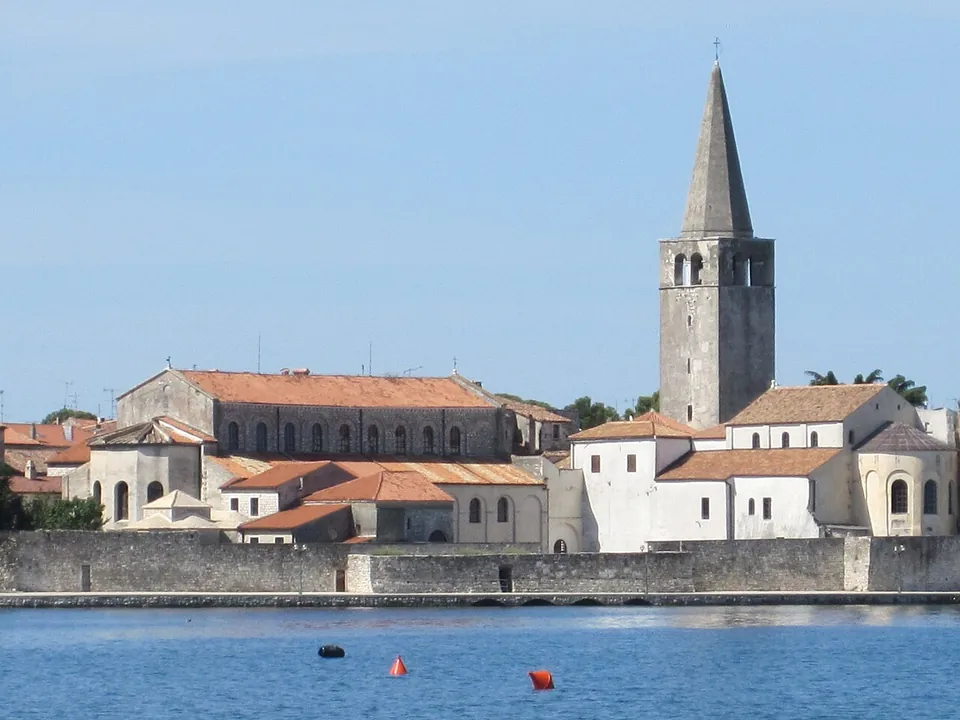
The Euphrasian Basilica is the cathedral of Poreč, built in the 6th century by Bishop Euphrasius on the site of earlier churches that go back to the 4th, and it is an outstanding example of early Byzantine architecture, famous for the gold-ground mosaics of its apse (en.wikipedia). It is on the UNESCO World Heritage List.
What is there today
The whole episcopal complex survives: the basilica itself, an atrium surrounded by porticoes with a collection of carved stones, an octagonal baptistery, the bishop’s palace and a later bell tower (en.wikipedia). Inside, two rows of nine marble columns, brought from the imperial quarries of Proconnesus in the Sea of Marmara, divide the nave from the aisles; their capitals carry Euphrasius’s monogram, and stucco decoration survives on the northern arcade (the parish).
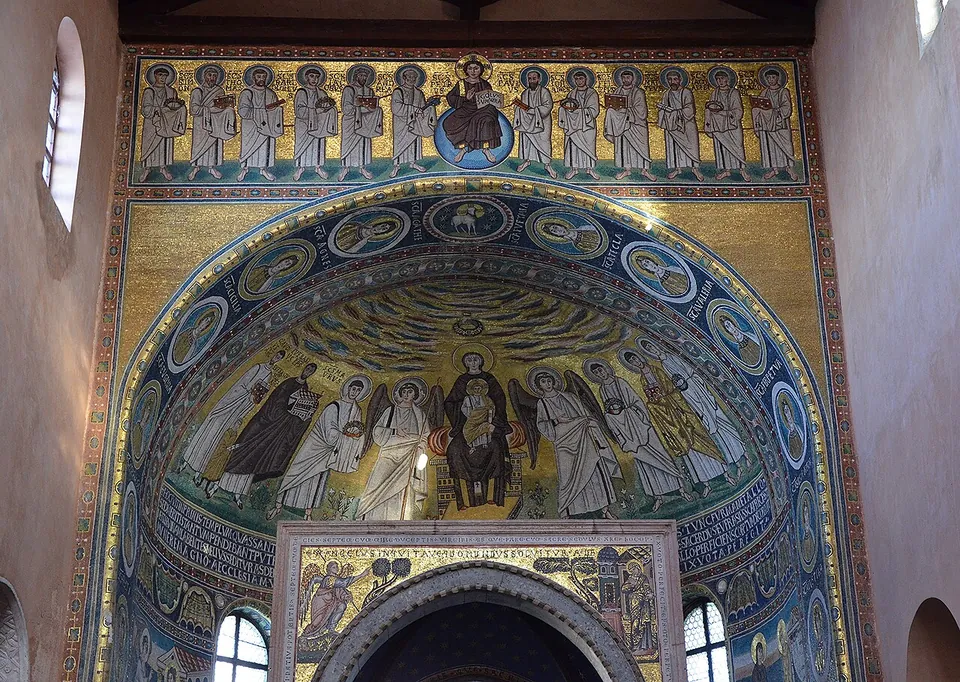
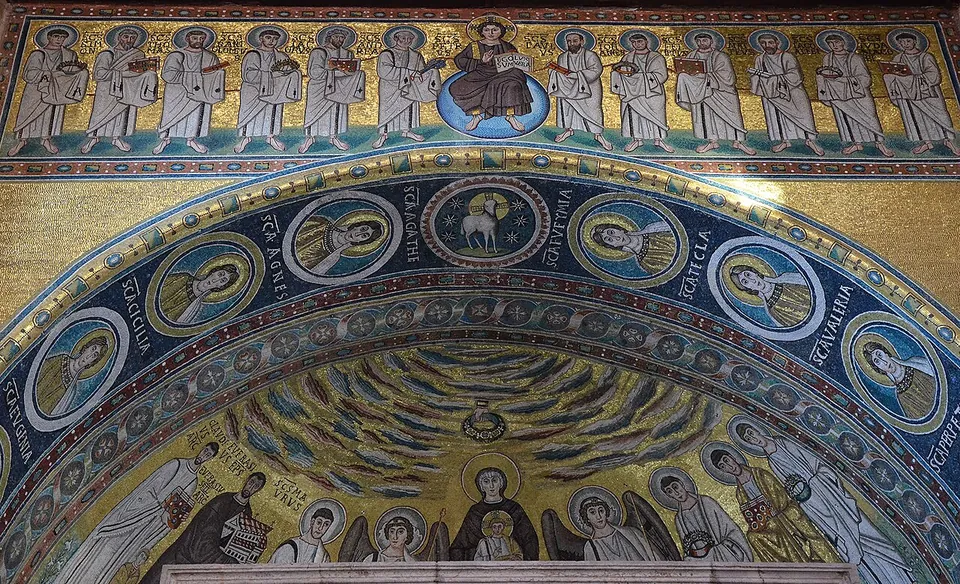
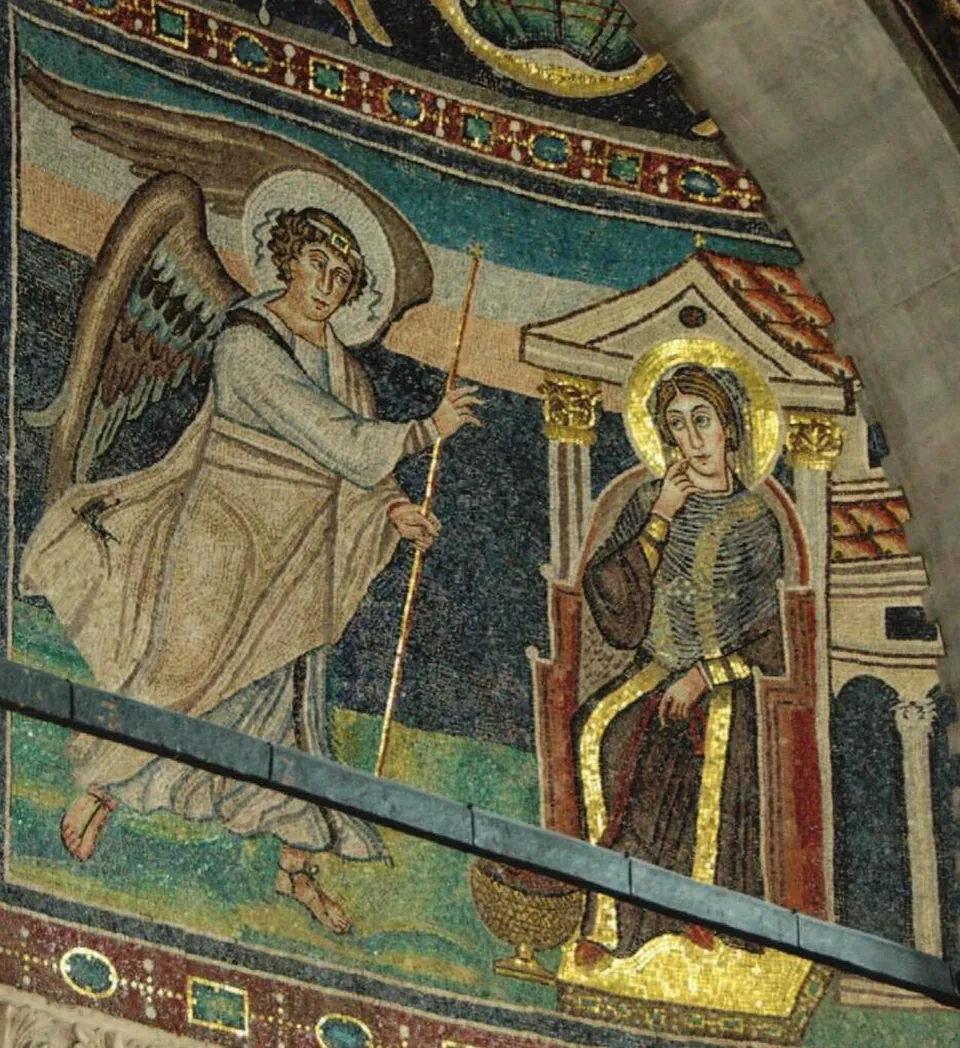
The mosaics are the reason to come. In the semi-dome of the apse the Virgin sits enthroned with the Child between angels, Saint Maurus, the first bishop of Poreč, and Euphrasius himself holding a model of his church. Between the windows below are the Annunciation and the Visitation, and on the arch in front Christ with the Apostles above a band of medallions with the Lamb of God and twelve female martyrs (en.wikipedia; the parish). Beneath and beside the present church, excavations have exposed the floor mosaics of its 4th- and 5th-century predecessors, some of which can be seen in the garden (en.wikipedia; the parish).
Is it worth the trip?
Yes. The apse mosaics are the draw — English Wikipedia notes that its Virgin is the only surviving image of the Mother of God in an early Christian basilica in the West — and you see them in the building they were made for, still in use. This is a Byzantine church rather than a Roman ruin, so come for the art and the continuity; the Roman town is outside, in the street plan of Poreč. Allow for the fact that it is a working cathedral: it closes on Sundays and during services.
Getting there
The basilica is at Eufrazijeva ulica 22 in the old town of Poreč (the tourist boards). It is open every day except Sundays and holy days of obligation; in September from 09.00 until 18.00 or 19.00 — the two tourist boards give different closing times — in July and August until 21.00, in October until 17.00, and for shorter hours in winter. A ticket is €10, or €5 for schoolchildren and students, and pre-school children go free (Istria tourist board, read 26 September 2026). You can also climb the bell tower (Poreč tourist board).
Visiting details
- Opening hours
- Open every day except Sundays and holy days of obligation, and closed to tourists during services. Published hours differ slightly between the two tourist boards; for September they give 09.00–19.00 (Poreč) or 09.00–18.00 (Istria). In July and August 09.00–21.00; in October 09.00–17.00; shorter in winter.
- Tickets
- €10 for adults; €5 for schoolchildren and students; free for pre-school children; groups get one free ticket in ten (Istria tourist board). The bell tower can be climbed (Poreč tourist board).
Before you go
- It is a working cathedral; silence is asked for inside, and tourist visits stop during services.
Hours and prices checked 26 September 2026 on the operator's own site. Confirm before travelling.
History
Christianity reached Poreč early: its first bishop, Saint Maurus, was martyred probably in the 3rd century, and in the second half of the 4th century his relics were brought into the town, to a house that had been turned into an oratory; coins of Licinius, Constantine and Valens under its mosaics help date it. A larger, three-aisled basilica followed in the 5th century (the parish). Bishop Euphrasius, probably born in Thrace, found that church small and ruinous, pulled it down and built the present basilica in the middle of the 6th century — between 543 and 554 according to the parish, from 553 according to English Wikipedia. It is one of the earliest churches in the West to end in three apses (en.wikipedia; the parish). An earthquake in 1440 damaged the south wall, which was repaired with Gothic windows (en.wikipedia).
More photographs

Nearby
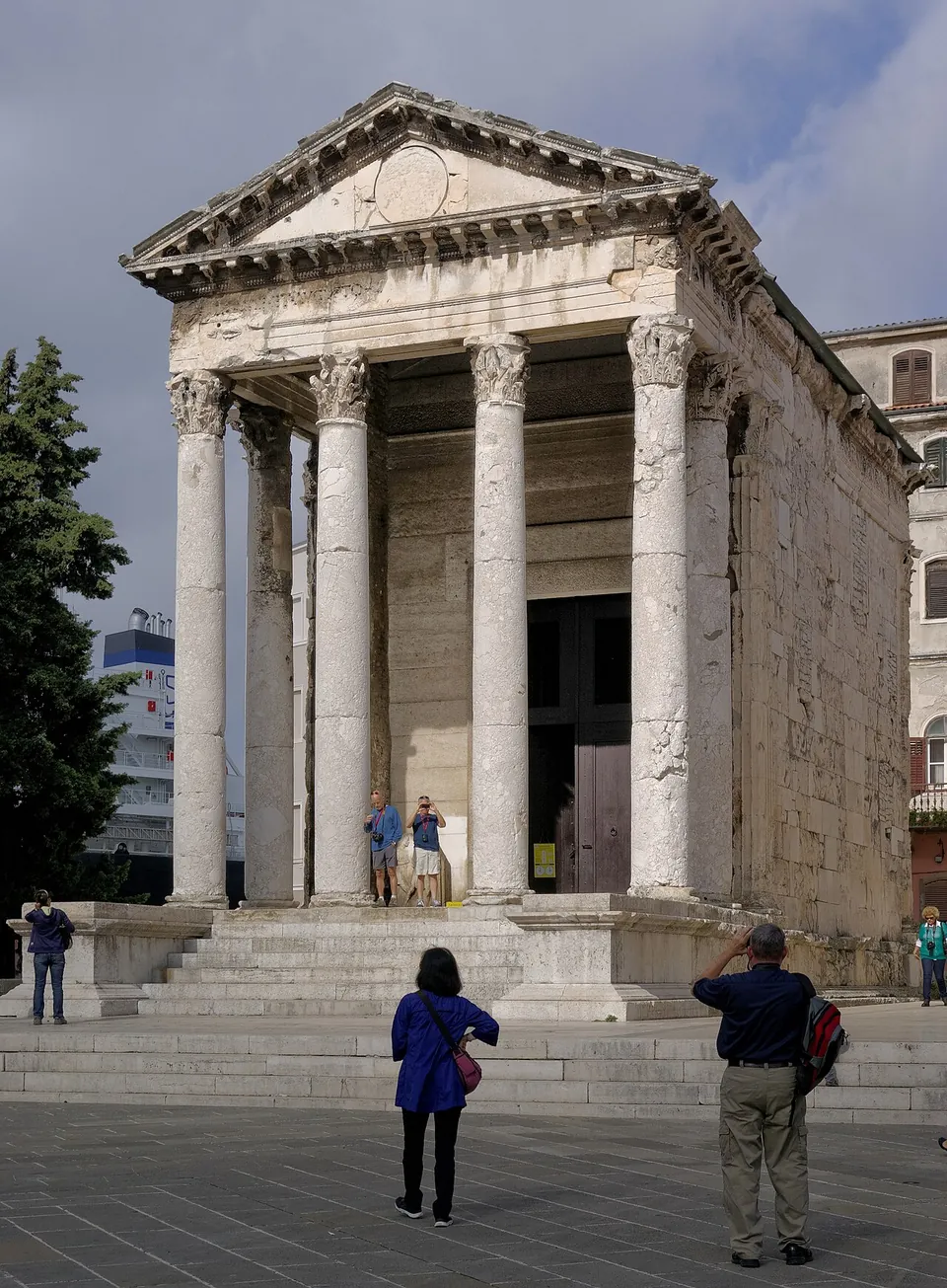
Photo: Berthold Werner · CC BY-SA 3.0 · Commons
44 km · temple · Istria County
Temple of Augustus
The temple is about 13 m high, 8.5 m wide and 17.65 m long: a closed shrine behind a porch of six Corinthian columns, four of them across the front.
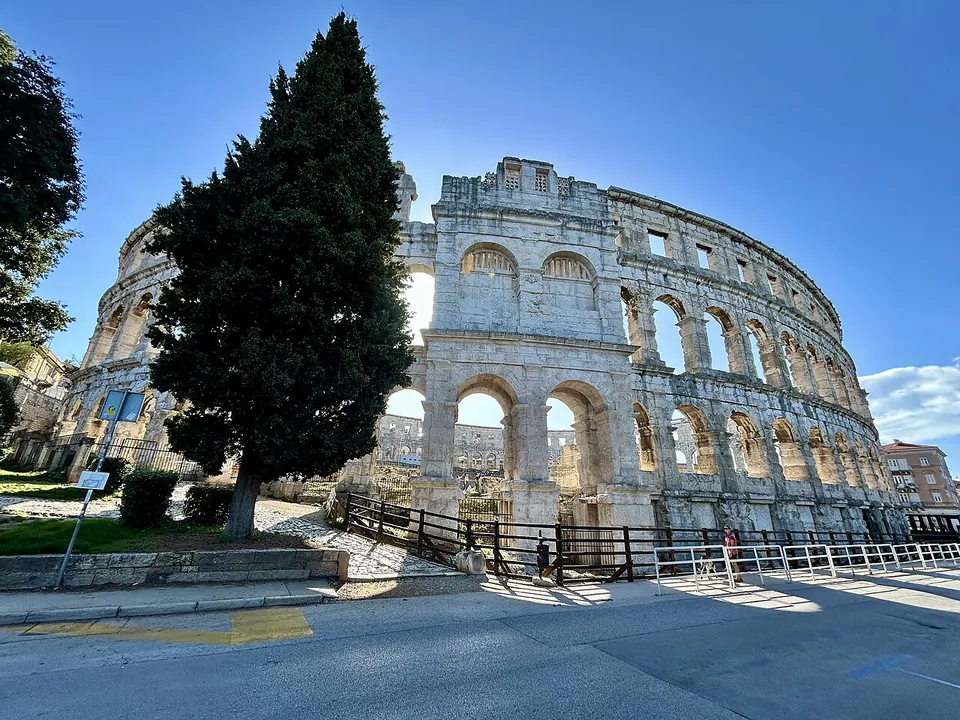
Photo: Olgierd Rudak · CC BY-SA 4.0 · Commons
44 km · amphitheatre · Istria County
Pula Arena
The oval measures about 132 by 105 m, and the wall rises to 32.45 m at its highest (the operator; en.wikipedia).
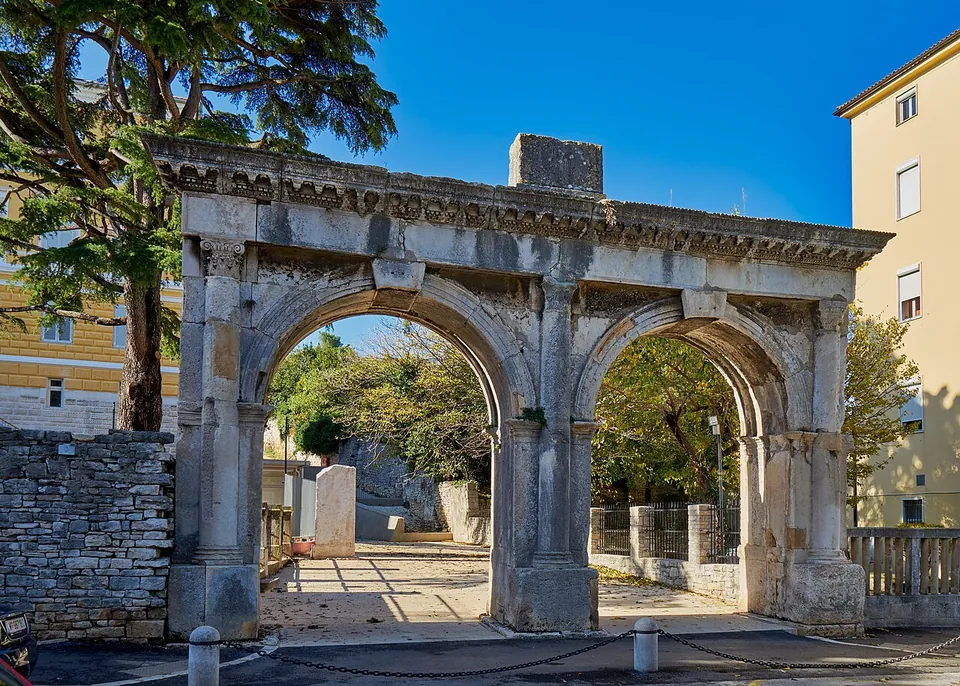
Photo: Georg Karl Ell · CC BY-SA 4.0 · Commons
44 km · city · Istria County
Pola – Pula
The stops each have their own page: the Pula Arena, the amphitheatre; the Temple of Augustus on the forum; the Arch of the Sergii at the end of the main street; and the Small Roman Theatre on the slope of the central hill.

.jpg)

Straight-line distances.
Sources
Every fact on this page comes from the records below, each used under the licence noted.
| Source | Licence |
|---|---|
| Pleiades 467551058 | CC BY |
| Wikidata Q645105 | CC0 |
| OpenStreetMap node/9020746235 | ODbL |
| Wikipedia (en) — Euphrasian Basilica | CC BY-SA 4.0 |
| Župa Poreč — Eufrazijeva bazilika (the parish's history of the basilica) | licence not recorded |
| Poreč tourist board — Eufrazijeva bazilika (hours) | licence not recorded |
| Istria tourist board — Eufrazijeva bazilika (hours and prices) | licence not recorded |