Country · 5 sites
Roman Albania
Rome met Albania’s coast as a land of Greek colonies and Illyrian cities. Epidamnos, later Dyrrachium, today’s Durrës, was founded by colonists from Corinth and Corcyra around 627 BC and Apollonia near Fier around 600 BC; inland, Illyrian peoples such as the Bylliones built walled hilltop towns, and in the south the Chaonians of Epirus had their capital at Phoenice and their port at Butrint. Rome took Dyrrachium and Apollonia in 229 BC, and in 148 BC Apollonia became part of the province of Macedonia; in late antiquity the region was divided among Epirus Nova, Old Epirus and Praevalitana.
Under Rome these towns took on a Roman life. Dyrrachium was the landing point for travellers from Brindisi and the start of the Via Egnatia, and its amphitheatre, which English Wikipedia calls the largest ever built in the Balkans, still stands in the city centre. Caesar and Augustus planned a veterans’ colony at Butrint, and Byllis became a colony in 30 BC; the young Augustus was studying at Apollonia when Caesar was murdered. Many of these cities survived as bishoprics into the 6th century, which is why their basilicas and baptisteries, with mosaic floors, stand beside Greek theatres and Roman baths.
This page lists the sites we have documented so far. Official visiting information for Albanian sites is hard to confirm, and each page says where hours and prices could not be checked.
Sources: Wikipedia (en) — Butrint; Wikipedia (en) — Apollonia (Illyria); Wikipedia (en) — Epidamnos; Wikipedia (en) — Byllis; Wikipedia (en) — Praevalitana
Landmarks
LandmarkWorth planning a trip around.
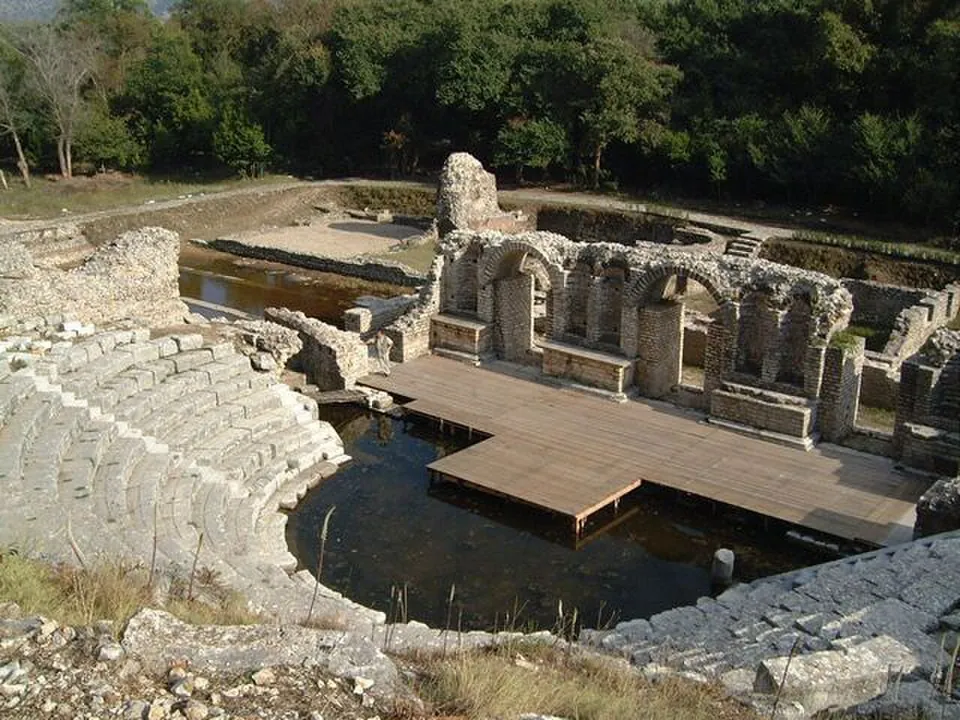
Photo: Marc Morell · CC BY-SA 3.0 · Commons
city · Vlorë County
1. Butrint
The city spreads across the peninsula below the acropolis hill; the site museum is housed in the Venetian castle on the acropolis (en.wikipedia, Archaeological Museum).
1st c. BC – 6th c. ADTicketed1st c. BC – 6th c. ADTicketed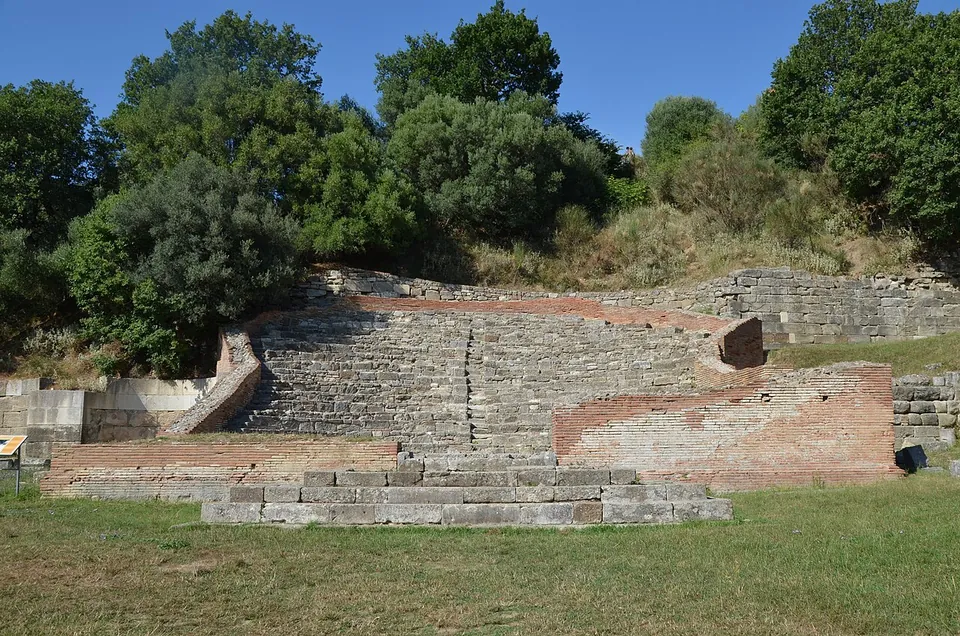
Photo: Carole Raddato · CC BY-SA 2.0 · Commons
3rd c. BC – 4th c. ADTicketed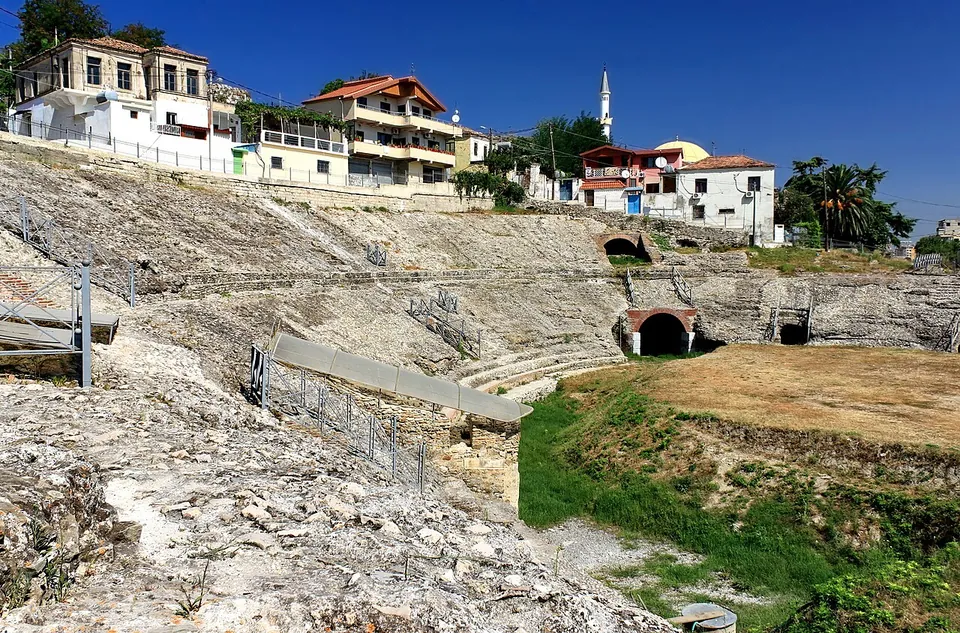
Photo: Marcin Konsek · CC BY-SA 3.0 · Commons
amphitheatre · Durrës County
3. Epidamnos
Built on a hillside in the early 2nd century under Trajan, the amphitheatre is an ellipse of about 132 by 113 m, with an arena of about 61 by 42 m; it once held up to 20,000 spectators.
3rd c. BC – 6th c. ADUnknown3rd c. BC – 6th c. ADUnknown
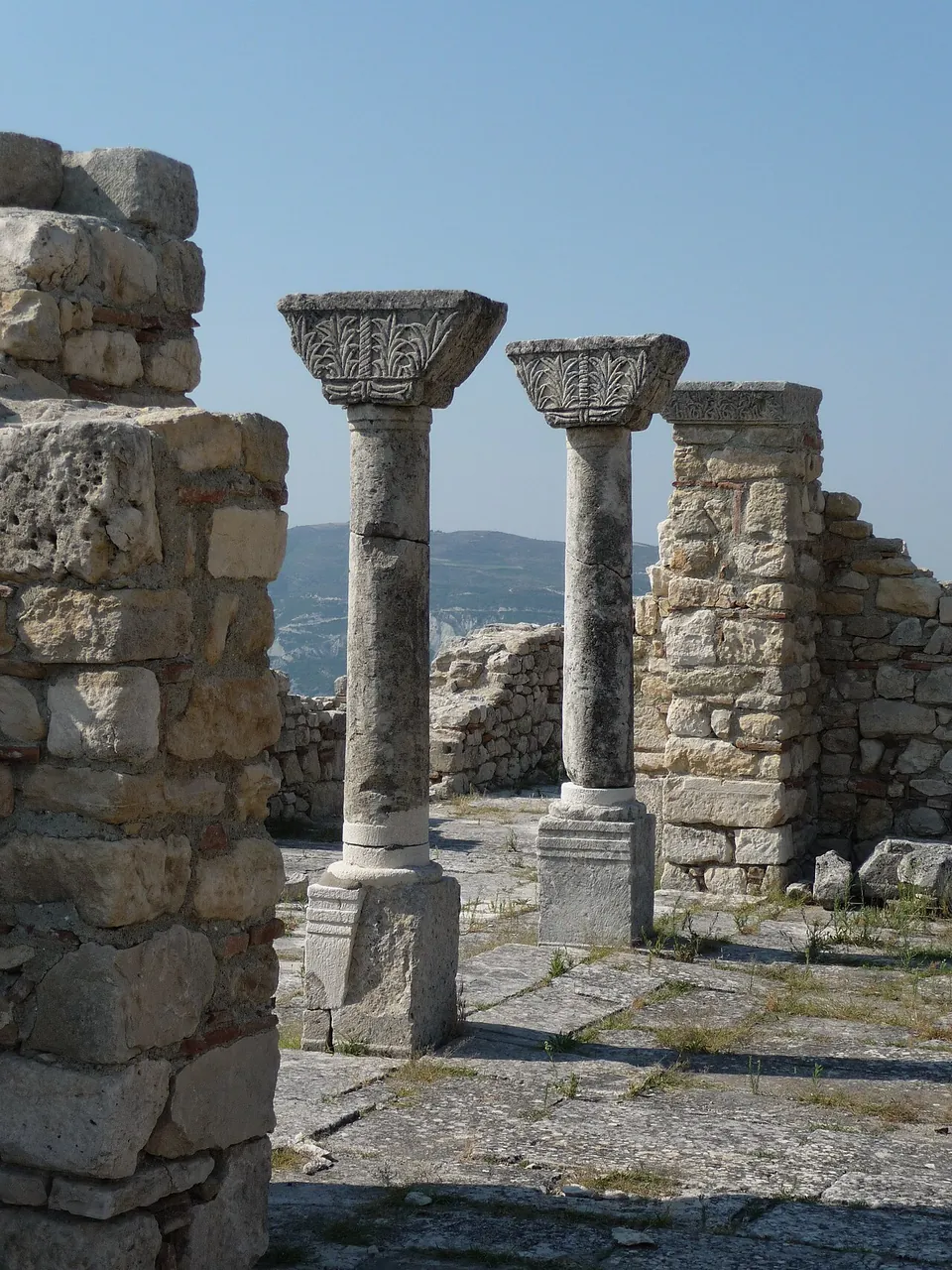


Photo: Marcin Konsek · CC BY-SA 3.0 · Commons
amphitheatre · Durrës County
Epidamnos
Built on a hillside in the early 2nd century under Trajan, the amphitheatre is an ellipse of about 132 by 113 m, with an arena of about 61 by 42 m; it once held up to 20,000 spectators.
Photo: Carole Raddato · CC BY-SA 2.0 · Commons
city · Fier County
Byllis
The walls of about 350 BC run for 2.25 km and enclosed some 30 hectares round the hill; inscriptions record their rebuilding by the engineer Victorinus on the orders of Justinian.
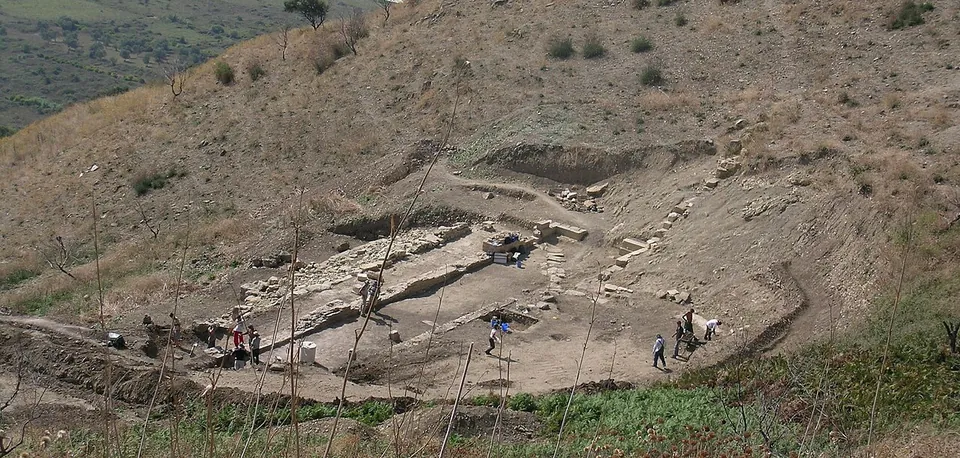
Photo: Giuseppe Lepore · CC BY-SA 3.0 · Commons
Photo: Marc Morell · CC BY-SA 3.0 · Commons
city · Vlorë County
Butrint
The city spreads across the peninsula below the acropolis hill; the site museum is housed in the Venetian castle on the acropolis (en.wikipedia, Archaeological Museum).
Numbers match the list. H marks a hub. Select a marker for a summary. Static map, generated at build time; the interactive map is one click away.