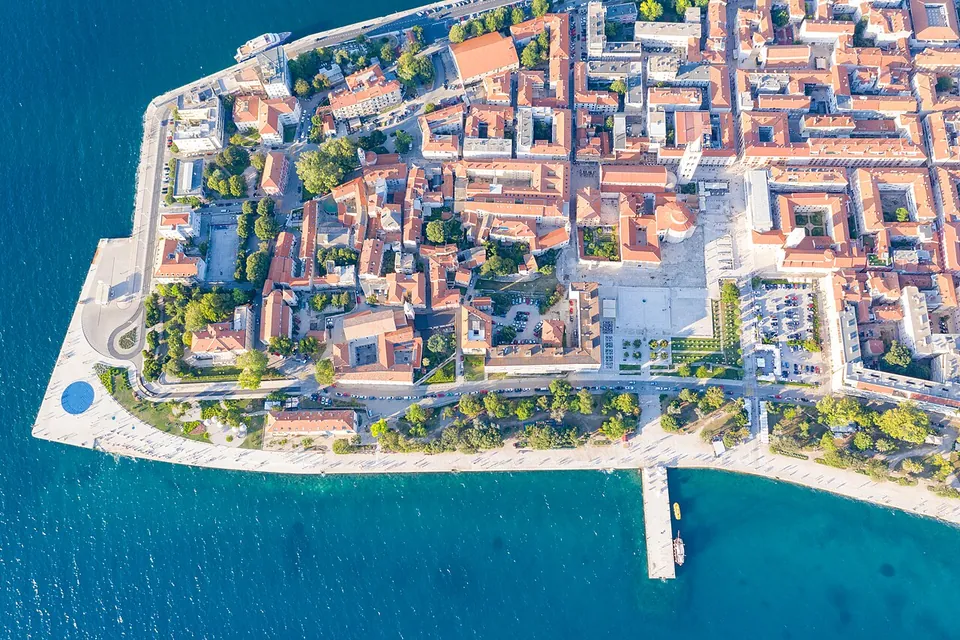
Zadar grew from the Liburnian settlement of Iader into a Roman colony under Julius Caesar, and the old town
on the peninsula took its urban structure in Roman times. Most of its Roman stone went into the later
fortifications, so what you see today is concentrated in one place: the forum.
What is there today
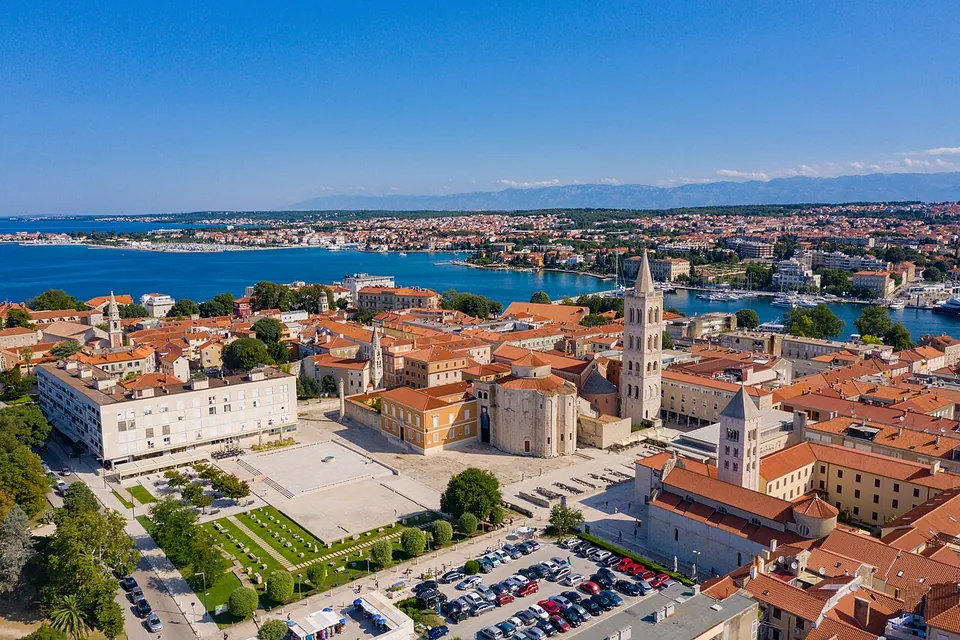
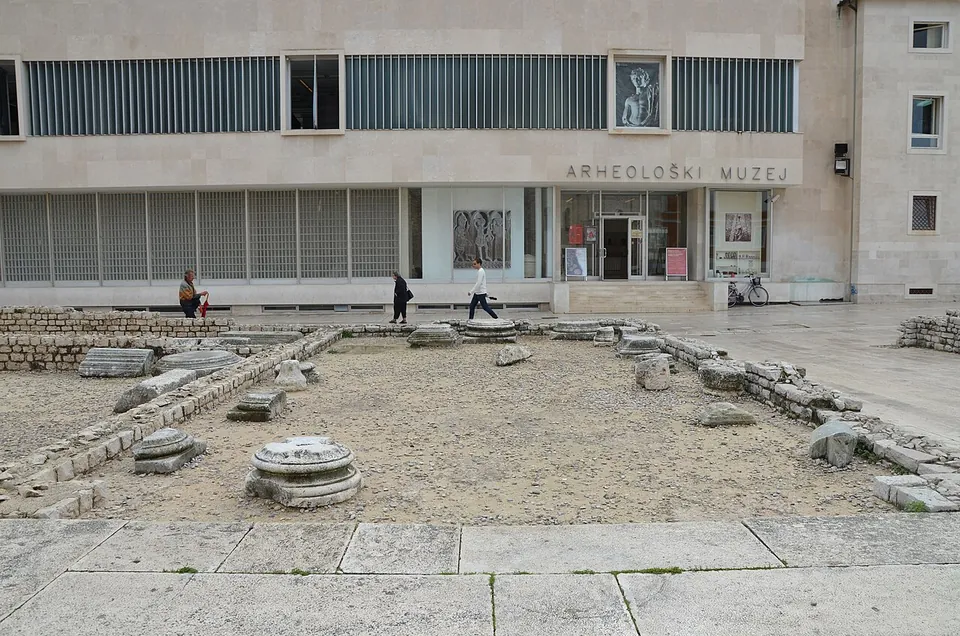
The one stop with its own page is the Roman Forum, an open square of Roman paving, foundations and carved
blocks beside the church of St Donatus. Beyond it, Roman Iader shows in the grid of the old town’s streets and in
fragments: two squares have tall marble columns, a Roman tower stands on the eastern side of the town, the Sea
Gate (Porta Marina) incorporates part of a Roman arch, and remains of the aqueduct can be seen outside the ramparts
(en.wikipedia). The Archaeological Museum Zadar stands on the forum.
History
Iader was a settlement of the Liburnians, a seafaring Illyrian people, from the 9th century BC. It became a Roman
municipium in 59 BC, when Illyricum was assigned to Julius Caesar, and in 48 BC Caesar rewarded its support in the
civil war by making it a colony, Colonia Iulia Iader, where veterans were settled (en.wikipedia; Pleiades). The town
was fortified under Caesar and Augustus and laid out with a regular street grid, a forum, baths and a 40 km aqueduct
from Lake Vrana (en.wikipedia; hr.wikipedia). It had a bishop by the end of the 3rd century, and after 476 it became
the capital of Byzantine Dalmatia (en.wikipedia).
.jpg)
.jpg)
.jpg)
.jpg)