Skip to content
Menu

Albania · Bosnia & Herzegovina · Croatia · Montenegro · Serbia · Slovenia

Roman sites you can actually visit.

The Roman remains between the Alps, the Adriatic and the Danube: what is left standing, how to reach it, and whether it is worth the detour. Every entry cites its sources.

Slovenia
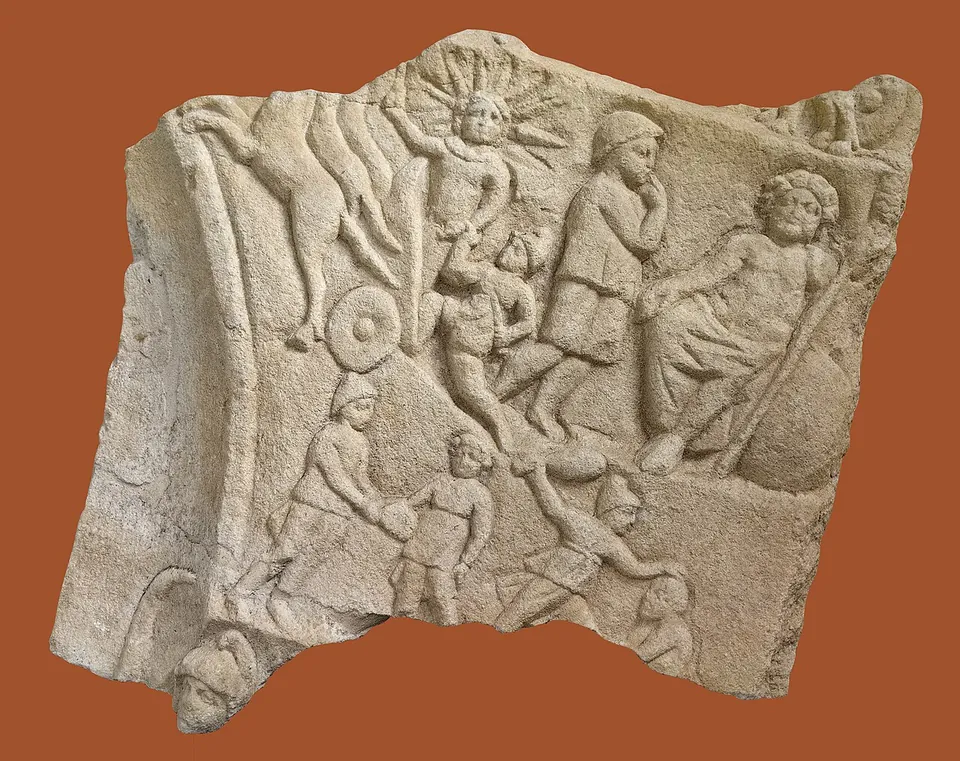
A broken stone slab carved in crowded relief with small figures — a radiate head, a figure with a round shield, standing and reclining figures — against a plain reddish-brown background.

Photo: Primož Jakopin · CC BY 4.0 · Commons

temple · Ptuj

Mithraeum III of Ptuj

The foundations of the shrine, under a protective building, with its original fittings: altars, reliefs, cult images and scenes of the Mithras legend (heritage register).

Hidden gem
Open page →
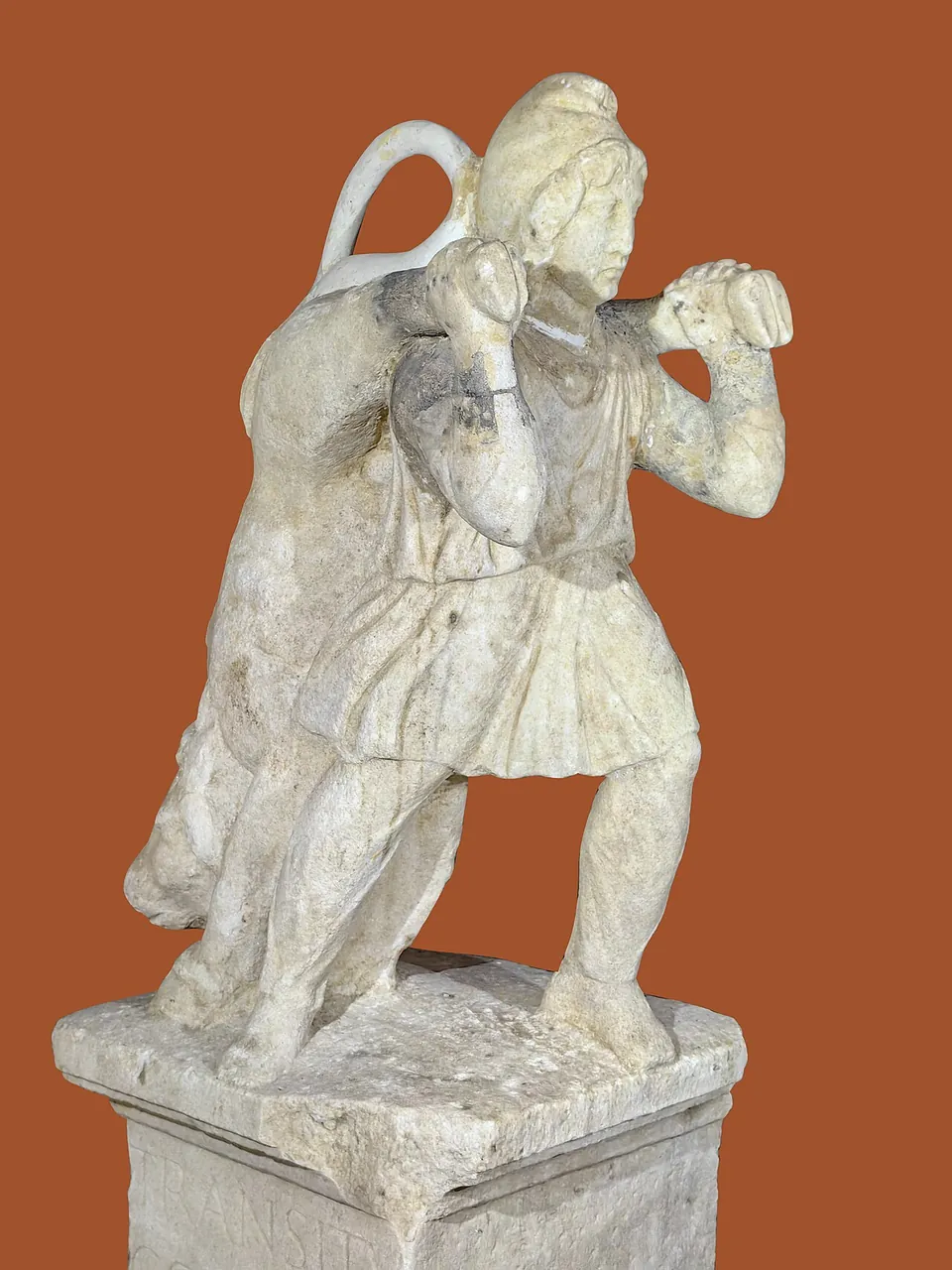
A marble statue of a man in a short tunic and cloak, striding forward, bent under the weight of a bull slung across his shoulders, on a squared base; the background is plain reddish brown.

Photo: Primož Jakopin · CC BY 4.0 · Commons

temple · Hajdina

Mithraeum I of Ptuj

A protective building covers the foundations of the shrine, with its floors and its altars in place — the register lists altars to Mithras and to his torch-bearers Cautes and Cautopates.
Hidden gem
Open page →
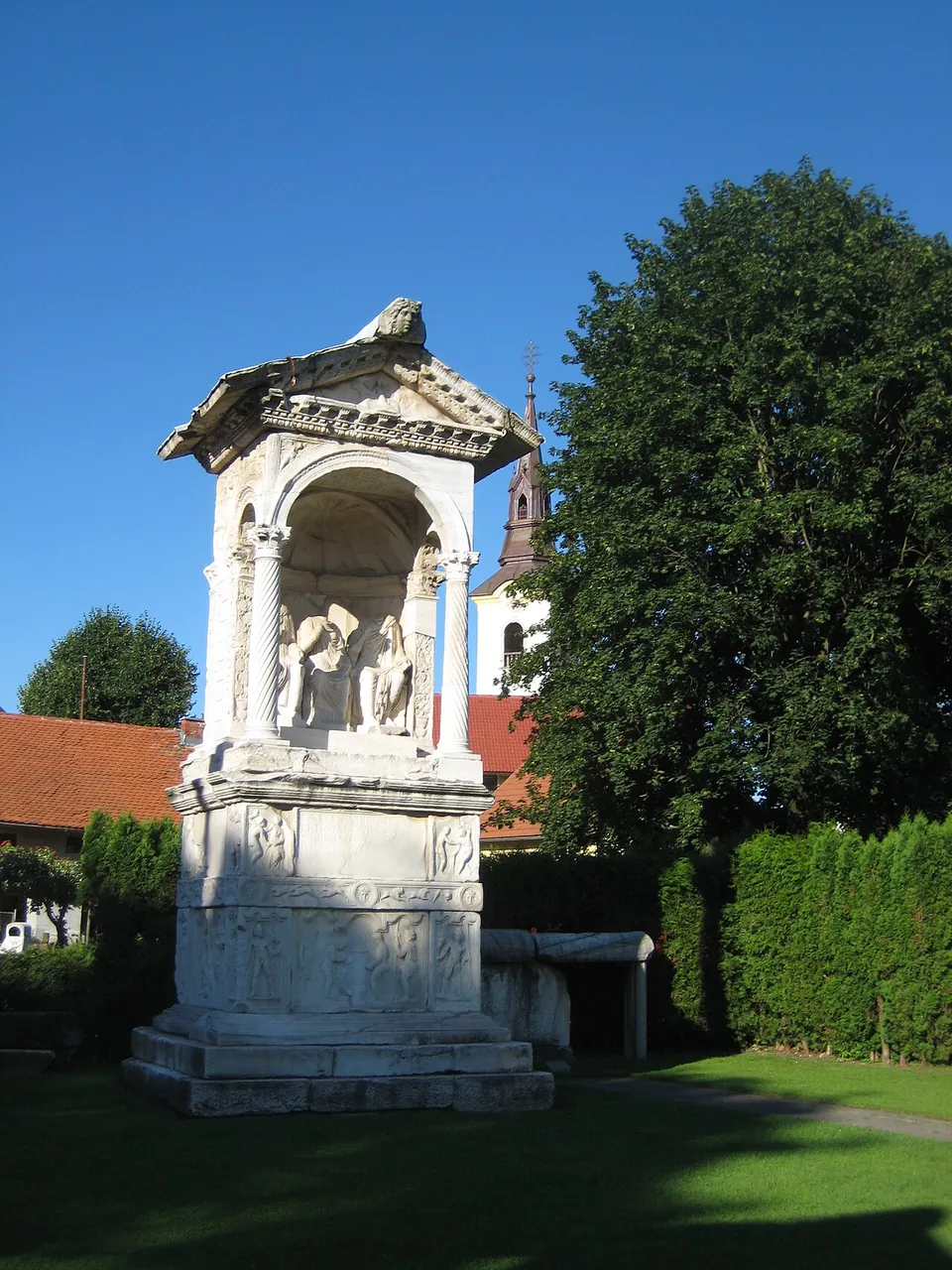
A tall white marble tomb against a blue sky, a pedimented roof on twisted columns sheltering carved figures, standing on a high base whose sides are covered in relief panels.

Photo: Sl-Ziga · Public domain · Commons

necropolis · Žalec

Šempeter Roman Necropolis

An open-air archaeological park, hedged round, south-west of the church of St Peter.

Hidden gem
Open page →
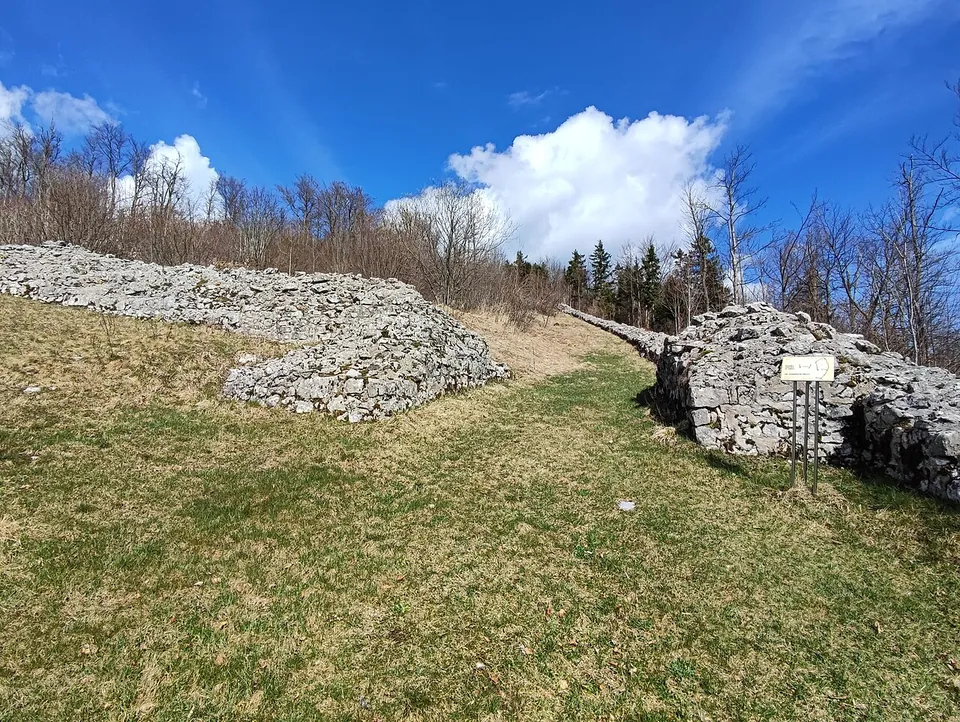
Two banks of piled pale limestone rubble, waist to head high, ending either side of a grassy gap, with a small information sign on a post and bare trees behind.

Photo: Ajznponar · CC0 · Commons

fort · Ajdovščina

Ad Pirum

The fort follows the ground in an irregular oval, 250 m long and up to 75 m wide.

Hidden gem
Open page →
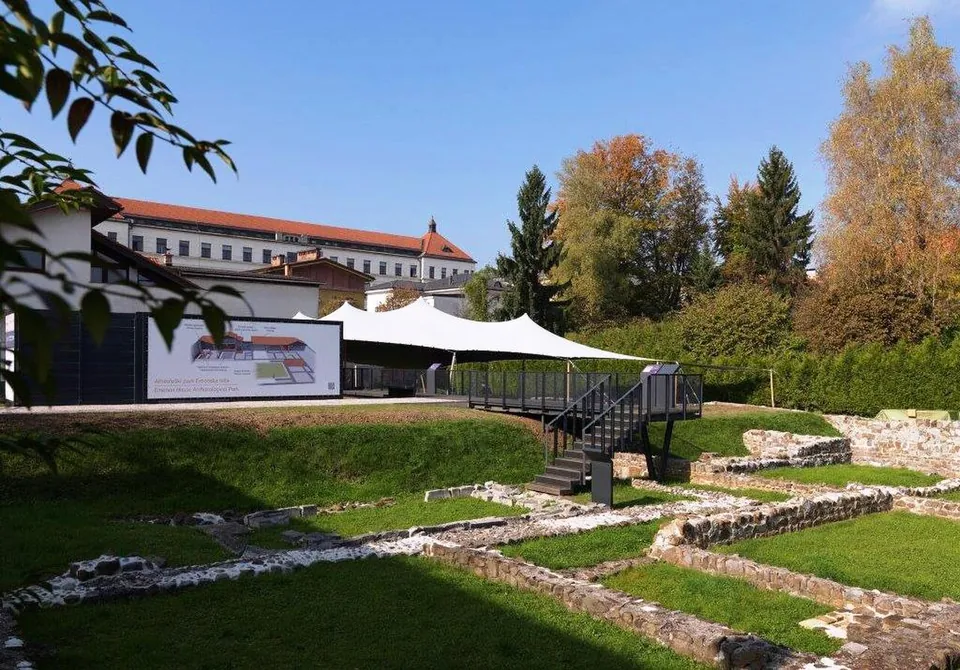
A sunken lawn crossed by low excavated stone walls, with a black metal viewing platform and steps, a white fabric canopy behind it, an illustrated information panel on the left and a large red-roofed building beyond the trees.

Photo: Matevž Paternoster, dokumentacija Muzeja in galerij mesta Ljubljane · CC BY-SA 3.0 · Commons
city · Ljubljana

Emona – Ljubljana

The best of it is in two small archaeological parks run by the city museum (MGML).

Also here

  1. 1Roman Walls in Mirje
Hub · 1 stop
Open page →
LandmarkOther sitesHubSelect a country to browse it, or a marker for a summary.

How to read an entry

Landmark
Worth planning a trip around.
Hidden gem
Remains that most visitors to the region never see.
Hub
A Roman town with several sites close together. One base, a day on foot.
Access
Free · Ticketed · Restricted · Private. Hours and prices come from the operator, and every page says when they were checked.

Roman towns to base yourself in

Where several sites share one modern town, we group them into a hub: one page, one walking route, every stop linked.

A sunken lawn crossed by low excavated stone walls, with a black metal viewing platform and steps, a white fabric canopy behind it, an illustrated information panel on the left and a large red-roofed building beyond the trees.

Photo: Matevž Paternoster, dokumentacija Muzeja in galerij mesta Ljubljane · CC BY-SA 3.0 · Commons

Hub · 1stop

Ljubljana · Slovenia

Emona – Ljubljana

  1. 01Roman Walls in Mirje

≈ 5 min on foot from the centre

Hidden gems

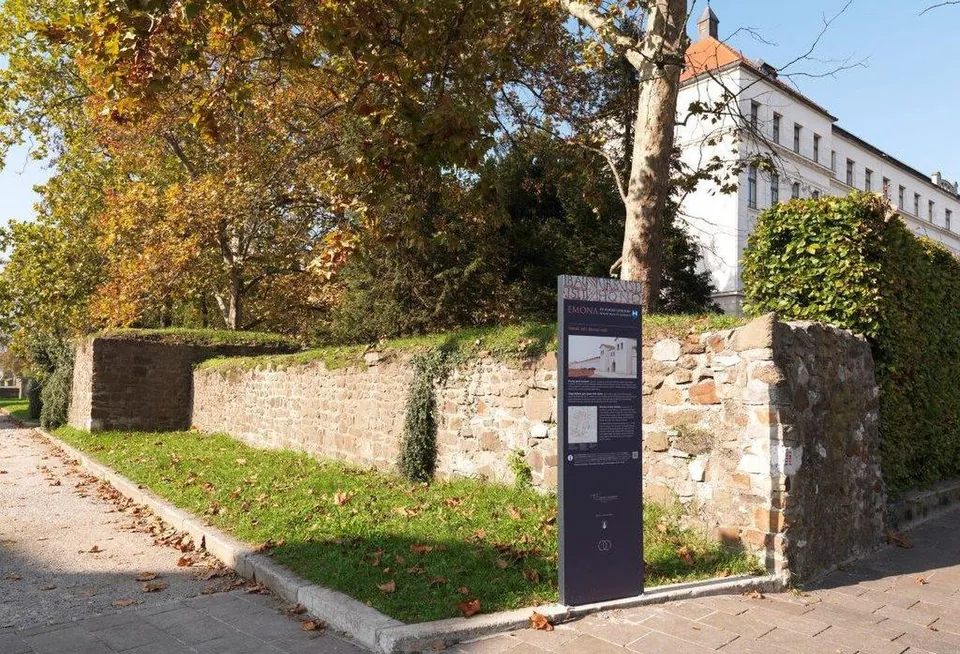
A stretch of rough stone wall capped with turf, with a square tower projecting at its far end, a paved pavement in front and a dark information stele standing against it; autumn trees and a large white building behind.

Photo: Matevž Paternoster, dokumentacija Muzeja in galerij mesta Ljubljane · CC BY-SA 3.0 · Commons

wall · Ljubljana

Roman Walls in Mirje

A long wall of rubble stone, grassed along the top, with square towers projecting from it, runs through a park between Aškerčeva cesta and the street Mirje, from the junction with Barjanska cesta to the junction with Snežniška ulica.

A tall white marble tomb against a blue sky, a pedimented roof on twisted columns sheltering carved figures, standing on a high base whose sides are covered in relief panels.

Photo: Sl-Ziga · Public domain · Commons

necropolis · Žalec

Šempeter Roman Necropolis

An open-air archaeological park, hedged round, south-west of the church of St Peter.

Two banks of piled pale limestone rubble, waist to head high, ending either side of a grassy gap, with a small information sign on a post and bare trees behind.

Photo: Ajznponar · CC0 · Commons

fort · Ajdovščina

Ad Pirum

The fort follows the ground in an irregular oval, 250 m long and up to 75 m wide.

A marble statue of a man in a short tunic and cloak, striding forward, bent under the weight of a bull slung across his shoulders, on a squared base; the background is plain reddish brown.

Photo: Primož Jakopin · CC BY 4.0 · Commons

temple · Hajdina

Mithraeum I of Ptuj

A protective building covers the foundations of the shrine, with its floors and its altars in place — the register lists altars to Mithras and to his torch-bearers Cautes and Cautopates.