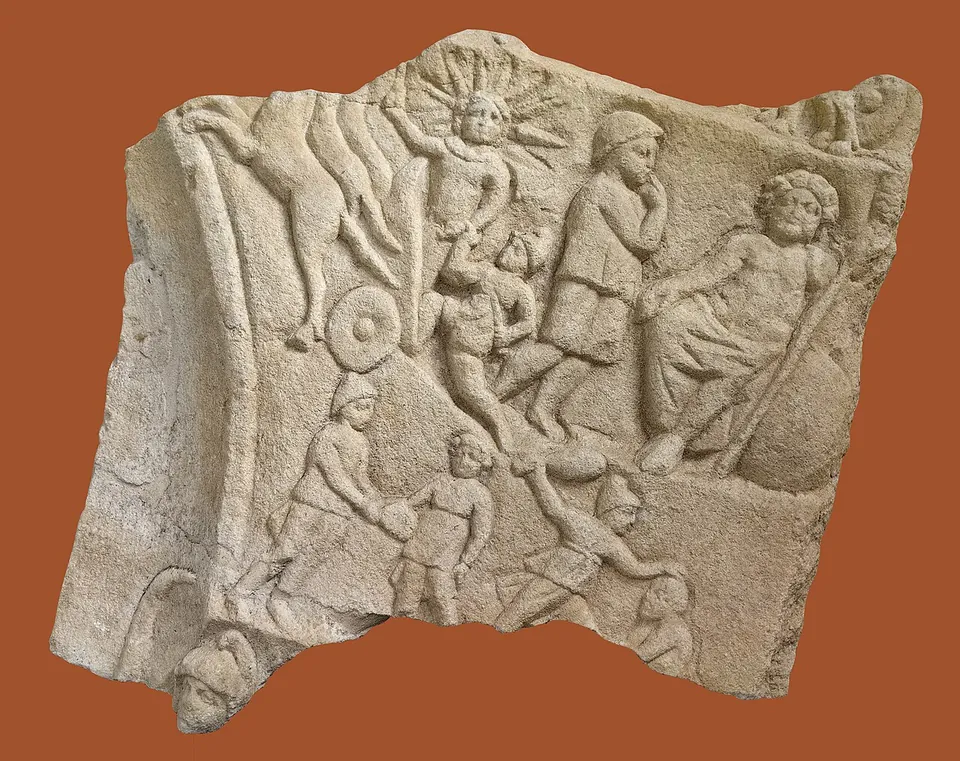
What is there today
The foundations of the shrine, under a protective building, with its original fittings: altars, reliefs, cult images and scenes of the Mithras legend (heritage register). Most of the altars carry dedications by soldiers of two legions, the XIII Gemina and the V Macedonica. The museum has added pieces from elsewhere: a relief dedicated to the “Exalted Nurses”; a bust of the Great Mother, a goddess of fertility; altar slabs from the mithraeum at Modrič on Pohorje; and a relief of Saxanus, patron of stonemasons, from Šmartno na Pohorju (the operator).
Is it worth the trip?
If Mithraeum I has caught your interest, yes; this is the bigger shrine and the more military one, and seeing both shows the cult first outside the town and then within it. On its own it is one shrine, and like Mithraeum I it opens only by appointment, so it suits a visitor who plans ahead rather than one passing through.
Getting there
The shrine is on Zgornji Breg, on the west side of Ptuj, north of Mariborska cesta towards the Studenčnica stream (heritage register; the operator). Bus stops are mapped within a few hundred metres (OpenStreetMap).
Visits are guided and by appointment only: phone the museum’s guide service on +386 2 748 03 60 at least three days ahead; tours run during the opening hours of the museum at Ptuj Castle. Entry is €4 (€3 for pupils and students), and a guided tour for a group is €46 for up to 15 people (Pokrajinski muzej Ptuj–Ormož, read 26 September 2026). If you want to see both shrines, ask for both when you book.
Visiting details
- Opening hours
- By appointment only. Guided visits are arranged with the museum's guide service on +386 2 748 03 60 at least three days ahead, and take place during the opening hours of the museum collections at Ptuj Castle.
- Tickets
- €4 for adults, €3 for pupils and students, free for pre-school children. A guided tour in Slovenian, English or German is €46 for a group of up to 15 people, or €4 a person above that.
Before you go
- The shrine does not open for walk-in visitors; book by phone at least three days ahead.
Hours and prices checked 26 September 2026 on the operator's own site. Confirm before travelling.
History
Poetovio was the seat of the army and of the province’s central customs and tax offices, and five Mithras shrines have been found there so far (the operator). Early mithraea had to stand outside the town limits; only from the middle of the 3rd century could they be built within it (sl.wikipedia). The register places this one in the area of the town’s praetorium. It was found in 1913 on the northern part of the Leskovšek field, in an excavation supervised by the Austrian Archaeological Institute under Mihovil Abramić and Viktor Skrabar, and the protective building was put up in 1914, just before the First World War (sl.wikipedia) by the town’s museum society of the time (the operator).
Nearby
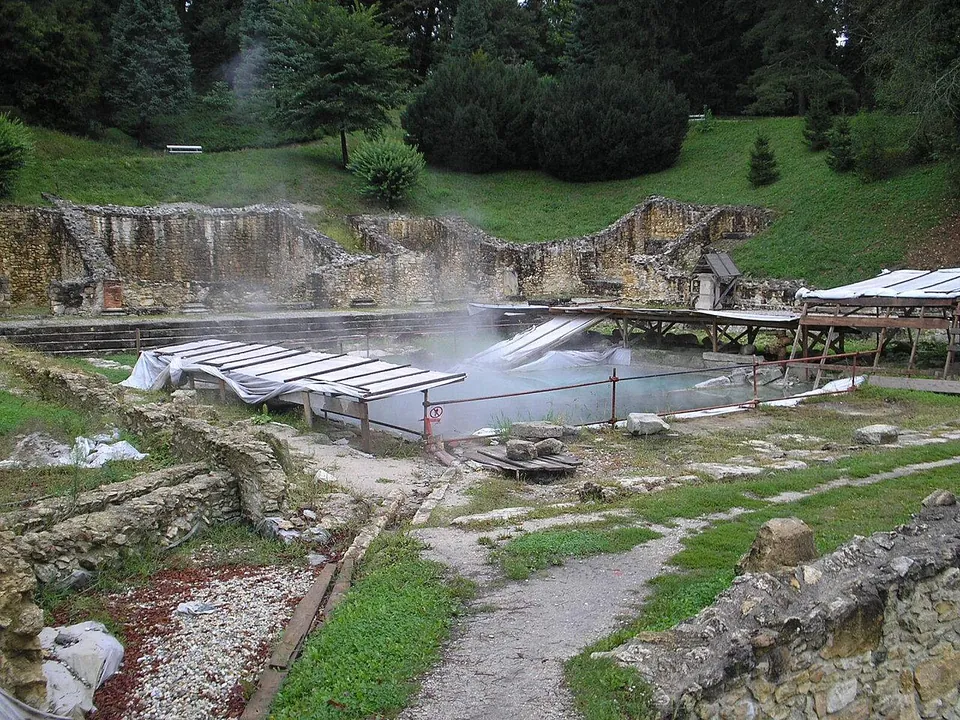
Photo: Fraxinus · CC BY-SA 3.0 · Commons
49 km · bath · Varaždin County
Aquae Iasae
A compact archaeological park covering about 6,000 m² of Roman public buildings of the 1st to 4th centuries.
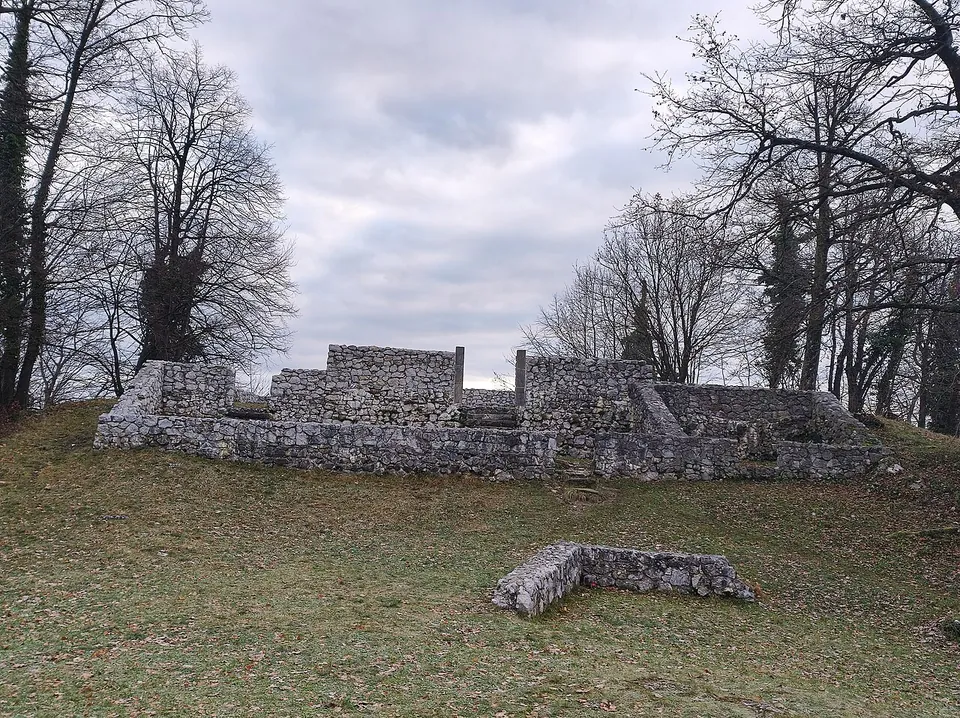


Straight-line distances.
Sources
Every fact on this page comes from the records below, each used under the licence noted.
| Source | Licence |
|---|---|
| Pleiades 594242500 | CC BY |
| Wikidata Q108510029 | CC0 |
| OpenStreetMap node/10868991093 | ODbL |
| Pokrajinski muzej Ptuj–Ormož — III. mitrej (the operator) | licence not recorded |
| Pokrajinski muzej Ptuj–Ormož — opening hours | licence not recorded |
| Pokrajinski muzej Ptuj–Ormož — entrance fees | licence not recorded |
| Register nepremične kulturne dediščine, unit 9269 (Ministrstvo za kulturo RS, CC BY 4.0) | licence not recorded |
| Wikipedia (sl) — Mitraizem (section "Mitreji na Ptuju") | CC BY-SA 4.0 |