What is there today
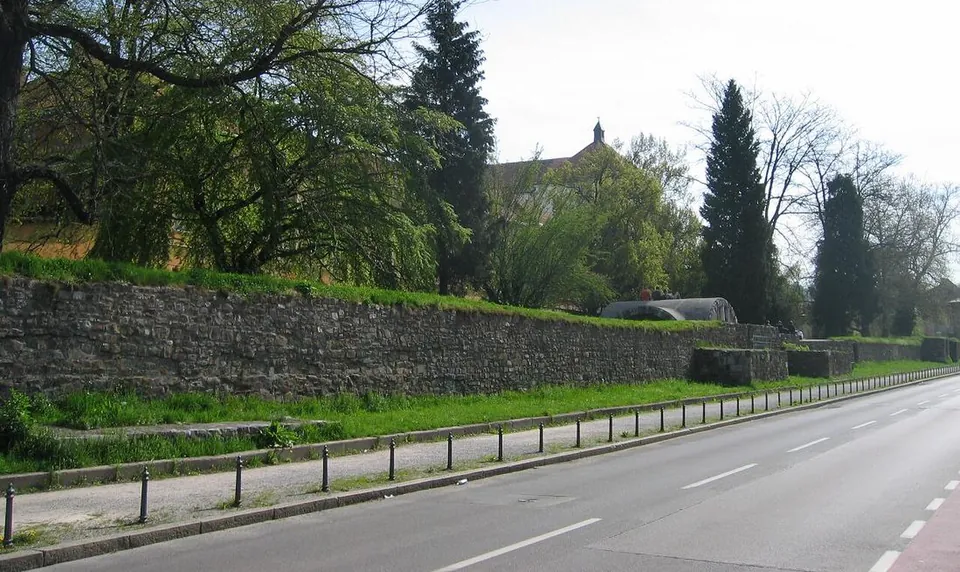
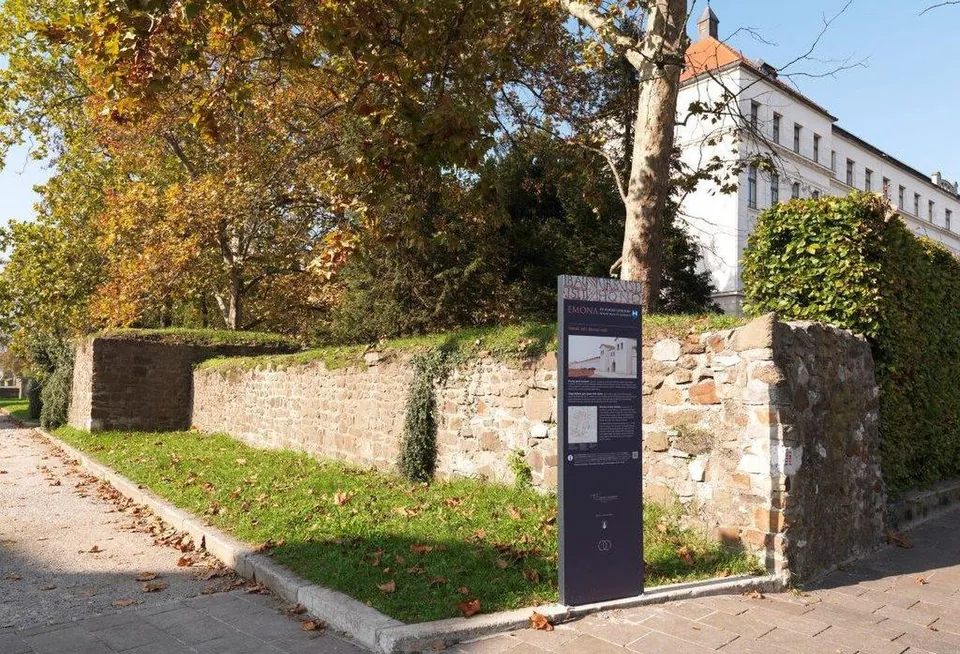
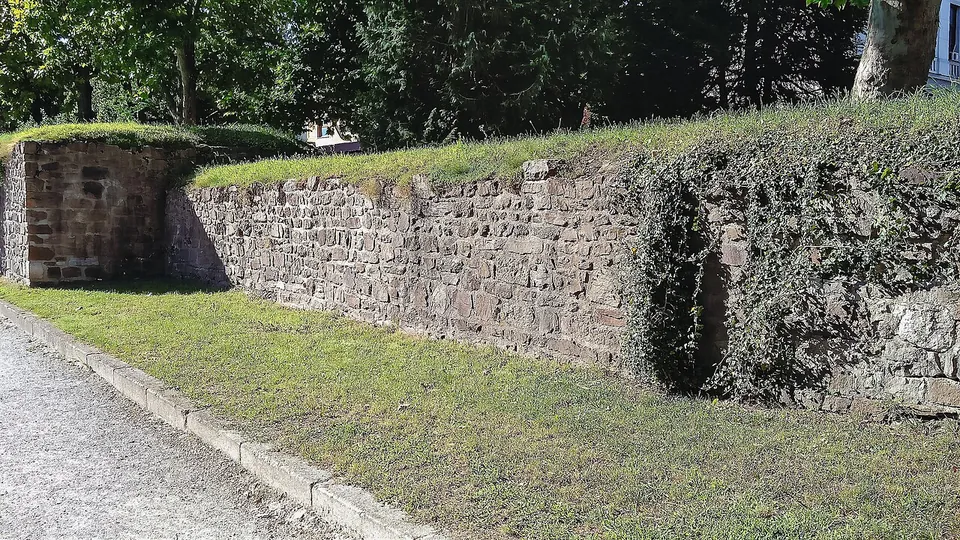
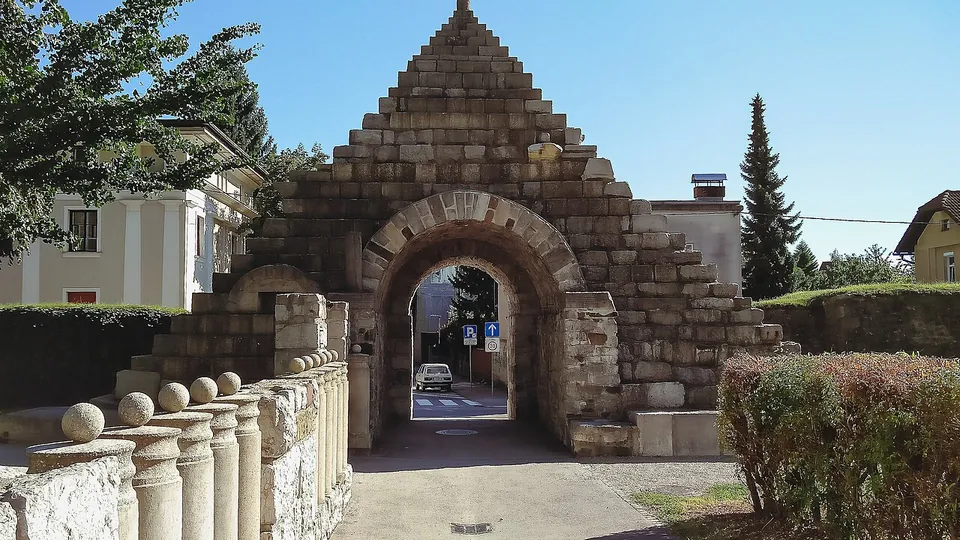
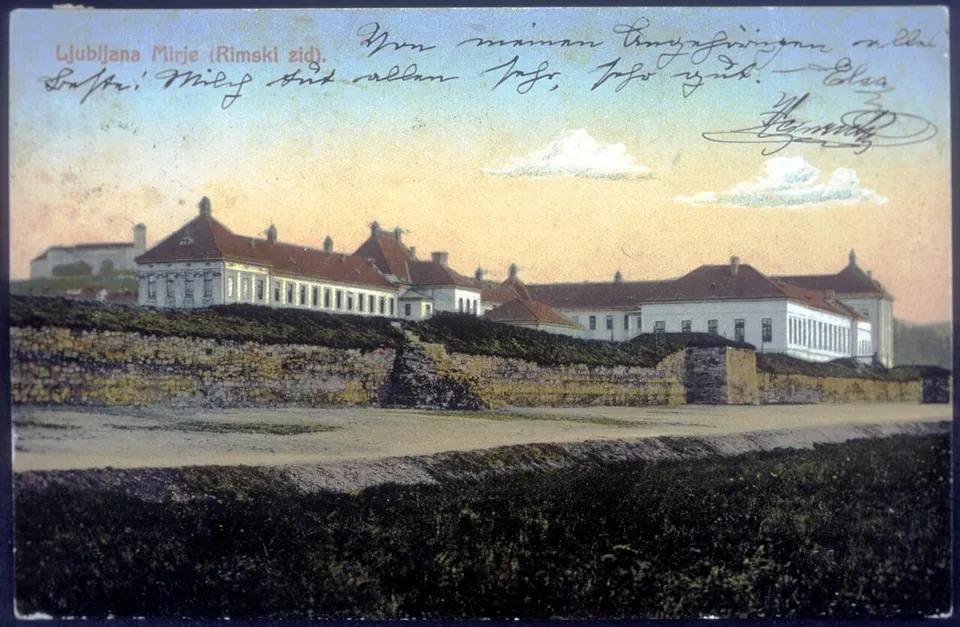
A long wall of rubble stone, grassed along the top, with square towers projecting from it, runs through a park between Aškerčeva cesta and the street Mirje, from the junction with Barjanska cesta to the junction with Snežniška ulica. The Roman masonry was rebuilt to a uniform height in 1913 and protected with turf, and between 1927 and 1956 Plečnik rearranged it: he laid out a lapidarium in the park, cut new passages through the wall and added pieces of classicist architecture to them (Slovenian heritage register). One of those passages is crowned by a stepped stone pyramid. The wall is a monument of national significance and, since 2021, part of the World Heritage Site “The works of Jože Plečnik in Ljubljana” (Wikidata).
Is it worth the trip?
It is worth the walk, not a trip. It is free, open to the street and about 200 m from the Emonan House archaeological park (OpenStreetMap), so it fits into any afternoon in Ljubljana. Go knowing what it is: a Roman wall line with a 20th-century architect’s hand all over it, and it is on the World Heritage list as one of Plečnik’s works, not as a Roman monument. If you want untouched Roman masonry, this is not it.
Getting there
The wall stands in central Ljubljana beside Aškerčeva cesta; the nearest bus stop, Aškerčeva, is about 110 m from it. Only private car parks are mapped nearby, so come on foot (OpenStreetMap). There are no opening hours or tickets. The city museum’s Roman trail includes the wall, and the museum sells the trail map at Gosposka 15 (MGML).
Visiting details
- Tickets
- Free
- Parking
- Only private car parks are mapped nearby (OSM); come on foot or by bus.
- On foot
- At the parking
History
Emona, founded as a walled town by AD 15, had a rectangular plan with a wall, towers and four main gates, and on its northern, western and southern sides a double moat (MGML). This is part of the southern wall. For the rest of the town’s story, see Emona – Ljubljana.
More photographs
Nearby
36 km · fort · Ajdovščina
Ad Pirum
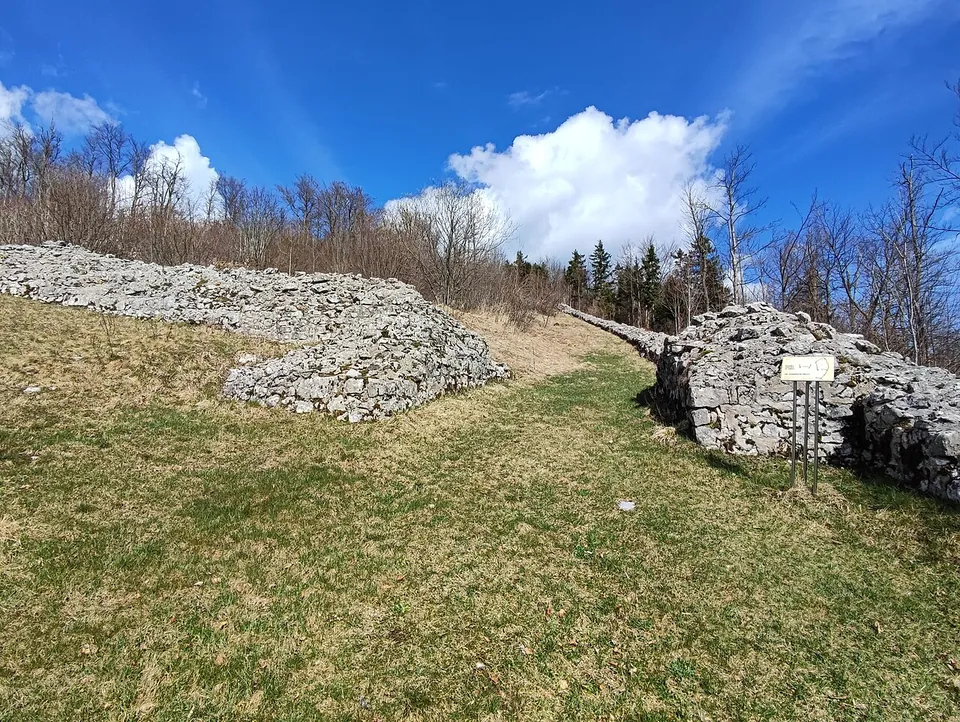
The fort follows the ground in an irregular oval, 250 m long and up to 75 m wide.

.jpg)


.JPG)
,_gate_to_the_northern_section.jpg)
Straight-line distances.
Sources
Every fact on this page comes from the records below, each used under the licence noted.
| Source | Licence |
|---|---|
| Wikidata Q60356947 | CC0 |
| OpenStreetMap way/392678699 | ODbL |
| Register nepremične kulturne dediščine, unit 22658 (Ministrstvo za kulturo RS, CC BY 4.0) | licence not recorded |
| MGML (Museum and Galleries of Ljubljana) — Arheopark Emona, the Roman trail | licence not recorded |
| Wikidata — The works of Jože Plečnik in Ljubljana (Q64494878, World Heritage Site) | licence not recorded |