What is there today
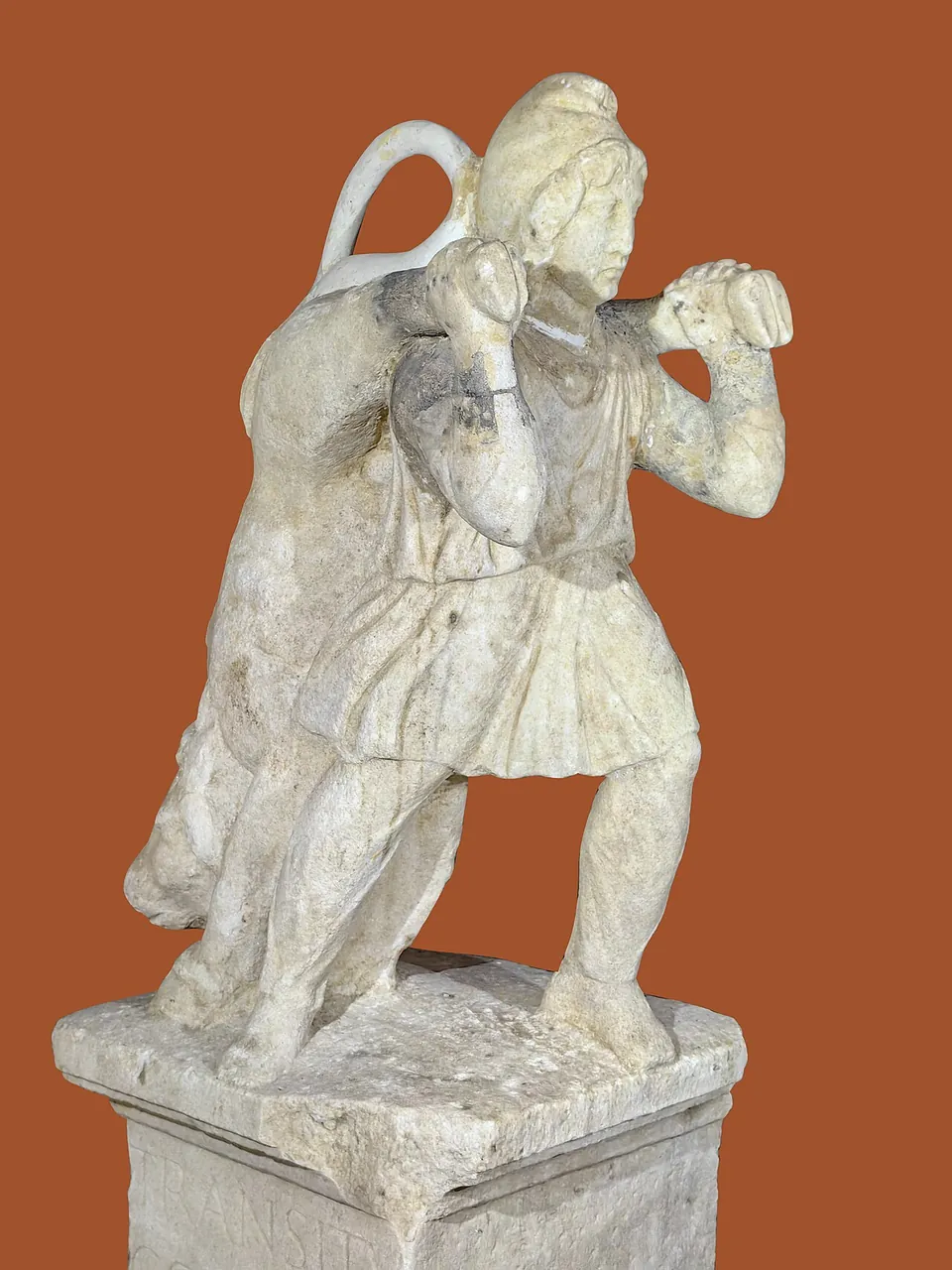
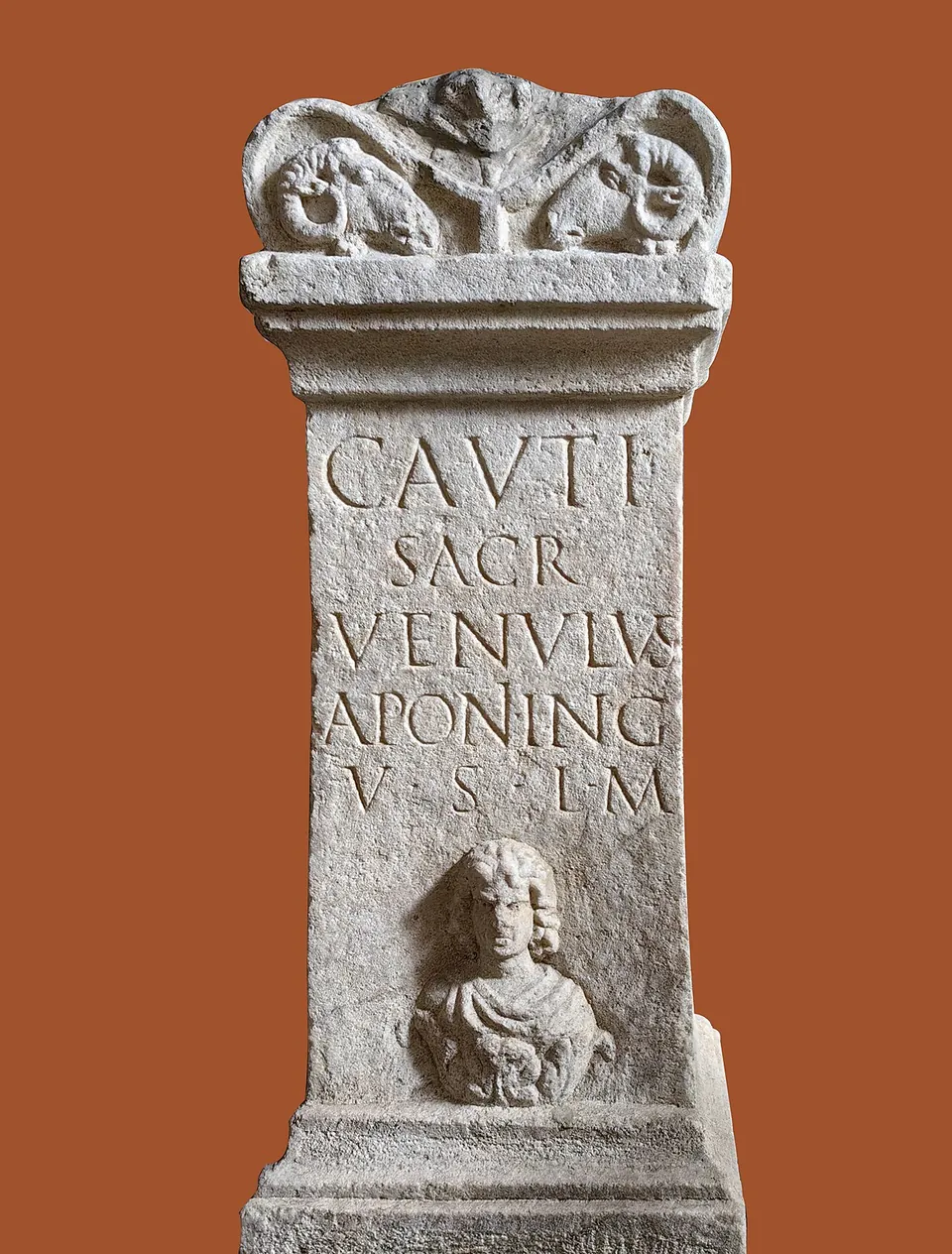
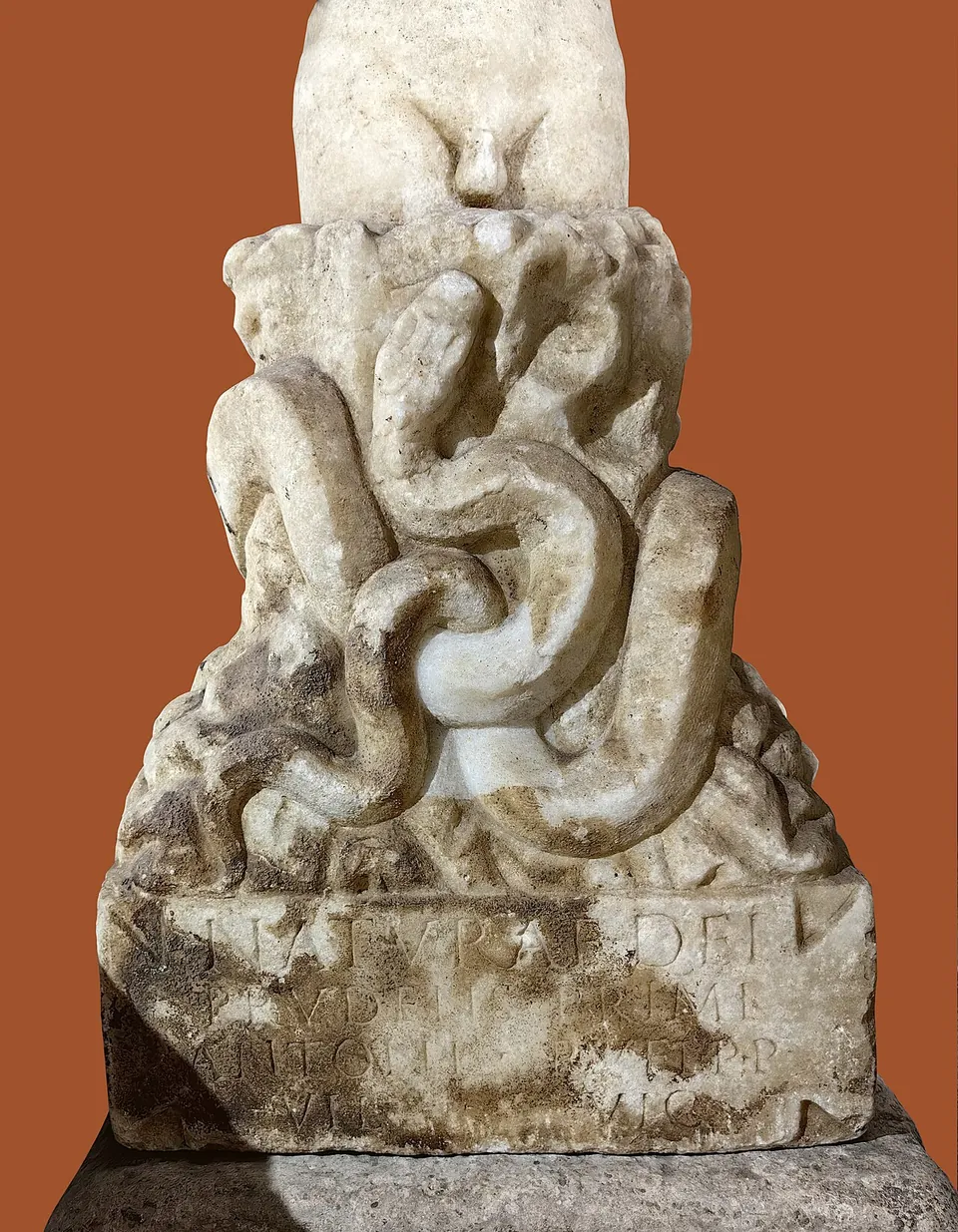
A protective building covers the foundations of the shrine, with its floors and its altars in place — the register lists altars to Mithras and to his torch-bearers Cautes and Cautopates. Inscribed and carved dedications stand along the walls, showing the myths and symbols of Mithras and the grades of initiation his followers passed through. In the sunken central part, one altar carries a statue of Mithras being born from the rock. There is also a column altar with a statue of Mithras carrying the bull, which the museum says is one of only two that survive (the operator; heritage register).
Is it worth the trip?
For anyone curious about Roman religion, yes: you stand inside a real 2nd-century mithraeum with its own sculpture, not a reconstruction or a museum case, and five such shrines have been found at Ptuj — the museum counts the town among the largest centres of the cult in Europe. It is a single shrine, so it is a stop to combine with Ptuj itself rather than a day out. The one real obstacle is that it opens only by appointment, so a spontaneous visit does not work.
Getting there
The shrine is set into the Drava river terrace beside Mariborska cesta, the road between Hajdina and Ptuj (heritage register), about 2.5 km from the centre of Ptuj (OpenStreetMap); a bus stop is about 110 m away (OpenStreetMap).
Visits are guided and by appointment only: phone the museum’s guide service on +386 2 748 03 60 at least three days ahead; tours run during the opening hours of the museum at Ptuj Castle. Entry is €4 (€3 for pupils and students); a guided tour for a group costs €46 for up to 15 people (Pokrajinski muzej Ptuj–Ormož, read 26 September 2026).
Visiting details
- Opening hours
- By appointment only. Guided visits are arranged with the museum's guide service on +386 2 748 03 60 at least three days ahead, and take place during the opening hours of the museum collections at Ptuj Castle.
- Tickets
- €4 for adults, €3 for pupils and students, free for pre-school children. A guided tour in Slovenian, English or German is €46 for a group of up to 15 people, or €4 a person above that.
Before you go
- The shrine does not open for walk-in visitors; book by phone at least three days ahead.
Hours and prices checked 26 September 2026 on the operator's own site. Confirm before travelling.
History
Poetovio was the seat of the army and of the province’s central customs and tax offices, and five Mithras shrines have been found there so far (the operator). In the early period mithraea had to stand outside the town limits, which is why the first, second and fifth are in Hajdina; only from the middle of the 3rd century could they be built in the town itself (sl.wikipedia). This shrine was discovered at the end of the 19th century and excavated from 1898 by Wilhelm Gurlitt, a professor from Graz. Its remains were well preserved and were left in place under a protective building put up in the autumn of 1899; the present building dates from 1910 and was restored in 1999. Mithraeum II was found only 20 m away, and its finds went to the lapidarium of Franz Ferk’s museum (sl.wikipedia).
Nearby
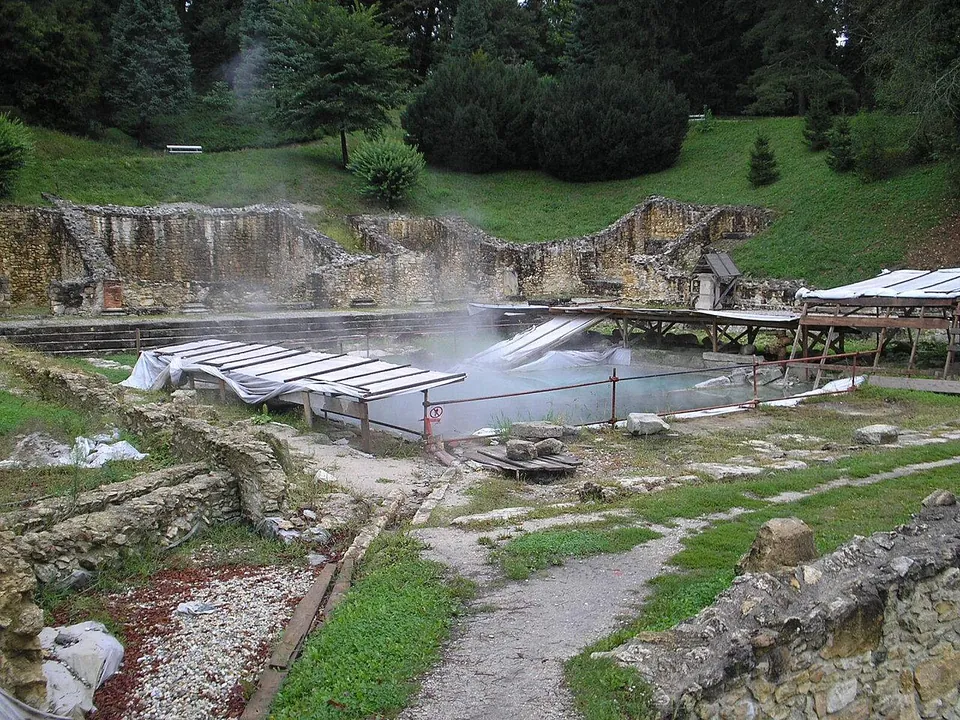
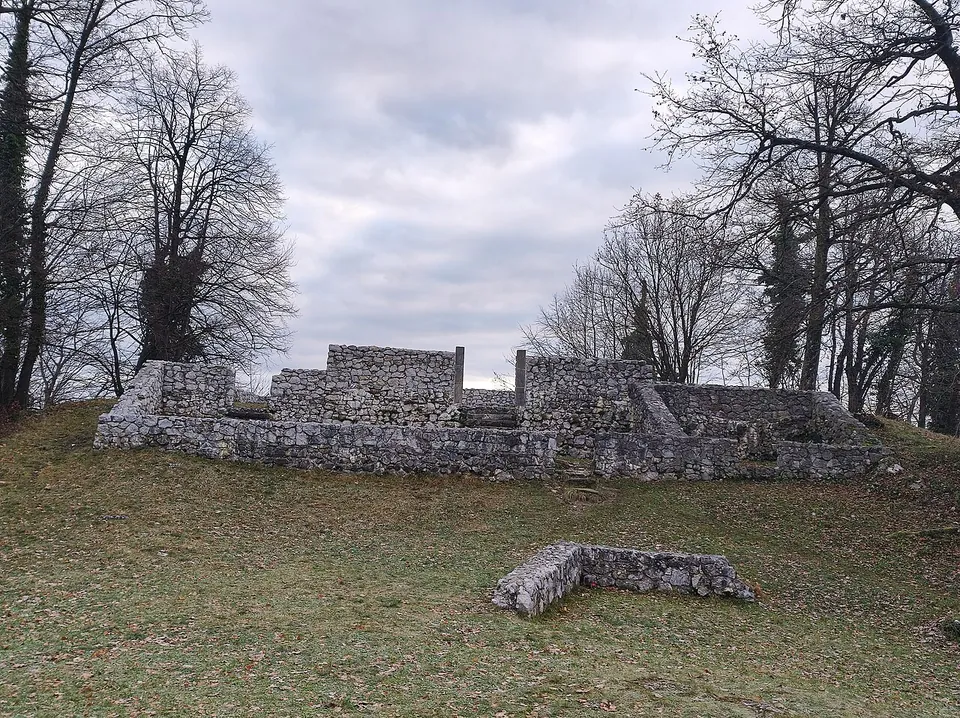
Photo: Fraxinus · CC BY-SA 3.0 · Commons
50 km · bath · Varaždin County
Aquae Iasae
A compact archaeological park covering about 6,000 m² of Roman public buildings of the 1st to 4th centuries.


Straight-line distances.
Sources
Every fact on this page comes from the records below, each used under the licence noted.
| Source | Licence |
|---|---|
| Wikidata Q140421920 | CC0 |
| OpenStreetMap way/1347189035 | ODbL |
| Pokrajinski muzej Ptuj–Ormož — I. mitrej (the operator) | licence not recorded |
| Pokrajinski muzej Ptuj–Ormož — opening hours | licence not recorded |
| Pokrajinski muzej Ptuj–Ormož — entrance fees | licence not recorded |
| Register nepremične kulturne dediščine, unit 9276 (Ministrstvo za kulturo RS, CC BY 4.0) | licence not recorded |
| Wikipedia (sl) — Mitraizem (section "Mitreji na Ptuju") | CC BY-SA 4.0 |
| Wikipedia (sl) — Spodnja Hajdina | CC BY-SA 4.0 |