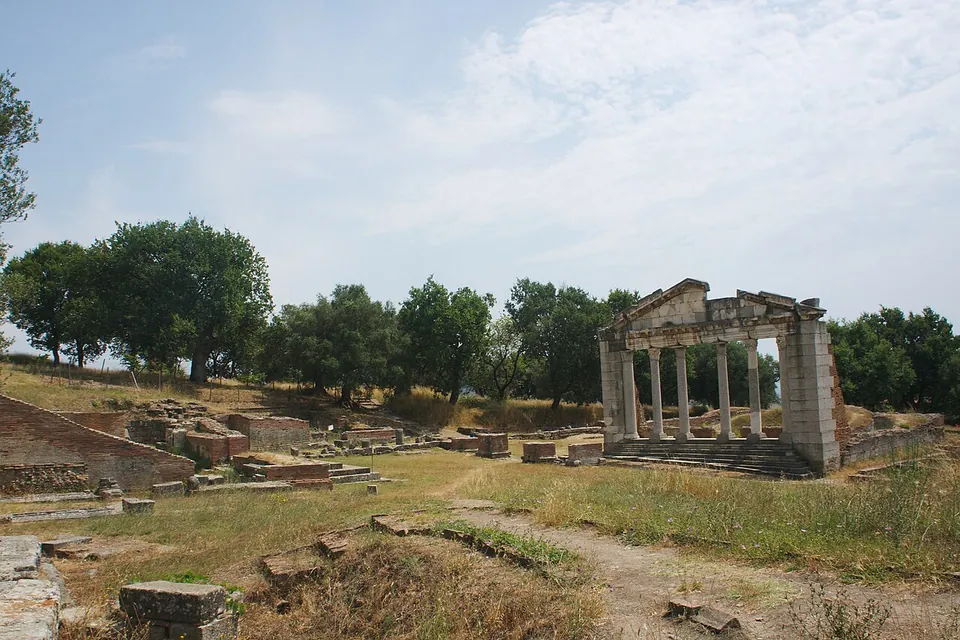
Apollonia was a Greek colony founded around 600 BC near the mouth of the Vjosë that became a flourishing Roman city, famous for its school of philosophy and rhetoric where the young Augustus studied. Its ruins lie near the village of Pojan, not far from Fier, and were declared an archaeological park in 2003.
What is there today
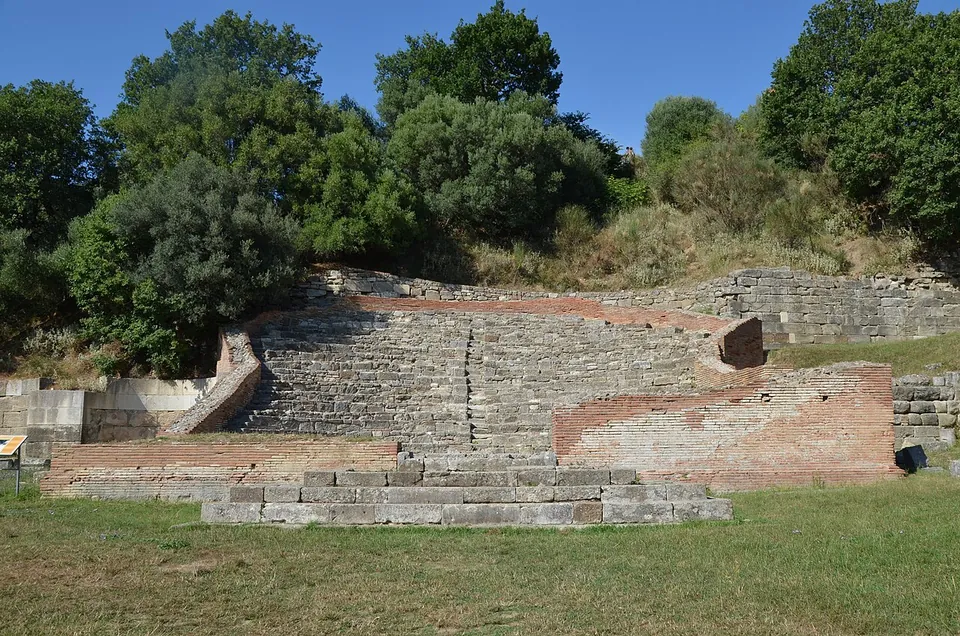
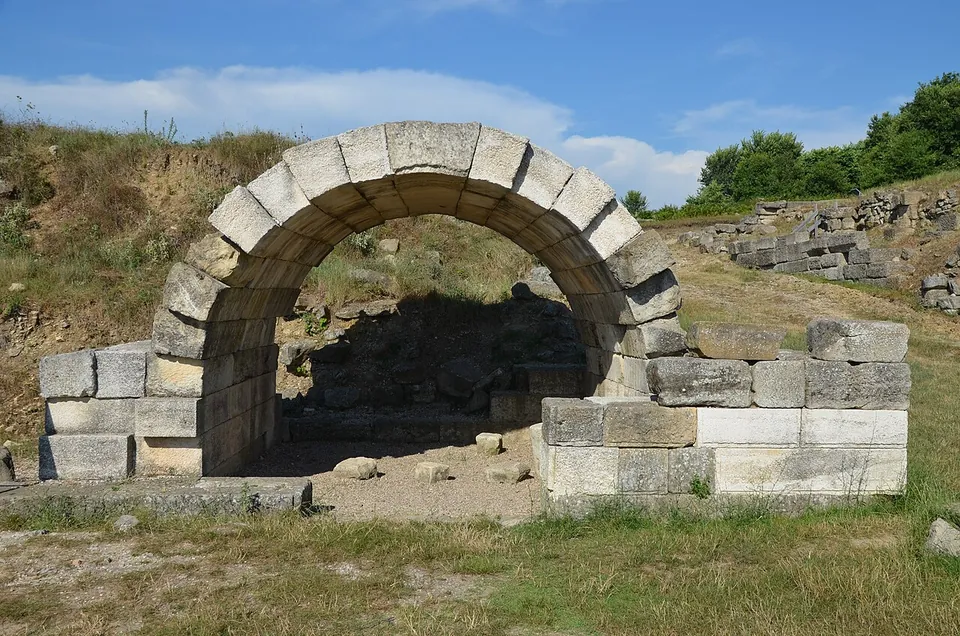
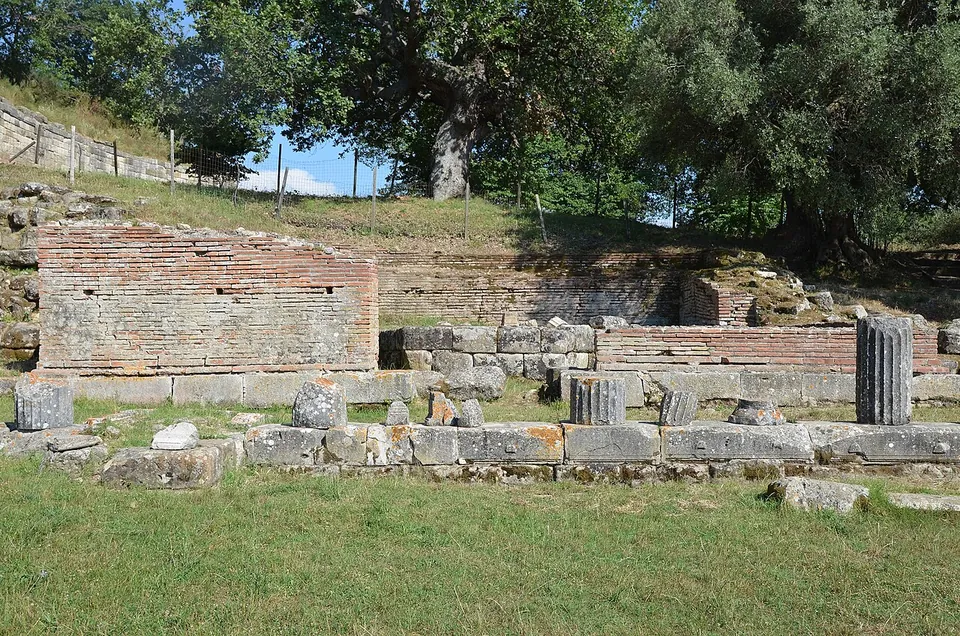
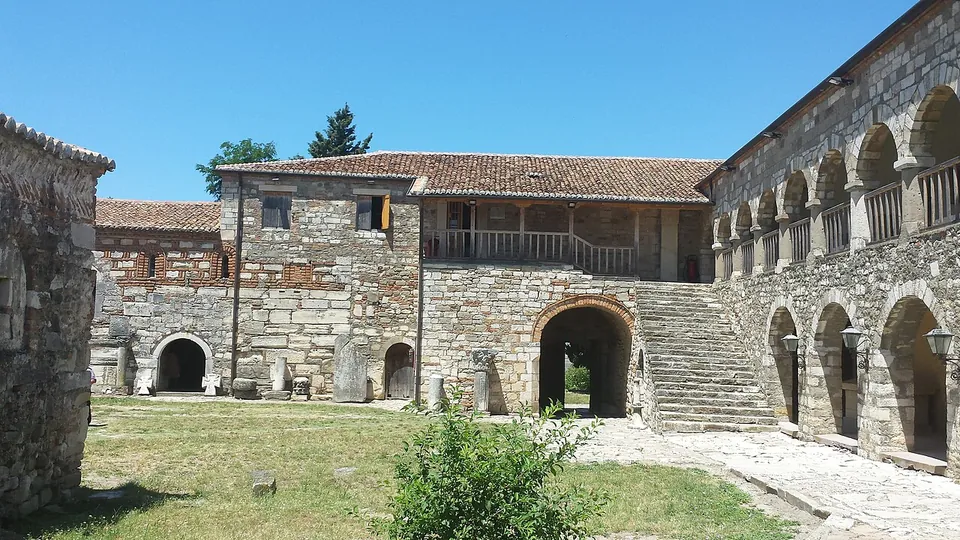
A partly excavated city. Among the Roman buildings are the odeon, built in the 2nd century AD on the north side of the agora for music and cultural events, and a library of the 2nd century built over an earlier Doric portico (the Commons file descriptions). A German-Albanian team has been studying the Hellenistic theatre (en.wikipedia). Finds are shown in a museum in the monastery beside the site; a new museum opened in December 2011 (en.wikipedia). Much of the city remains unexcavated, and the site was badly damaged in 1967 by heavy machinery and the building of about 400 military bunkers (en.wikipedia).
Is it worth the trip?
Yes, if you are travelling through central Albania: it was, in English Wikipedia’s words, perhaps the most important of the ancient towns named Apollonia, and its Roman public buildings and the monastery museum give the visit shape. Go knowing that much of it lies unexcavated or in fragments.
Getting there
Apollonia is near the village of Pojan in Fier County (en.wikipedia); OpenStreetMap puts the centre of Fier about 8 km away. No public transport stop is mapped near the site, so plan on a car. Current opening hours and ticket prices could not be confirmed from an official source; check locally before you go.
Visiting details
- Tickets
- Ticketed
Before you go
- No official source could be read for current opening hours or ticket prices. No public transport stop is mapped near the site (OpenStreetMap), so plan on a car.
History
Some 200 Corinthians under their leader Gylax founded the colony around 600 BC; it was later renamed after Apollo. It came under Roman control in 229 BC, was loyal to Rome, and in 148 BC became part of the province of Macedonia. Octavian, the future Augustus, was studying here in 44 BC when he heard of Caesar’s murder, and Cicero called Apollonia a great and important city. An earthquake in the 3rd century AD changed the course of the Aoös, silted up the harbour and turned the land into a malarial swamp; the city was abandoned in the 4th century, apart from a Christian community whose monastery still stands (en.wikipedia). The ruins were declared an archaeological park in 2003 (en.wikipedia).
More photographs
Nearby
29 km · city · Fier County
Byllis
The walls of about 350 BC run for 2.25 km and enclosed some 30 hectares round the hill; inscriptions record their rebuilding by the engineer Victorinus on the orders of Justinian.


Straight-line distances.
Sources
Every fact on this page comes from the records below, each used under the licence noted.
| Source | Licence |
|---|---|
| Pleiades 481728 | CC BY |
| Wikidata Q505703 | CC0 |
| Vici.org 2109 | CC BY-SA (text), CC0 (metadata) |
| OpenStreetMap way/434991811 | ODbL |
| Wikipedia (en) — Apollonia (Illyria) | CC BY-SA 4.0 |
| Commons — Odeon of Apollonia (file description) | licence not recorded |
| Commons — Ancient Roman library of Apollonia (file description) | licence not recorded |