.JPG)


Epidamnos, the Roman Dyrrachium, was a Greek colony that became Rome’s main port on the Adriatic crossing from Brindisi and the start of the Via Egnatia; it lies under today’s Durrës. Its great surviving monument is a Roman amphitheatre in the middle of the city — the largest ever built in the Balkans, according to English Wikipedia.
What is there today
The amphitheatre
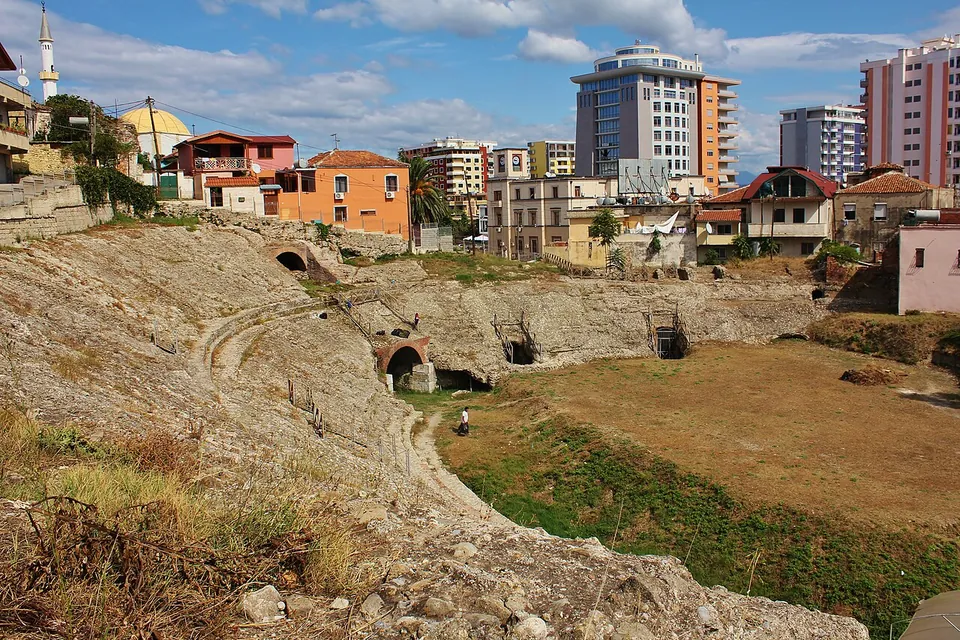
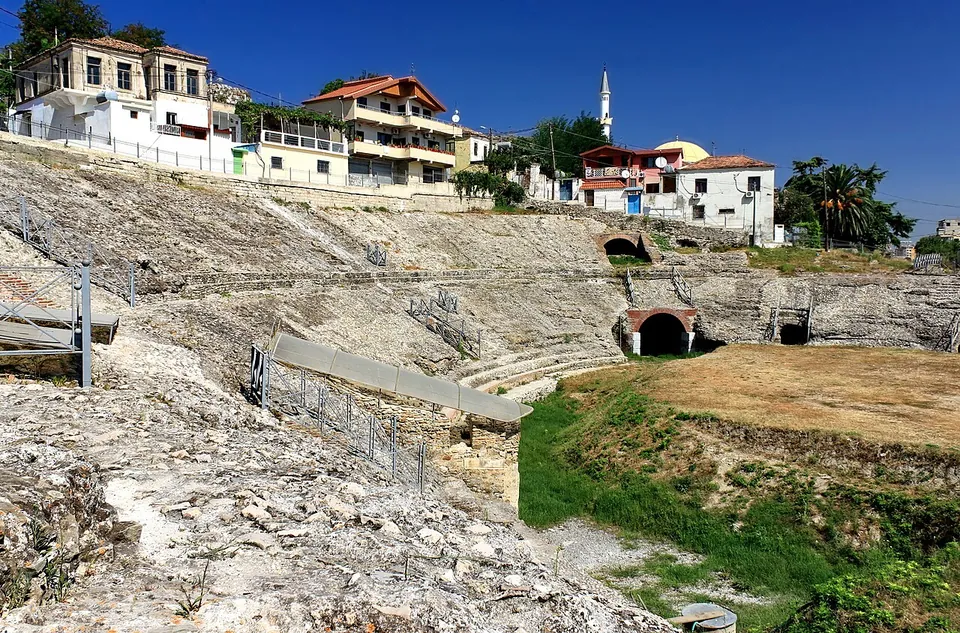
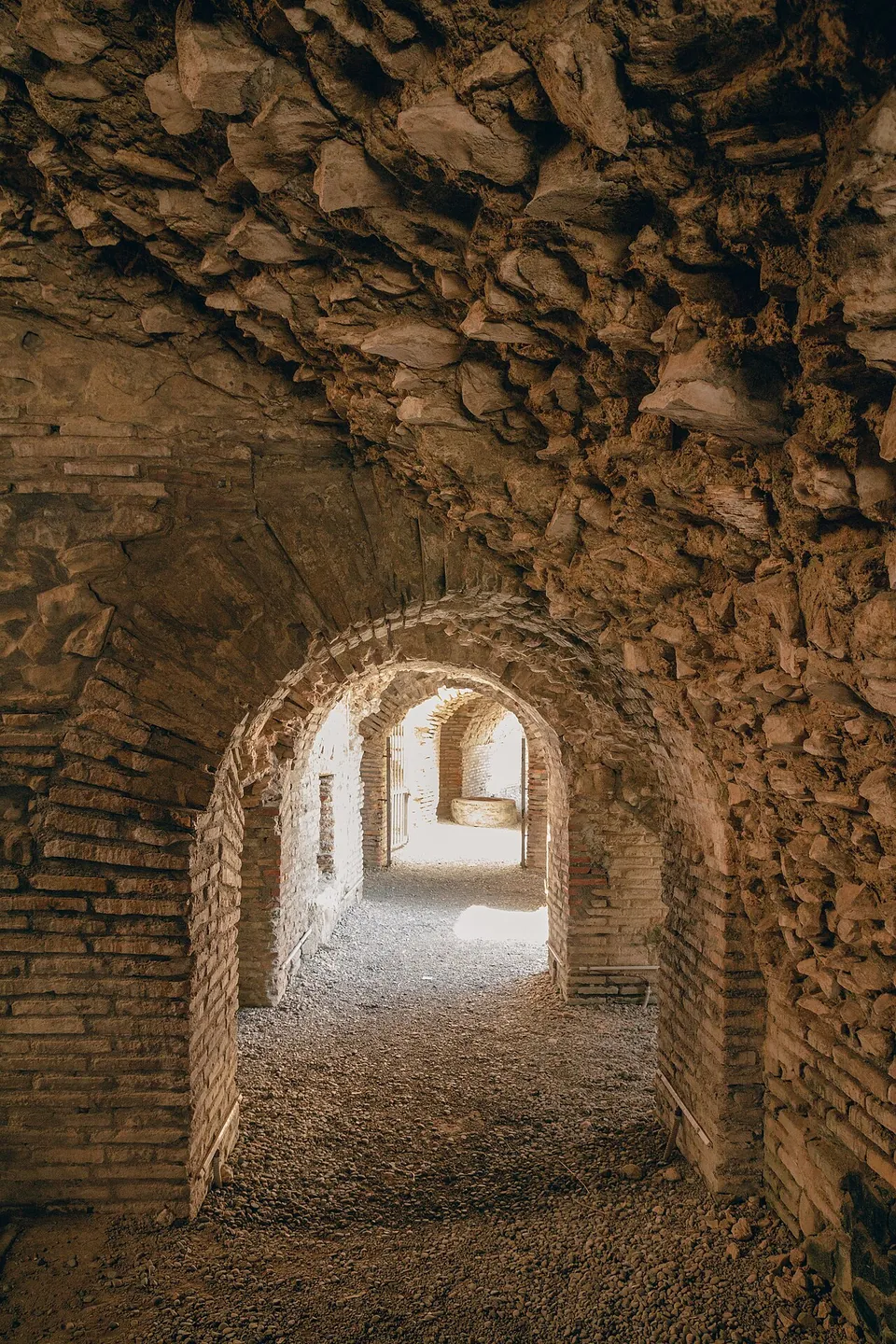
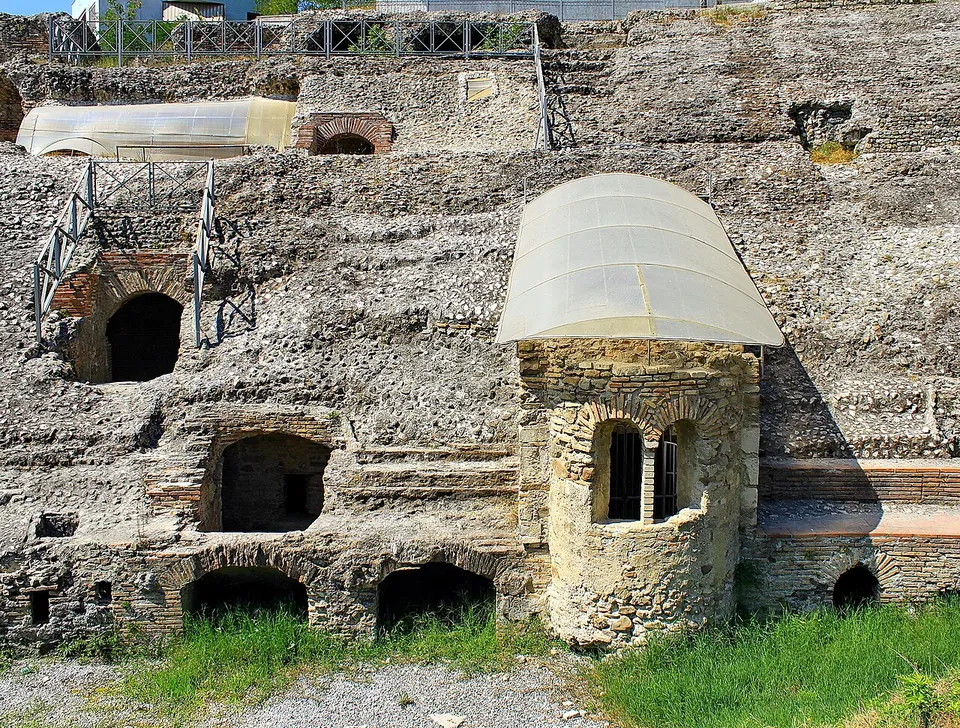
Built on a hillside in the early 2nd century under Trajan, the amphitheatre is an ellipse of about 132 by 113 m, with an arena of about 61 by 42 m; it once held up to 20,000 spectators. Inside are stairways and vaulted galleries at different levels, and an early Christian chapel, built into it in the late 4th century and given mosaics in the 6th, is preserved (en.wikipedia, Amphitheatre of Durrës). It was found only in 1966; a third was excavated in the 1960s and the rest in the 1980s. The city presses in on every side, and modern houses stand on part of the arena (en.wikipedia).
Beyond it, Durrës keeps stretches of its Byzantine walls and remains of Roman roads (en.wikipedia, Epidamnos).
Is it worth the trip?
If you are in Durrës, yes: a huge Roman amphitheatre in the middle of a modern city is a striking thing to see, and the chapel inside it adds something unusual. Go knowing that it is a partly excavated, partly built-over ruin in need of conservation, not a restored monument like Pula’s Arena.
Getting there
The amphitheatre is in the centre of Durrës, a few metres from the Adriatic according to the national tourism agency. A free car park is mapped about 170 m away and a bus stop about 270 m away (OpenStreetMap). The national tourism agency describes it as open to the public, but no official source publishes current hours or prices.
Visiting details
- Tickets
- Unknown
- Parking
- A free surface car park about 170 m from the amphitheatre (OSM way/1169289646, fee=no).
Before you go
- No official source publishes current opening hours or admission; the amphitheatre functions as a museum (en.wikipedia), so expect a ticket.
- Europa Nostra listed the amphitheatre among Europe's most endangered heritage sites in 2013; parts are fenced and propped (en.wikipedia; the photographs).
History
Epidamnos was founded around 627 BC by settlers from Corinth and Corcyra in the territory of the Illyrian Taulantii; a quarrel over it helped start the Peloponnesian War. The Romans took it in 229 BC and called it Dyrrachium. It was the landing point for travellers from Brundisium and the start of the Via Egnatia to Thessalonica and Byzantium, and in 48 BC Pompey defended it against Caesar. In the late 3rd century the city became the capital of the province of Epirus Nova; Justinian strengthened its walls in the 6th century; a devastating earthquake in 345 led to its rebuilding on the old foundations (en.wikipedia, Epidamnos). The amphitheatre was used for shows until the 4th century, when the earthquake of 345/346 probably ended the gladiatorial games (en.wikipedia, Amphitheatre of Durrës).
More photographs

Sources
Every fact on this page comes from the records below, each used under the licence noted.
| Source | Licence |
|---|---|
| Pleiades 481818 | CC BY |
| Wikidata Q3567546 | CC0 |
| OpenStreetMap way/307287831 | ODbL |
| Wikipedia (en) — Epidamnos | CC BY-SA 4.0 |
| Wikipedia (en) — Amphitheatre of Durrës | CC BY-SA 4.0 |
| Agjencia Kombëtare e Turizmit — Amfiteatri Durrës (national tourism agency) | licence not recorded |
| Wikidata — Amphitheatre of Durrës (Q779868) | licence not recorded |
| Pleiades — Amphitheater of Durrës | licence not recorded |