

.jpg)
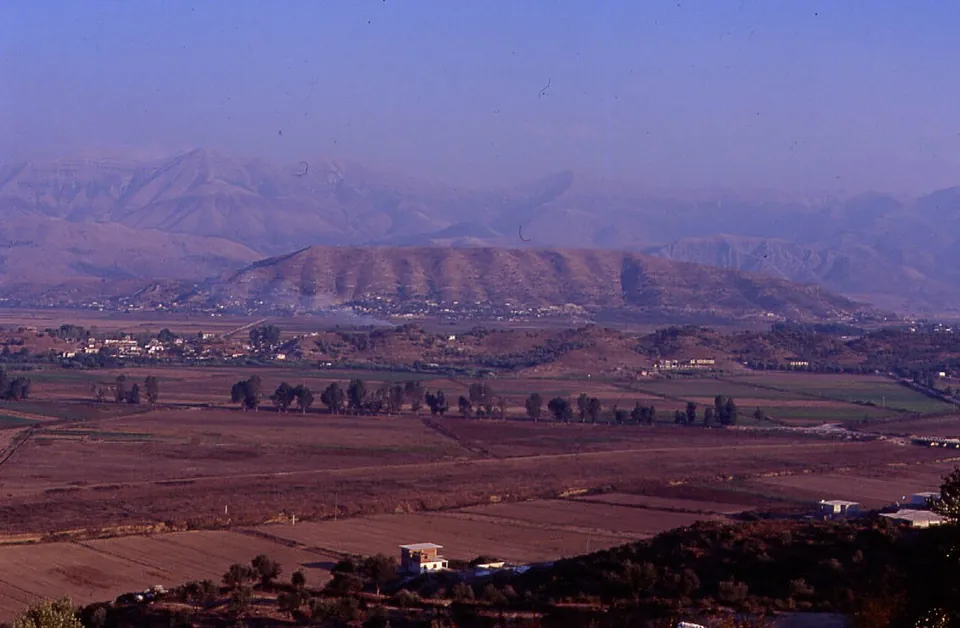
Phoenice was the capital of the Chaonians of Epirus, a Greek city on a steep hill above a fertile valley near the modern town of Finiq, and it stayed a town under Rome, which spared it in 167 BC and later rebuilt its theatre. Today it is part of an archaeological park, with a theatre, houses and walls on the hilltop.
What is there today
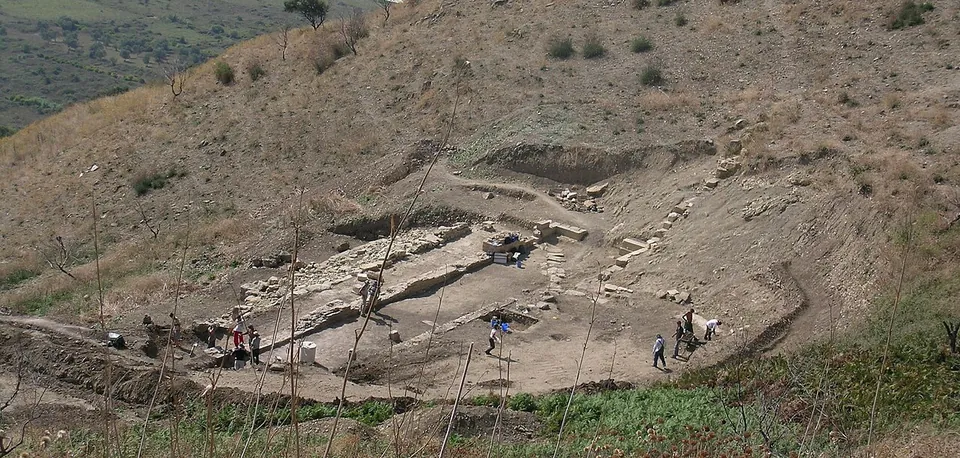
The theatre
The large theatre had a stage front 30 m wide. It was built in the 3rd century BC, renovated in the 2nd century BC and rebuilt under the Romans in the 2nd century AD; it was found in the excavations of 1980–81 (en.wikipedia).
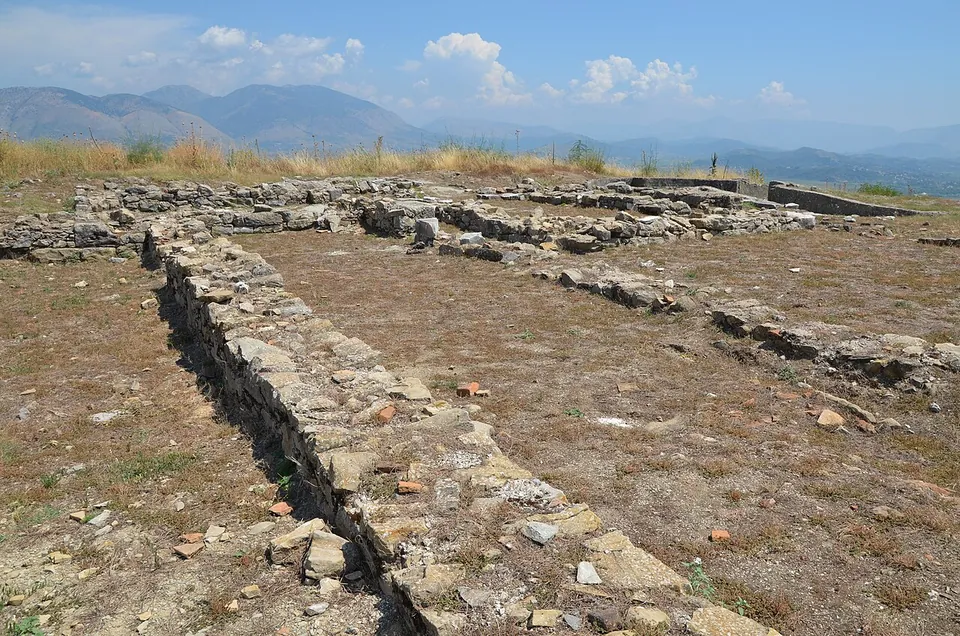
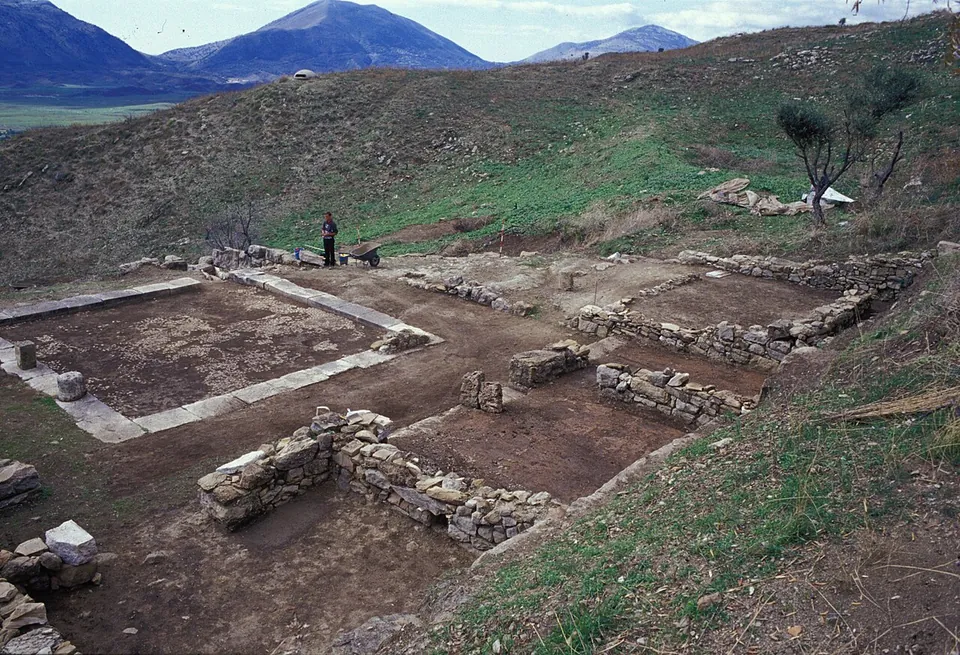
Elsewhere on the hill are Hellenistic and Roman houses, among them the House of the Two Peristyles excavated in 1989–91, a temple of the mid-3rd century BC, sections of the city walls and the great Roman cistern of the 2nd century AD; a southern cemetery with Hellenistic tombs lies below (en.wikipedia).
Is it worth the trip?
If you are near Sarandë or Butrint, yes, as a quieter second site: the site sits high on a hill above a fertile valley, and the theatre and houses show a Greek city that lived on under Rome. and no official source publishes hours or prices, so treat it as an excursion for drivers.
Getting there
Phoenice is on a hill near the town of Finiq in southern Albania (en.wikipedia), about 5 km from Delvinë according to OpenStreetMap, which maps a car park about 280 m from the theatre and no public transport nearby. Current hours and prices could not be confirmed from an official source.
Visiting details
- Tickets
- Unknown
- Parking
- A car park ("Finiq Parking") is mapped about 280 m from the theatre (OpenStreetMap).
Before you go
- No official source could be read for current opening hours or prices, and no public transport stop is mapped nearby (OpenStreetMap).
History
Phoenice was the political centre of the Chaonians, one of the three major Greek peoples of Epirus; its walls, of massive blocks, were expanded as part of the defences of Pyrrhus. After the Epirote monarchy ended around 233 BC it became the seat of the Epirote League, and in 205 BC the treaty that ended the First Macedonian War between Rome and Macedon was signed here. When Rome conquered Epirus in 167 BC, the pro-Roman Chaonian cities including Phoenice were spared; the Romans later renovated the city. In the 5th and 6th centuries it was a bishopric with a baptistery and a basilica; Justinian built fortifications on a neighbouring hill, and after the 6th century the city disappeared (en.wikipedia).
More photographs

Nearby
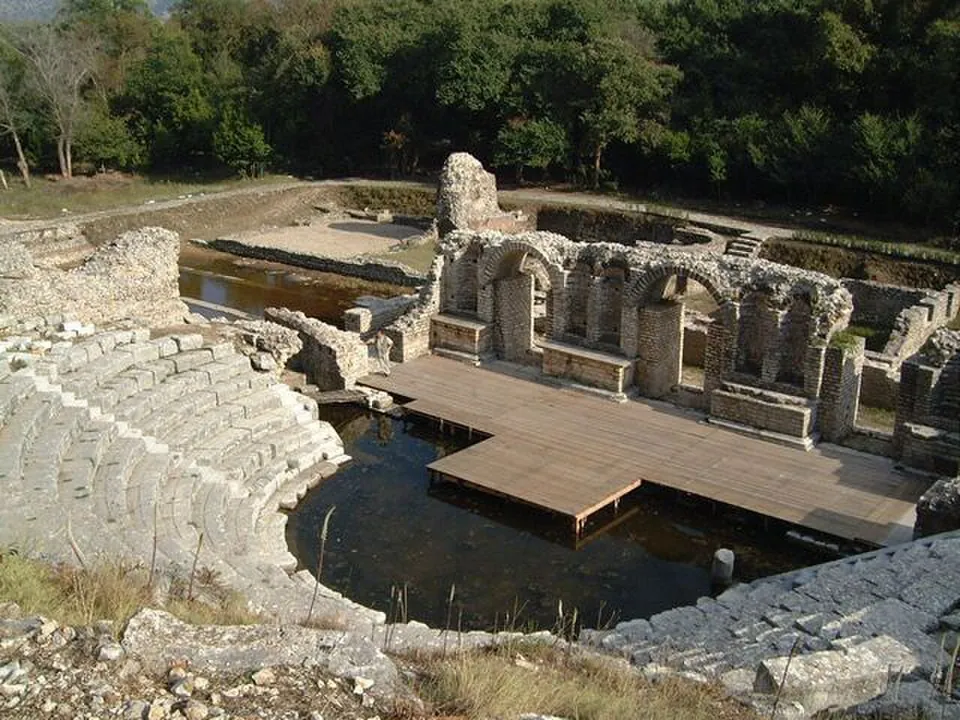
Photo: Marc Morell · CC BY-SA 3.0 · Commons
19 km · city · Vlorë County
Butrint
The city spreads across the peninsula below the acropolis hill; the site museum is housed in the Venetian castle on the acropolis (en.wikipedia, Archaeological Museum).

Straight-line distances.
Sources
Every fact on this page comes from the records below, each used under the licence noted.
| Source | Licence |
|---|---|
| Pleiades 531061 | CC BY |
| Wikidata Q781463 | CC0 |
| Vici.org 11767 | CC BY-SA (text), CC0 (metadata) |
| OpenStreetMap way/289835247 | ODbL |
| Wikipedia (en) — Phoenice | CC BY-SA 4.0 |