

.jpg)
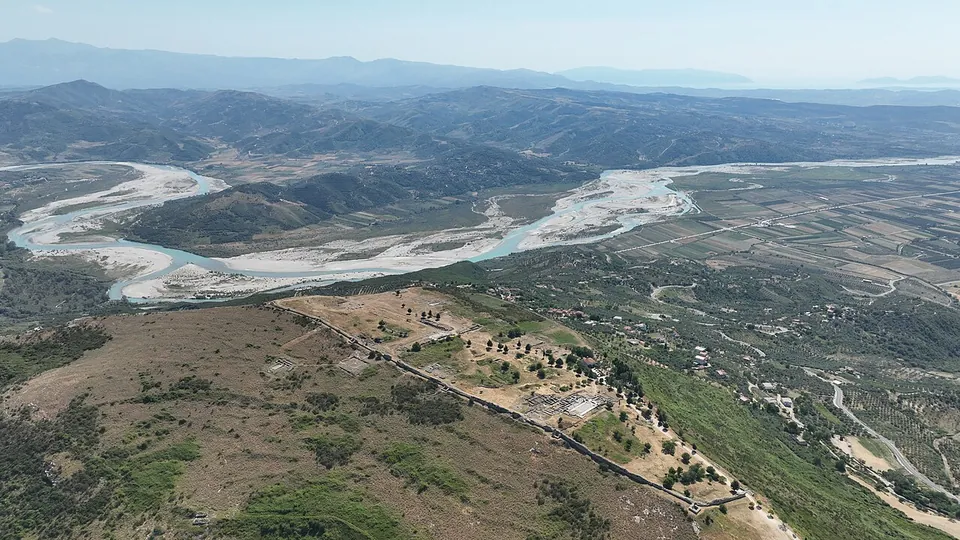
Byllis was the hilltop capital of the Illyrian Bylliones, walled around 350 BC, which became a Roman colony in 30 BC and a Christian bishopric in late antiquity. Its ruins — walls, a theatre, a stadium, the agora and several early Christian basilicas — lie on a hilltop above the Vjosë valley, 25 km from the sea.
What is there today
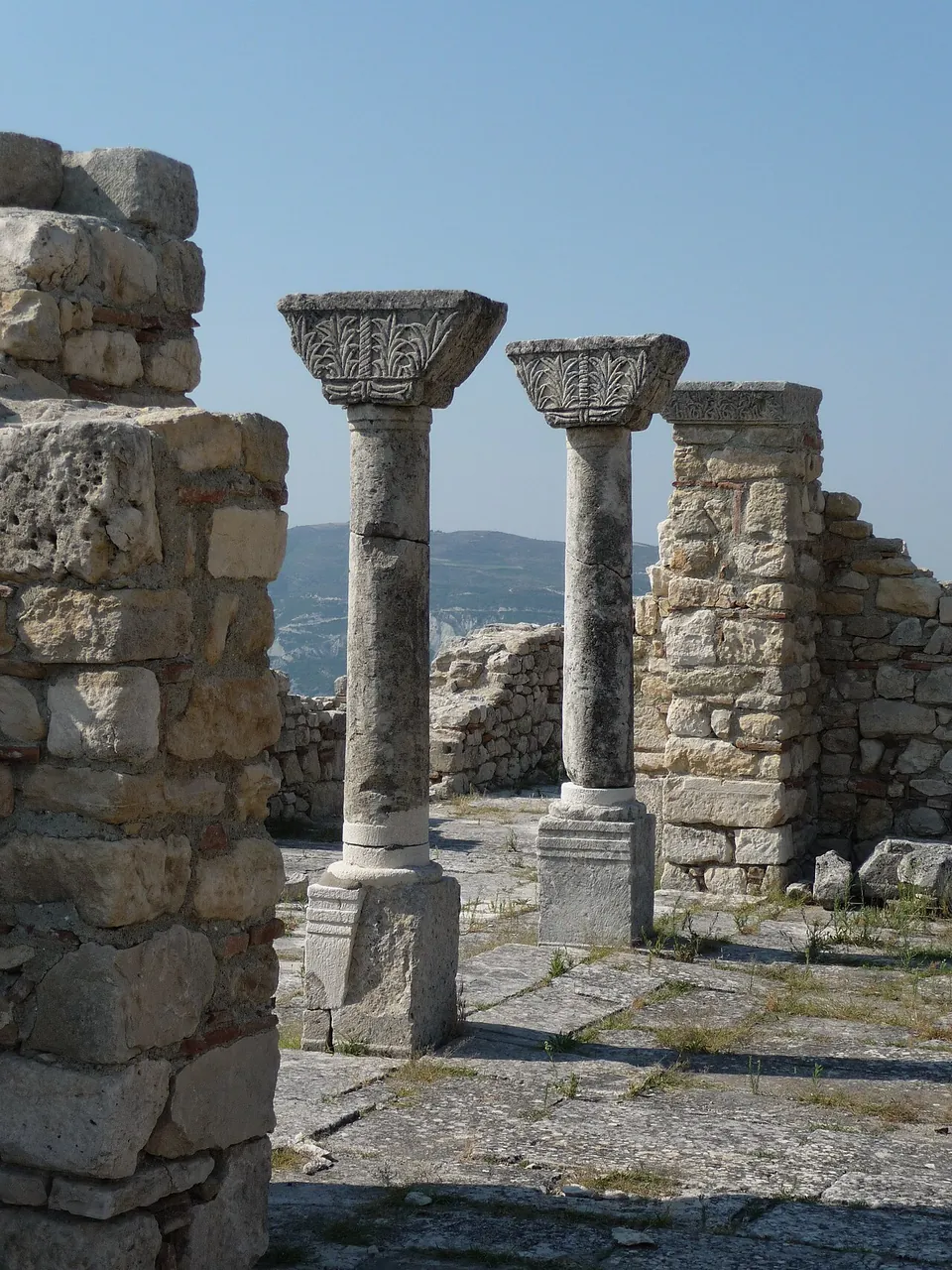
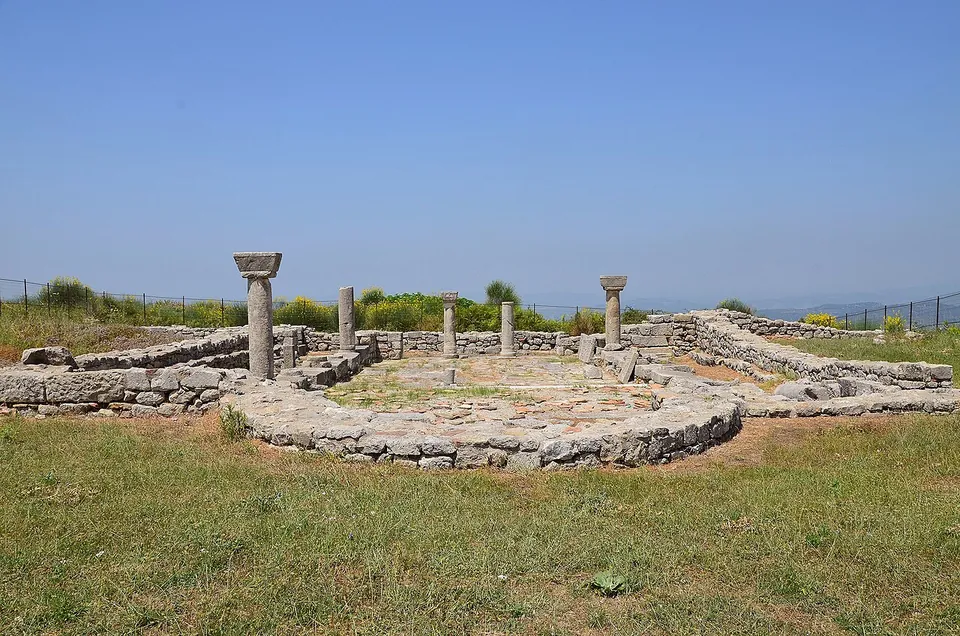
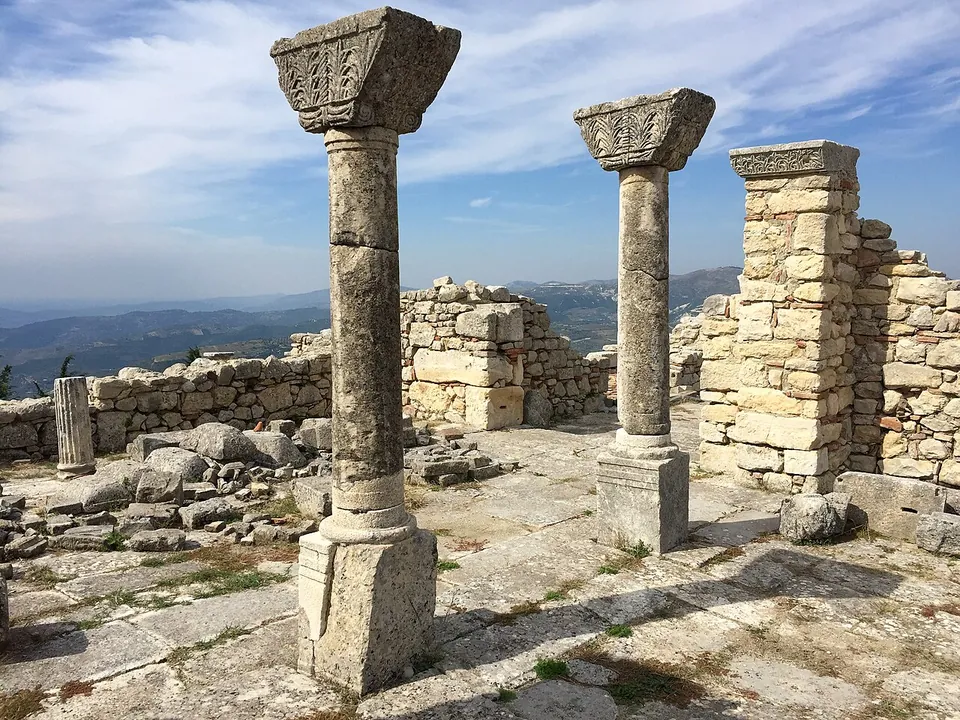
The walls of about 350 BC run for 2.25 km and enclosed some 30 hectares round the hill; inscriptions record their rebuilding by the engineer Victorinus on the orders of Justinian. Inside, the Hellenistic city of the 3rd century BC had a stadium, a theatre, an agora, two stoas, a cistern and a temple, with six gates in its walls. The early Christian town left a number of basilicas with mosaic floors and carvings, one with a baptistery (en.wikipedia). One of them, Basilica C, built in 525–550, had three aisles, a narthex and a portico (the Commons file description).
Is it worth the trip?
Yes, if you are in central Albania: the hilltop setting above the Vjosë is striking, and the standing columns of the basilicas help you picture the Christian town. It is mostly foundations beyond that, and there is no public transport, so plan on a car.
Getting there
Byllis is at Hekal in Fier County, north-east of Vlorë, 25 km from the sea (en.wikipedia). A car park is mapped about 270 m from the point, and no public transport stop is nearby (OpenStreetMap). Current hours and prices could not be confirmed from an official source; check locally.
Visiting details
- Tickets
- Unknown
- Parking
- A car park is mapped about 270 m from the point (OpenStreetMap).
Before you go
- No official source could be read for current opening hours or prices, and no public transport stop is mapped nearby (OpenStreetMap); plan on a car.
History
Byllis was founded around 350 BC as the chief town of the Bylliones, on an older Illyrian hilltop settlement; it took on the forms of a Hellenistic town and spoke Greek. In the war of 169/168 BC the Bylliones fought on Rome’s side against the Illyrian king Gentius, but the city later allied with the Molossians and Macedonians and was sacked by the Romans. After a long decline it rose again as a Roman colony in 30 BC, recorded by Pliny as Colonia Bullidensis. In late antiquity it stayed an important town of Epirus Nova, though smaller, and Justinian had its walls rebuilt (en.wikipedia). The ruins were declared an archaeological park in 2003 (en.wikipedia).
More photographs

Nearby
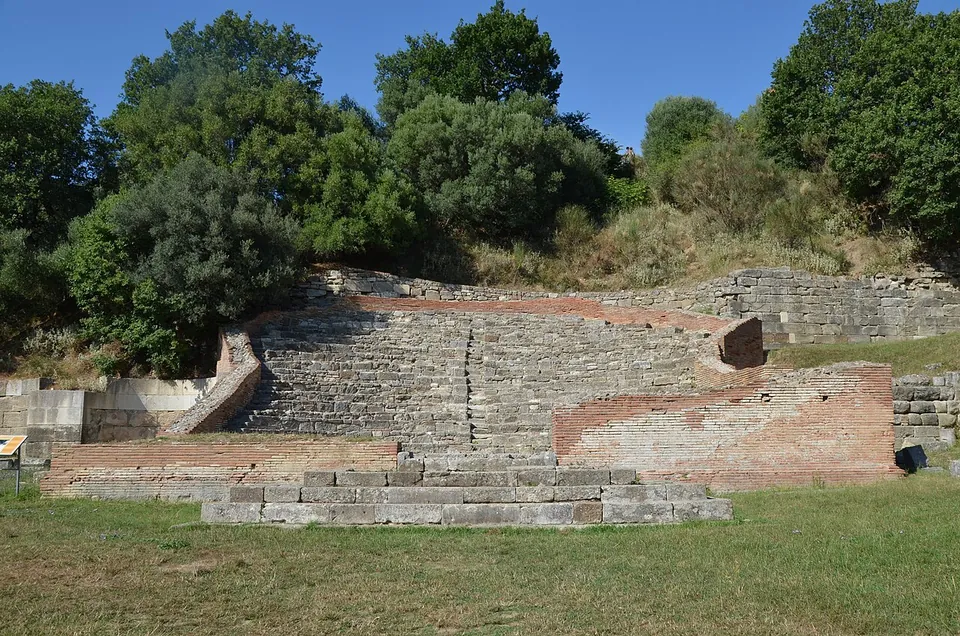
Photo: Carole Raddato · CC BY-SA 2.0 · Commons

Straight-line distances.
Sources
Every fact on this page comes from the records below, each used under the licence noted.
| Source | Licence |
|---|---|
| Pleiades 481777 | CC BY |
| Wikidata Q1018544 | CC0 |
| OpenStreetMap way/307869990 | ODbL |
| Wikipedia (en) — Byllis | CC BY-SA 4.0 |