Stop 1 · temple · Hajdina
Mithraeum I of Ptuj
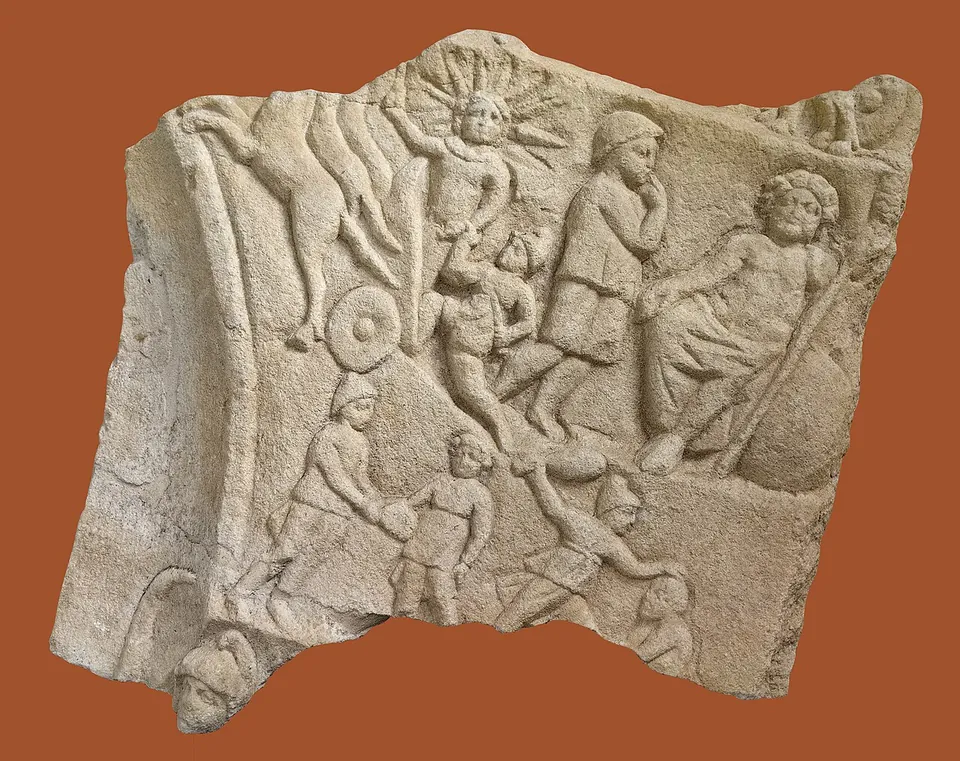
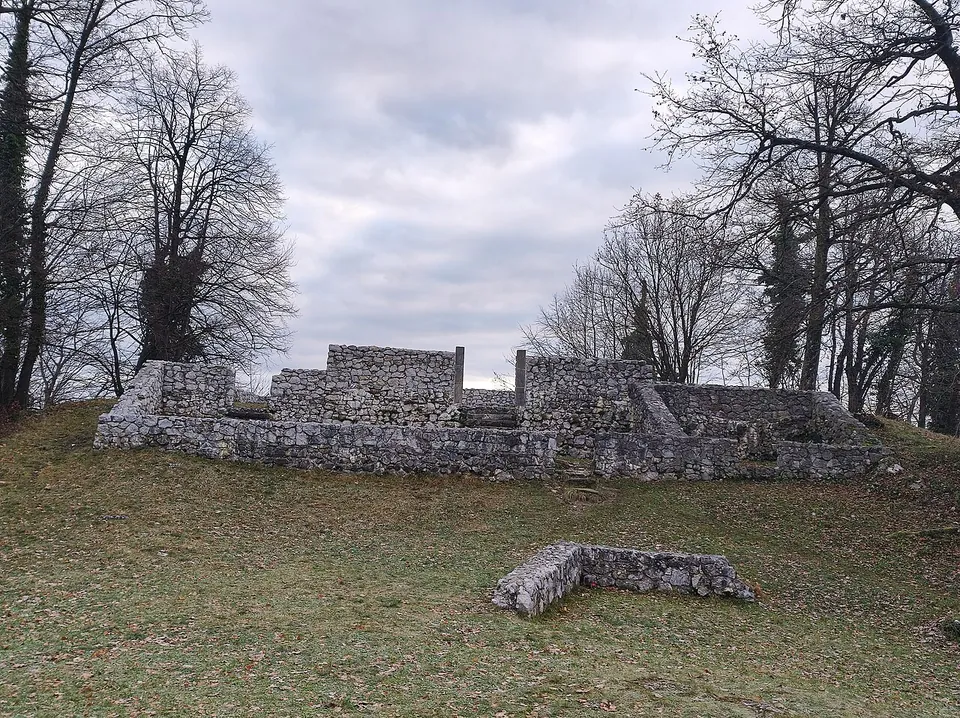
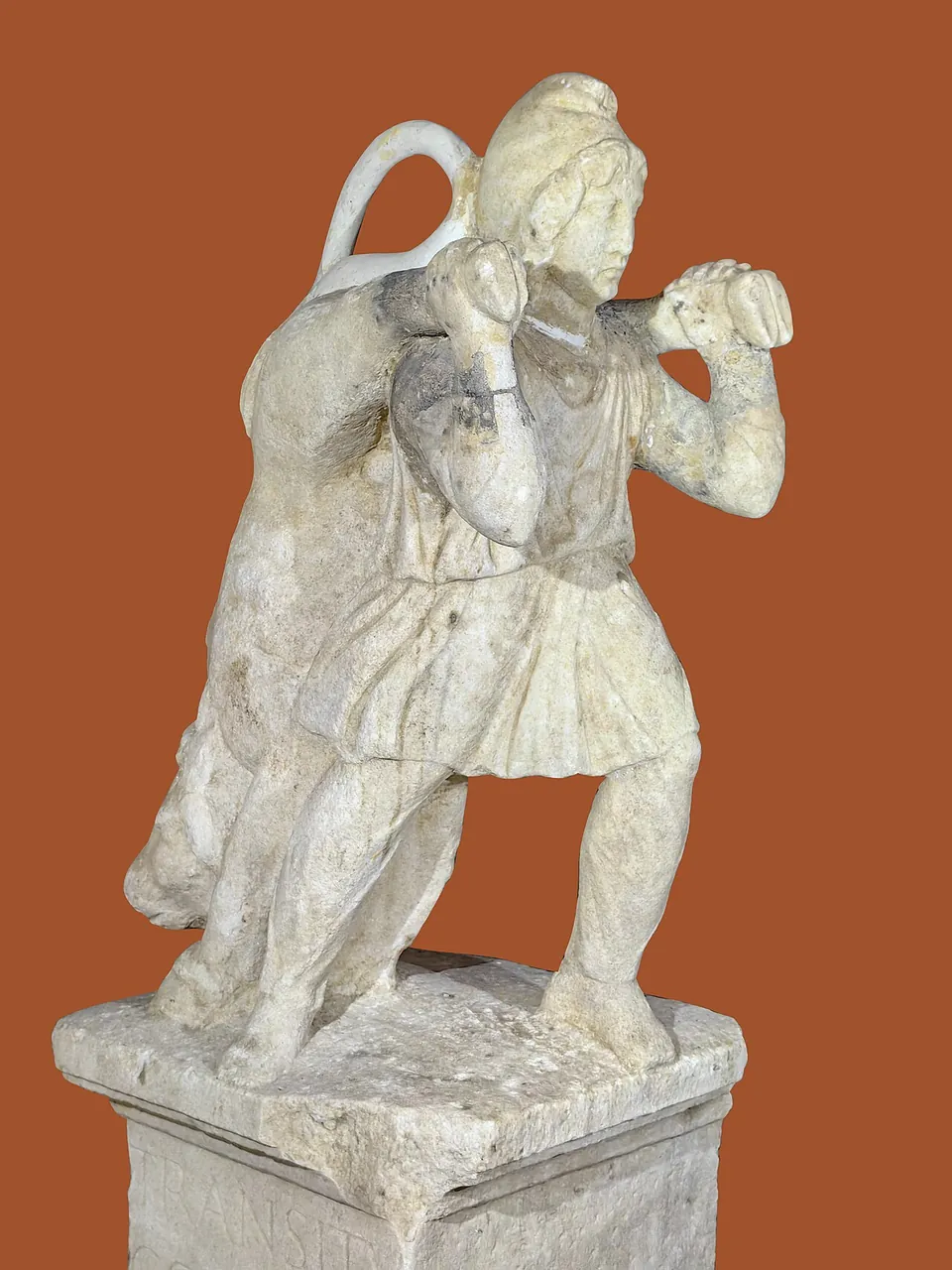
A protective building covers the foundations of the shrine, with its floors and its altars in place — the register lists altars to Mithras and to his torch-bearers Cautes and Cautopates.
Poetovio, Poetovium, Pettau
city · Ptuj, Slovenia
About 1.5 km and 18 minutes of walking, plus time at each stop.
↓ ≈ 18 min walk
Walking times are estimates: the straight-line distance × 1.3 for streets, at 80 m a minute.
Stop 1 · temple · Hajdina
A protective building covers the foundations of the shrine, with its floors and its altars in place — the register lists altars to Mithras and to his torch-bearers Cautes and Cautopates.
Stop 2 · temple · Ptuj
The foundations of the shrine, under a protective building, with its original fittings: altars, reliefs, cult images and scenes of the Mithras legend (heritage register).
Ptuj is the oldest recorded town in Slovenia, and it began as Roman Poetovio — the base camp of the Thirteenth Legion, at the point where the road between the Baltic and the Adriatic crossed the Drava. The Roman town lies under the modern one, so what you come for is one extraordinary stone on the main square and two mithraea on the outskirts.
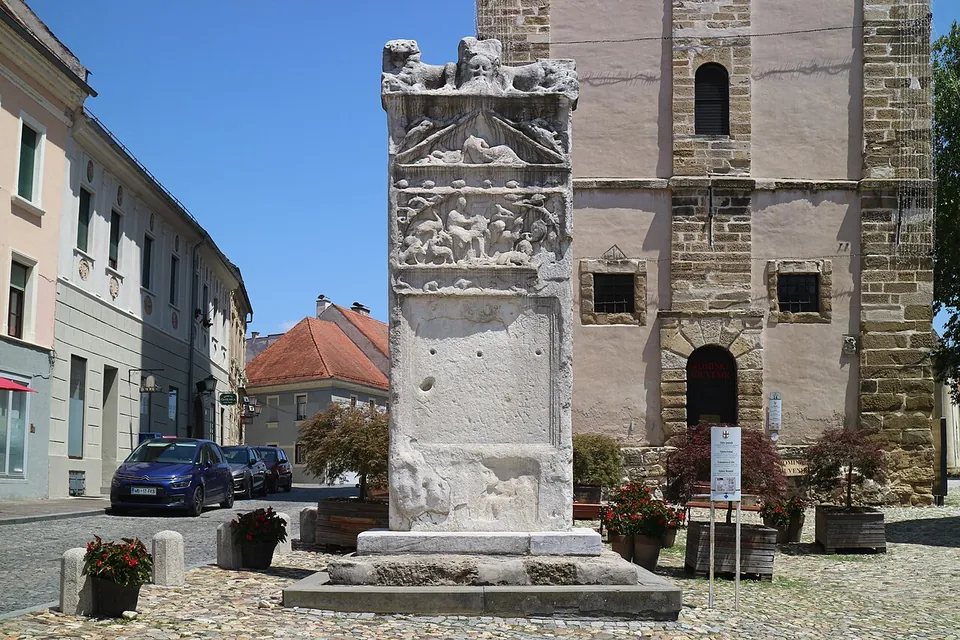
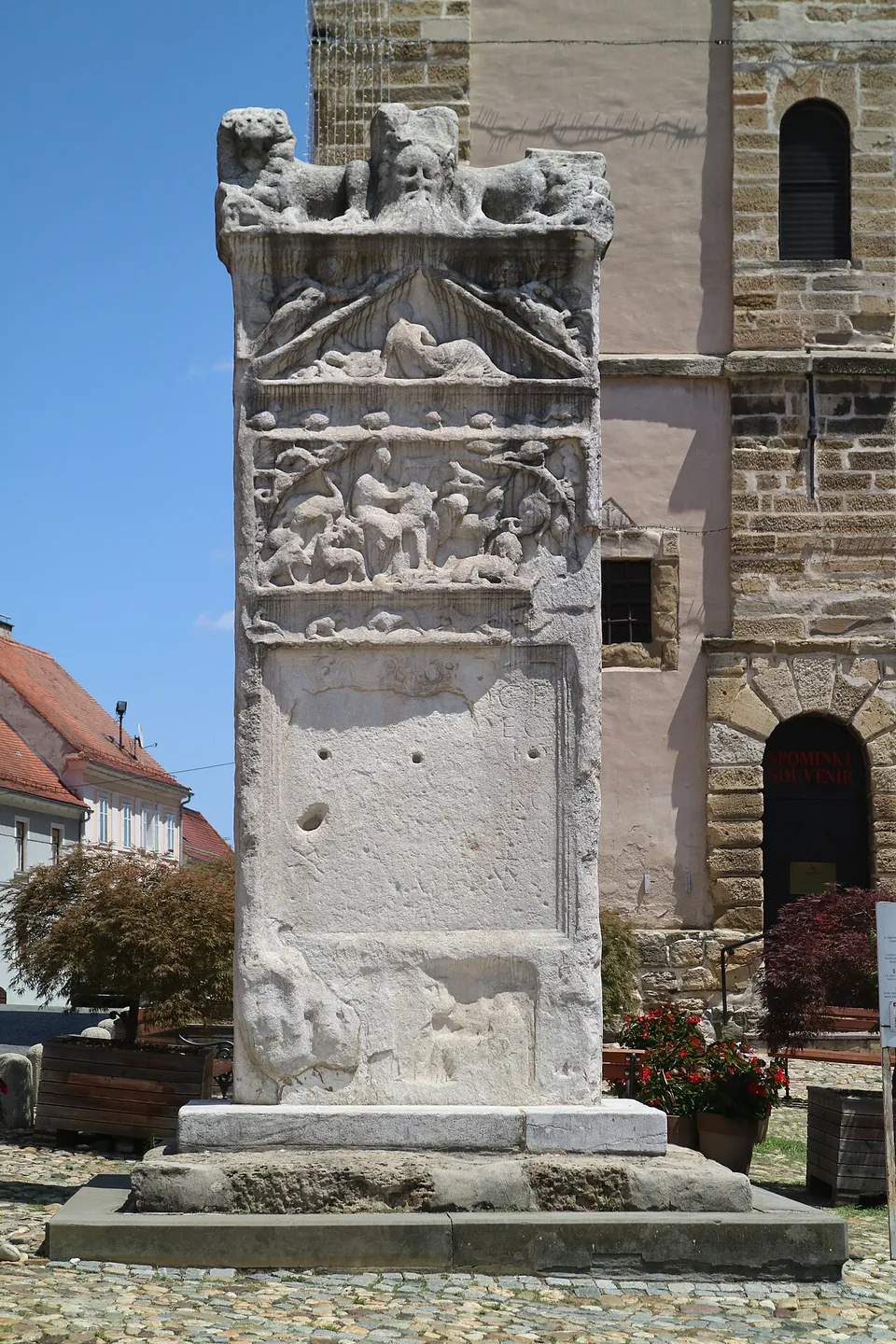
The Orpheus Monument stands on Slovenski trg in front of the Town Tower, where it has always stood: it is the oldest public monument in Slovenia still in its original place, and the largest known monument from the Roman province of Pannonia Superior (en.wikipedia). It is a stele of white Pohorje marble, almost 5 m high and about 1.8 m wide, carved in the 2nd century as a grave marker for Marcus Valerius Verus, duumvir — mayor — of Roman Poetovio.
The carving repays a slow look, though all of it is badly eroded. The central relief shows Orpheus playing his lyre as he mourns Eurydice; other panels show the Greek-Egyptian god Serapis, who stood for the hope of resurrection, and in each corner a lion lies gnawing a ram’s head. In the tympanum below, the moon goddess Selene leans over her dead lover Endymion (en.wikipedia). The round holes punched through the lower half are not Roman: in the Middle Ages the stone was used as a pillory, and criminals were tied to iron rings fixed there. It has been a national cultural monument since March 2008.
Beyond the square, the town’s Roman material is in its museums and in the two mithraea listed below, which are out of the centre and have their own pages.
As a Roman destination on its own, honestly, not quite — there is no excavated town to walk round, and a visitor expecting one will be disappointed. As a stop, yes: Ptuj is a handsome old town where the single best Roman monument in Slovenia stands in the open, free, in the middle of the square, and the mithraea give you somewhere to go afterwards. Come for the town and the monument together rather than for Roman Poetovio as such.
The point is the main square itself. A bus stop is 5 m away and paid car parks are within 60 m (OpenStreetMap). The tourist information office is about 20 m from the monument, and there are museums, cafés and a bakery on the same square. Nothing here opens or closes: the Orpheus Monument is outdoors and free at any hour.
Before you go
Poetovio was an ancient city in Pannonia and the base camp of Legio XIII Gemina (Pleiades). The site had been inhabited since the late Stone Age, and the Roman town grew out of a military fort at a strategically important crossing of the Drava, on a prehistoric trade route running between the Baltic and the Adriatic (en.wikipedia). Pleiades records the place as attested in both the Roman and late antique periods, bracketing it between 30 BC and about AD 640.
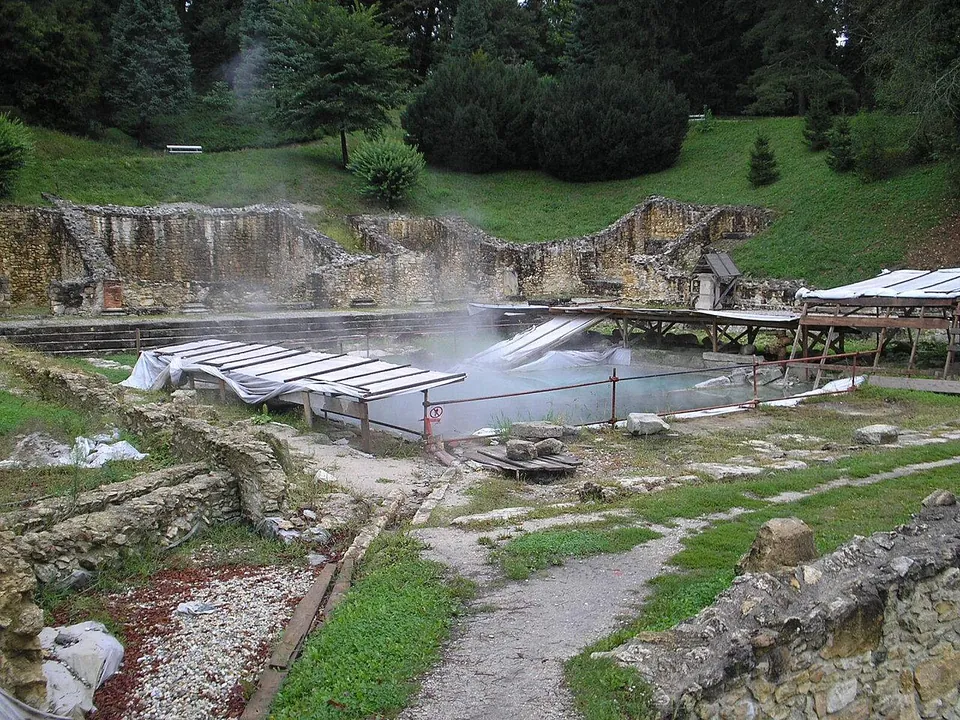
Photo: Fraxinus · CC BY-SA 3.0 · Commons
48 km · bath · Varaždin County
A compact archaeological park covering about 6,000 m² of Roman public buildings of the 1st to 4th centuries.
Straight-line distances.
Every fact on this page comes from the records below, each used under the licence noted.
| Source | Licence |
|---|---|
| Pleiades 197446 | CC BY |
| Wikipedia (en) — Ptuj | CC BY-SA 4.0 |
| Wikipedia (en) — Orpheus Monument | CC BY-SA 4.0 |