.JPG)
.jpg)
_(7369180792).jpg)
What is there today
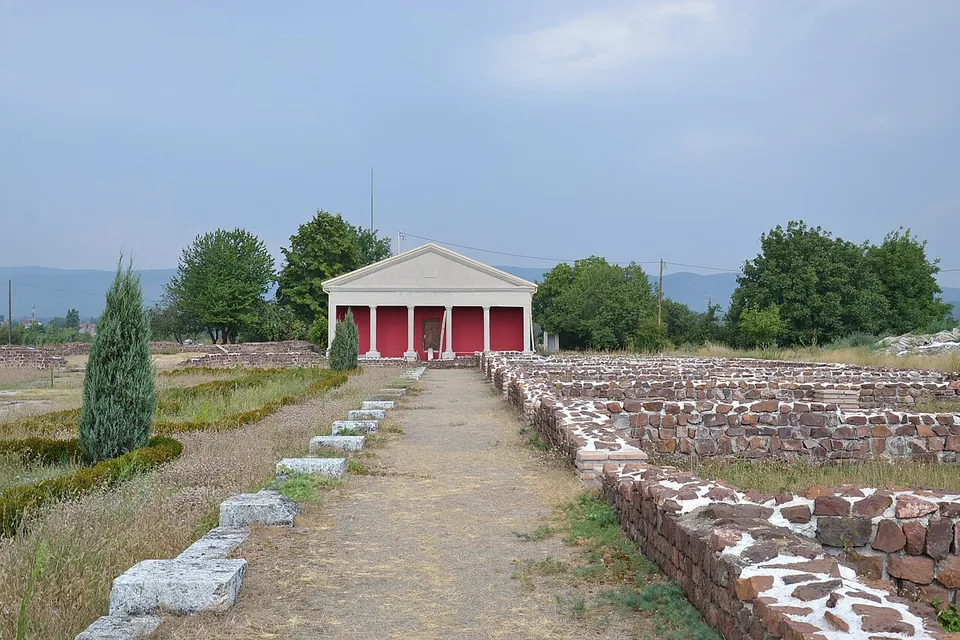
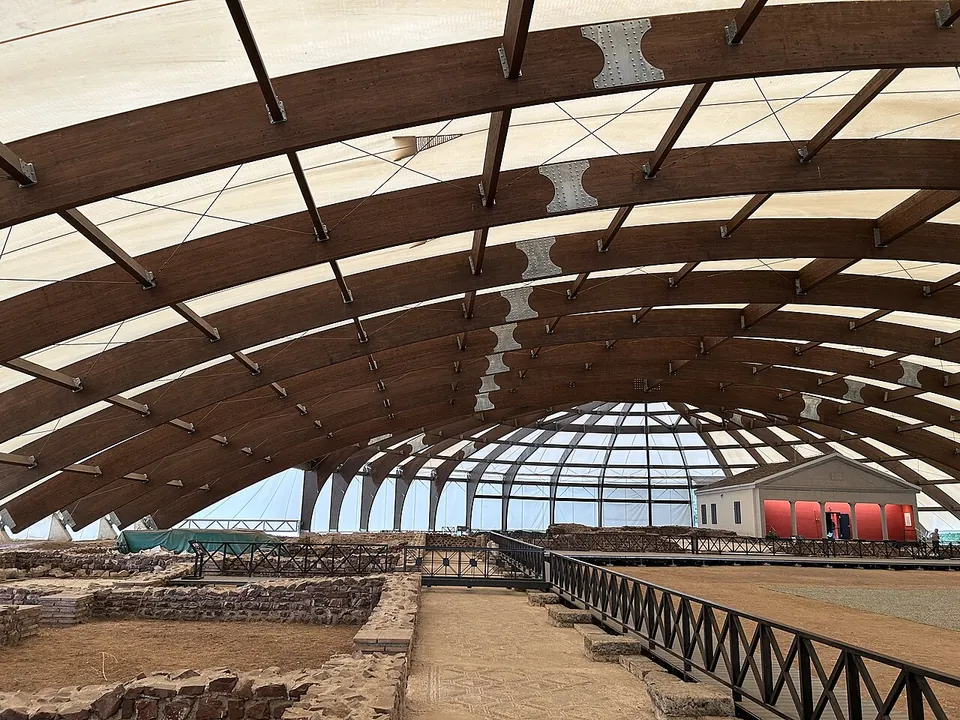
An archaeological park, and a recently reopened one. Excavation has exposed the villa with its peristyle at the centre of the complex, along with the thermae, the granary and the water tower (en.wikipedia, hr.wikipedia). The mosaics are the reason for the modern canopy that now spans the main building: the site was shut for ten years for excavation, mosaic conservation and the laying of visitor paths, and reopened only at the end of December 2022 (sr.wikipedia). Anything written about Mediana before then describes a closed site.
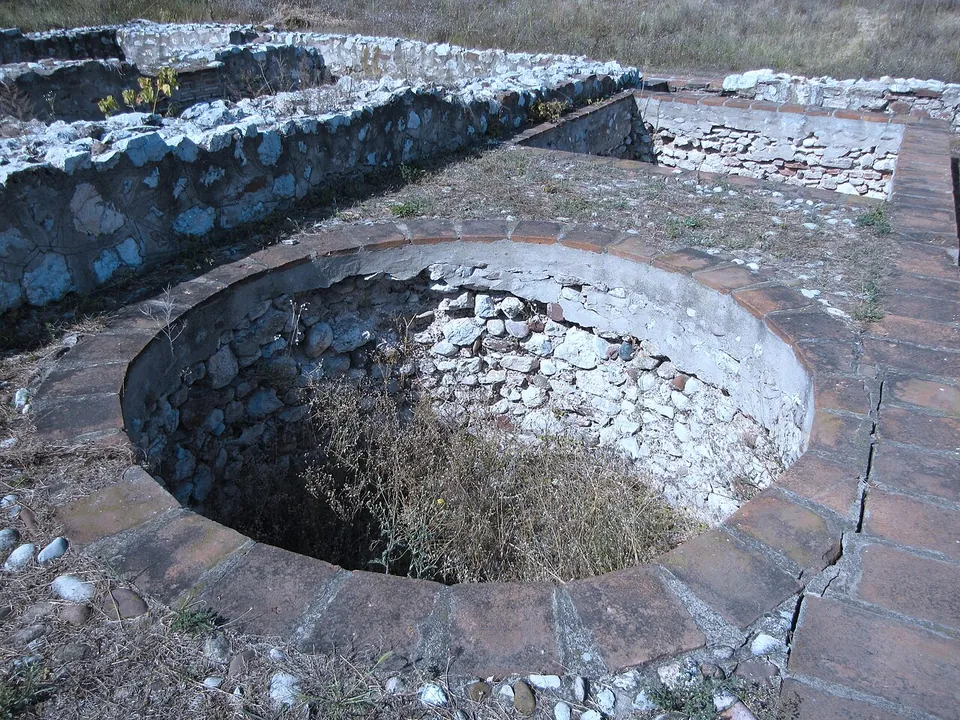
What survives is at floor level — low wall foundations, mosaic pavements and a circular storage basin in the granary — rather than standing rooms. That is still more than survives of Naissus itself, whose remains are scattered across the area of the present-day city (en.wikipedia).
Is it worth the trip?
If you are in Niš, yes, and it is an easy half-day: the site sits beside the road out to Niška Banja, there is free parking, and a ticket is 500 dinars, about €4.30. The mosaics and the scale of the estate justify the visit on their own, and the imperial connection is not a stretch here — this was Constantine’s own ground, in the town where he was born.
Two things to plan around. It is closed on Mondays and shuts at 15.00 at weekends, which is early if you were counting on a slow afternoon. And it is a site to walk and read rather than to photograph dramatically: the canopy that protects the mosaics also flattens the light.
Getting there
Mediana is in the eastern outskirts of Niš, on the road towards Niška Banja (hr.wikipedia), about 4.5 km from the city centre (OpenStreetMap). There is a free surface car park roughly 250 m away and a footpath from it to the entrance; a bus stop is mapped within 300 m (OpenStreetMap).
Opening hours are 09.00 to 16.00 Tuesday to Friday and 09.00 to 15.00 at weekends, closed Mondays, with last admission half an hour before closing. Admission is 500 RSD, or 400 RSD for students, pensioners and school groups; under-sevens, ICOM members and disabled visitors with a companion go free. If you plan to see more of the museum’s sites, the 1,200 RSD combined ticket covers them all (narodnimuzejnis.rs, read 26 September 2026 — check before travelling).
Visiting details
- Opening hours
- Tuesday to Friday 09.00–16.00, Saturday and Sunday 09.00–15.00, closed Mondays. Last admission half an hour before closing.
- Tickets
- 500 RSD (about €4.30); 400 RSD for students, pensioners and school groups; free for under-7s, ICOM members, and disabled visitors with a companion. A 1,200 RSD ticket covers every site the museum runs, including the Skull Tower and the archaeological hall.
- Parking
- Free surface car park about 250 m away (OSM relation/12874187, tagged fee=no).
- On foot
- About 4 min from the parking
Before you go
- Closed on Mondays, and the doors shut earlier at weekends than on weekdays.
- The site reopened at the end of 2022 after ten years of closure for excavation and mosaic conservation, so older guidebooks and web pages describe it as shut.
Hours and prices checked 26 September 2026 on the operator's own site. Confirm before travelling.
History
Naissus was Constantine the Great’s birthplace, and he grew up there. The residence at Mediana was his doing, and historical sources place him here in 315, 319, 324 and 334 (de.wikipedia). The Serbian account puts the beginnings of the settlement slightly earlier, late in Diocletian’s reign at the end of the 3rd century, with the great complex begun by Roimetalkes, a close friend of Constantine’s (sr.wikipedia). It stood beside the road running east from Naissus towards Serdica — modern Sofia — and on to Constantinople.
After Constantine’s death in 337 the villa passed to a succession of emperors. Constantius II and Constans wintered at Naissus in 340, and Constans later used the villa as a temporary residence; in 350 Vetranio, commander of the Danube army, handed the imperial insignia to Constantius II here; Julian spent two unexpected months at Naissus at the end of 361, writing from it to the Roman senate and to Athens and Corinth to shore up support; and Valentinian I was here in 364. Naissus was also the home town of a later emperor, Constantius III (de.wikipedia).
The residence was abandoned after Attila’s Huns overran the region in 442. Justinian I had new walls built in the 6th century, as Procopius records (de.wikipedia), and Pleiades brackets the place as late-antique down to about 640. It is protected as an Archaeological Site of Exceptional Importance, entered in the Serbian heritage register in December 1981 (Serbian heritage register; en.wikipedia dates the listing to 1979).
Sources
Every fact on this page comes from the records below, each used under the licence noted.
| Source | Licence |
|---|---|
| Pleiades 207273 | CC BY |
| Wikidata Q960839 | CC0 |
| OpenStreetMap way/296184228 | ODbL |
| National Museum of Niš — tickets (the site's operator) | licence not recorded |
| National Museum of Niš — opening hours | licence not recorded |
| Serbian heritage register — Bresje-Medijana, Brzi Brod (AN22) | licence not recorded |
| Wikipedia (en) — Mediana | CC BY-SA 4.0 |
| Wikipedia (de) — Mediana | CC BY-SA 4.0 |
| Wikipedia (sr) — Медијана (Ниш) | CC BY-SA 4.0 |