
_2.JPG)
_(5446813060).jpg)
What is there today
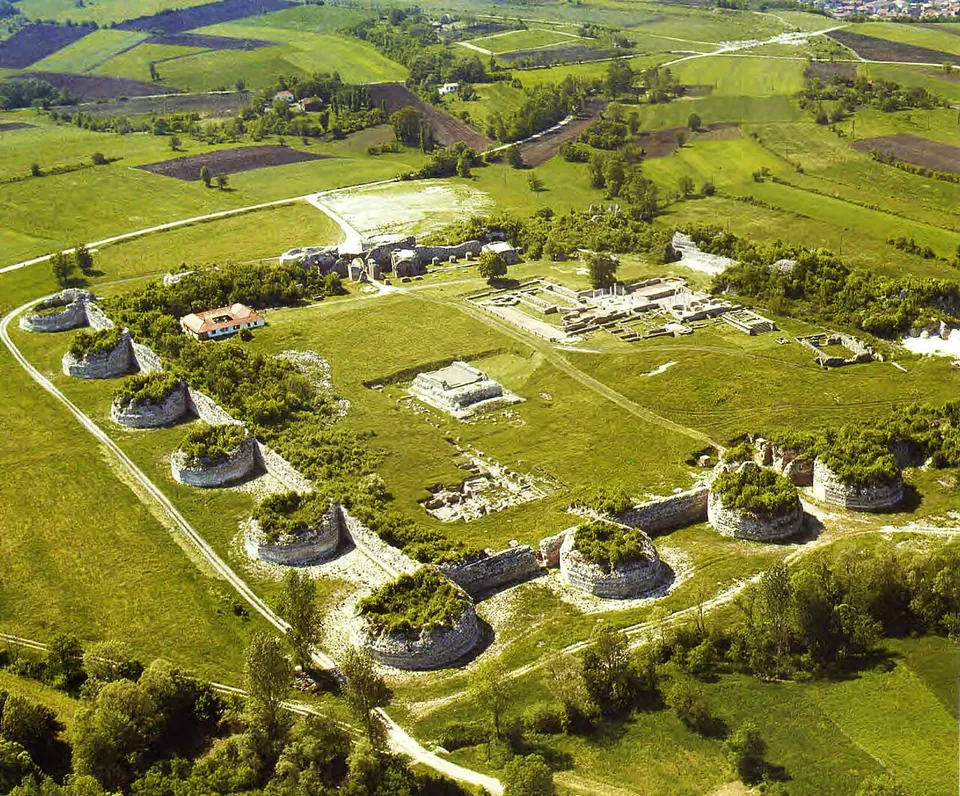
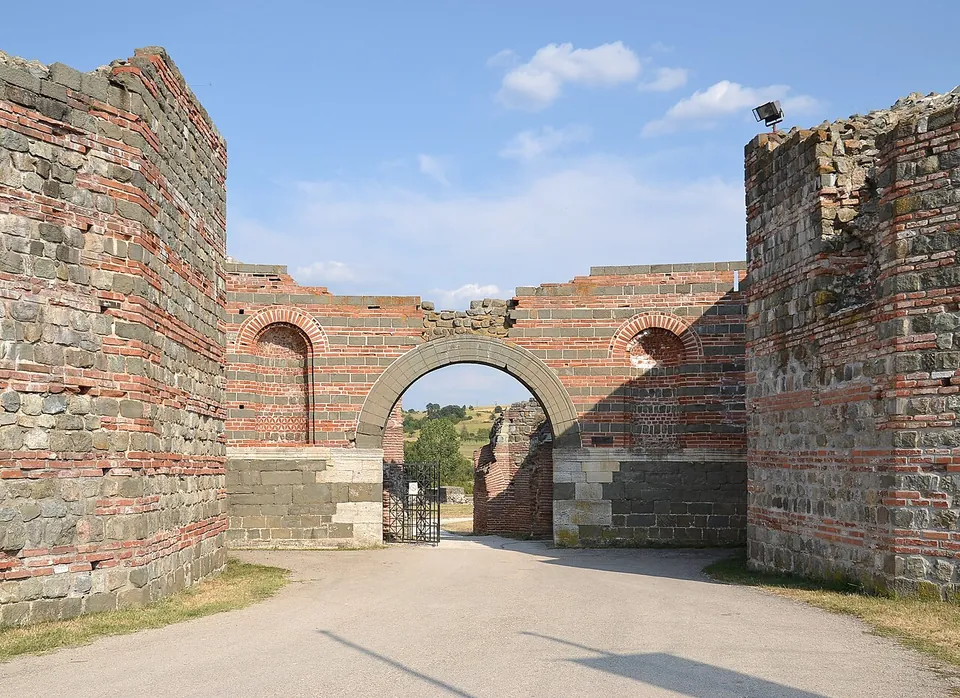
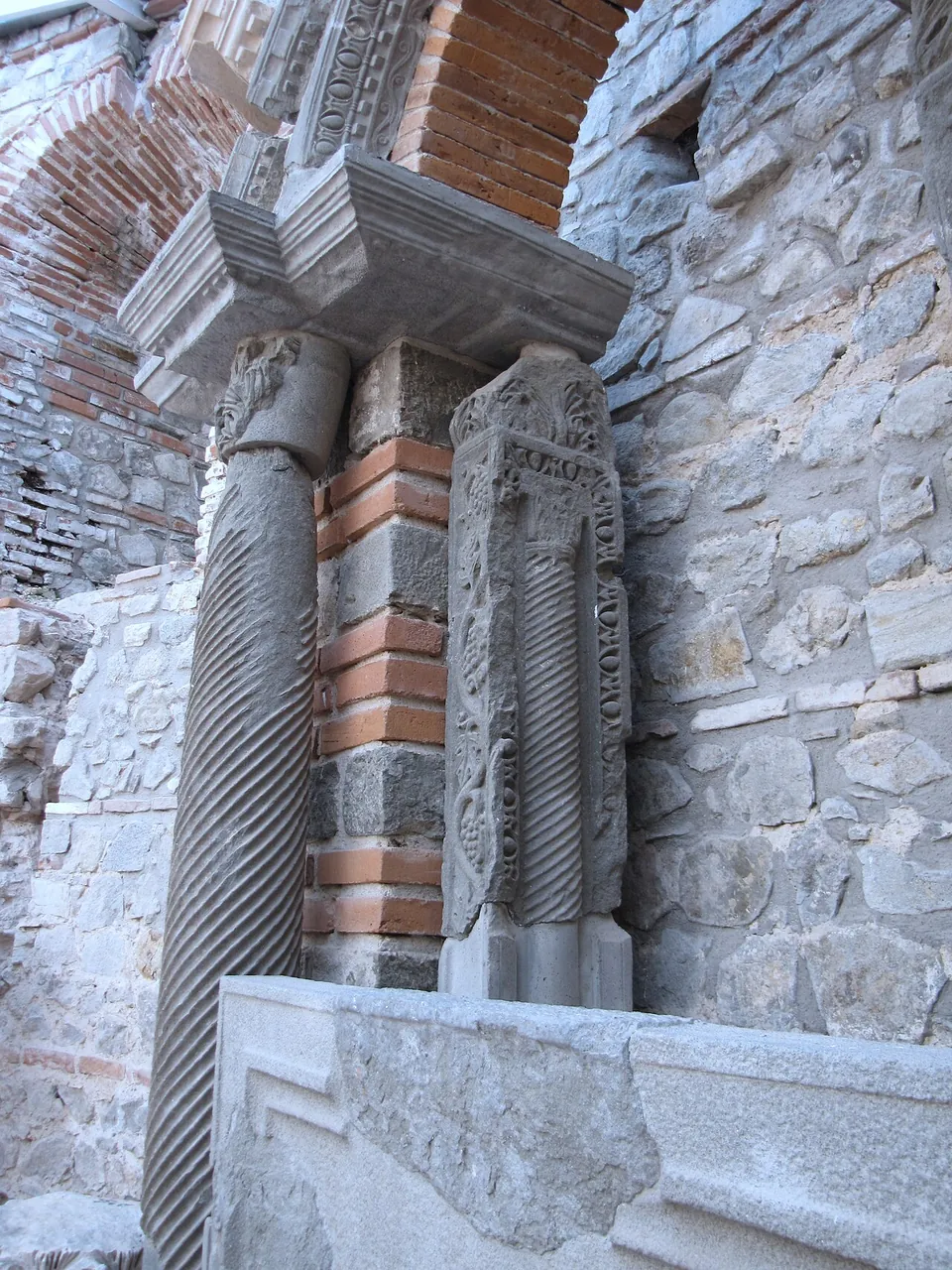
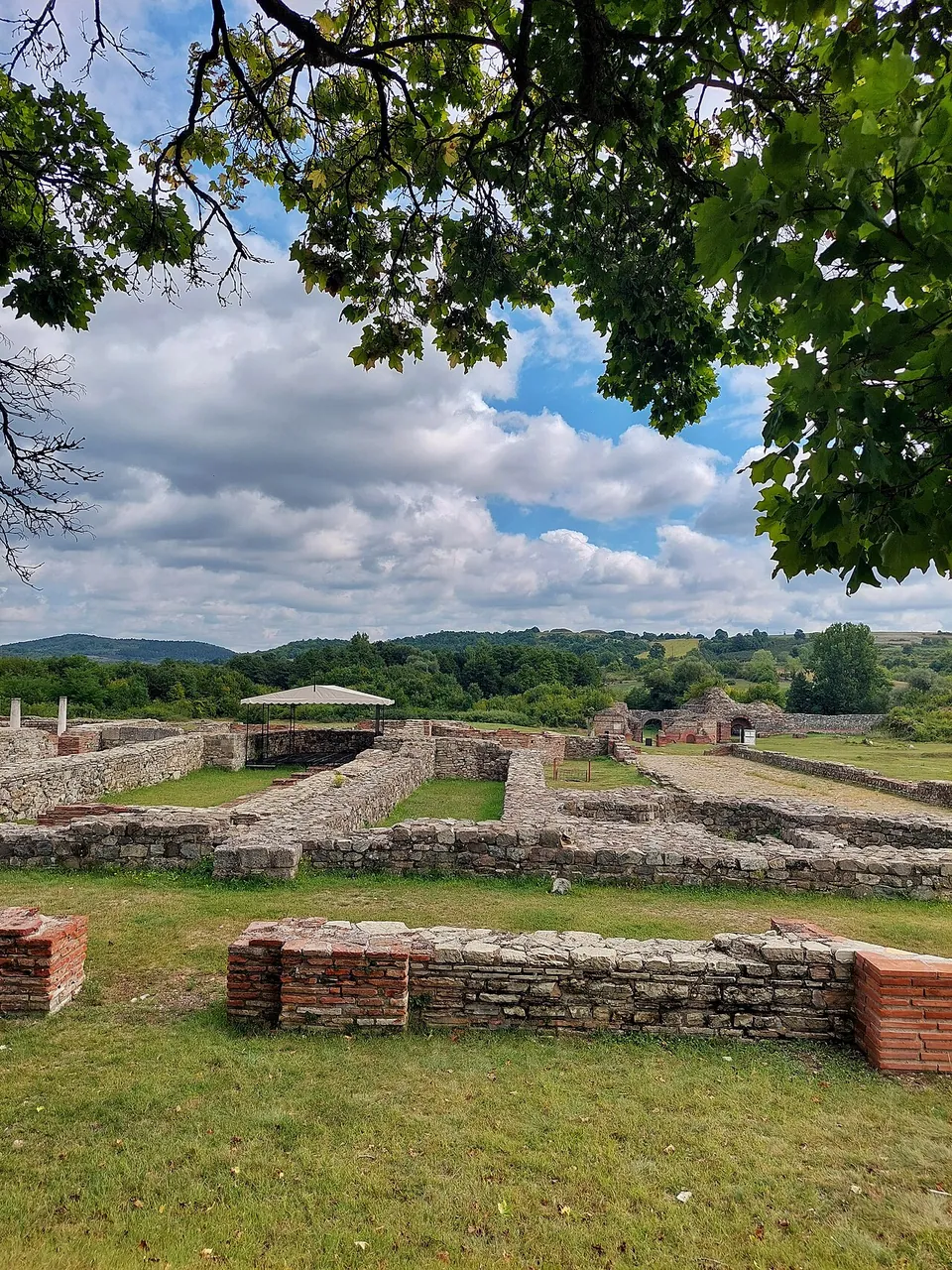
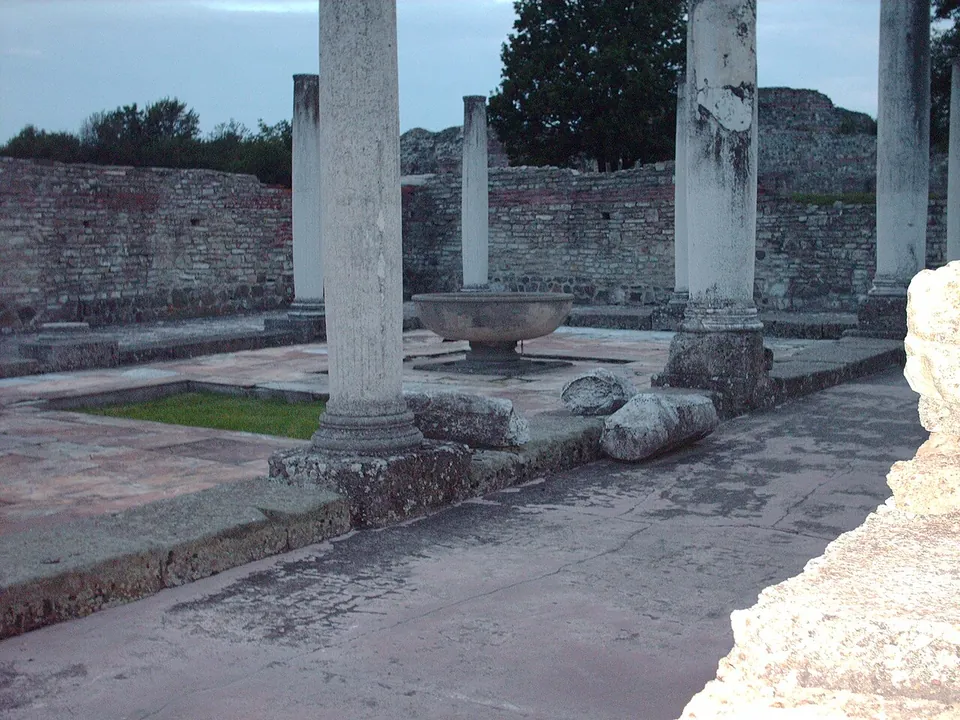
The enclosure is the set piece. Published figures put the ground inside the walls at between 4 and 6.5 hectares, so this is a place you walk round rather than take in from the gate. The wall is preserved all the way round, and the towers give it the silhouette that made Felix Philipp Kanitz, writing in the later 19th century, call it one of the largest and best-preserved Roman structures in Europe (de.wikipedia). Inside the walls, excavation has exposed the palace itself, two pagan temples, three Christian churches and further buildings; the floor mosaics are rated among the finest late-antique work in Europe (sr.wikipedia). On the neighbouring hill of Magura, Galerius had mausolea built for himself and for his mother (de.wikipedia). A museum is mapped about 85 m from the walls, with a café and public toilets nearby (OpenStreetMap).
Is it worth the trip?
If you have a car and you are anywhere near Zaječar, yes — this is a complete late Roman fortification wall, not a foundation course, and UNESCO added it to the World Heritage list in 2007. It is also the kind of site that rewards a slow walk rather than a quick look, because what is legible on the ground is the plan of a palace rather than standing rooms.
One honest caveat: it is 7 km outside Zaječar with no public transport mapped at the gate, so without a car it is awkward. Everything else is easy. It opens every day of the year, a ticket is 500 dinars — about €4.30 — and from April to November you have twelve hours a day to use it, which is more site than most people need.
Getting there
The site lies about 7 km south-west of Zaječar (de.wikipedia; the nearest mapped town centre is 7.4 km from the point). There is a car park roughly 150 m from the walls, with a footpath leading in.
It is open daily, 08.00 to 20.00 from 1 April to 1 November and 08.00 to 16.00 in winter, with last entry an hour before closing. A ticket is 500 RSD, about €4.30; students, pensioners and groups of fifteen or more pay 300 RSD, and under-sevens go free. For 600 RSD a combined ticket adds the National Museum in Zaječar and Radul Beg’s Konak in the town. The individual ticket includes a presentation at the info centre and then the palace at your own pace; a guided tour of the palace costs 1,000 RSD and runs between noon and 16.00, and an audio guide is 300 RSD (felixromuliana.rs, read 26 September 2026 — check before travelling, since prices move).
Visiting details
- Opening hours
- Daily 08.00–20.00 from 1 April to 1 November, and 08.00–16.00 through the winter. Last entry one hour before closing.
- Tickets
- 500 RSD (about €4.30); 300 RSD for students, pensioners and groups of 15 or more; free under 7. A 600 RSD combined ticket adds the National Museum in Zaječar and Radul Beg's Konak. A guided tour of the palace is 1,000 RSD and runs daily between noon and 16.00; audio guide 300 RSD.
- Parking
- Car park about 150 m from the walls (OSM node/10967360144 and way/223636905); a footpath runs from there to the site.
Before you go
- No bus stop or railway station is mapped within 300 m; the site needs a car.
Hours and prices checked 26 September 2026 on the operator's own site. Confirm before travelling.
History
Galerius commissioned the fortified palace and memorial complex in the late third and early fourth centuries (Pleiades). It was named Romuliana after his mother Romula, who had been born nearby in the province of Dacia. The identification was settled in 1984, when an inscription naming Romuliana was found inside the walls; a portrait head carved in porphyry, a stone reserved for emperors, supported the reading that Galerius (who reigned 293–311) built the place as a retirement residence (de.wikipedia).
It appears never to have been finished. Emperors of the fourth century passed the estate to the Christian church; the fifth century brought destruction; in the sixth, Justinian I rebuilt Romuliana as a frontier fort; and after the Slav invasions at the end of that century the former imperial residence was abandoned (sr.wikipedia). The ruins were seen and described by August von Herder in 1835 (de.wikipedia). A village of the same name and a warm mineral-water spa lie next to the site today (sr.wikipedia).
More photographs


Sources
Every fact on this page comes from the records below, each used under the licence noted.
| Source | Licence |
|---|---|
| Pleiades 207395 | CC BY |
| Wikidata Q14552369 | CC0 |
| Vici.org 11341 | CC BY-SA (text), CC0 (metadata) |
| OpenStreetMap way/96921763 | ODbL |
| Pleiades — Defensive wall, Felix Romuliana | licence not recorded |
| Wikidata — Gamzigrad (Q904128, UNESCO World Heritage Site) | licence not recorded |
| Wikipedia (de) — Romuliana | CC BY-SA 4.0 |
| Wikipedia (sr) — Гамзиград | CC BY-SA 4.0 |
| Wikipedia (en) — Gamzigrad | CC BY-SA 4.0 |
| Felix Romuliana — hours and admission (the site's own operator) | licence not recorded |